Modern
Yeşilvadi Mosque
2003–2010 · Ümraniye / Tepeüstü
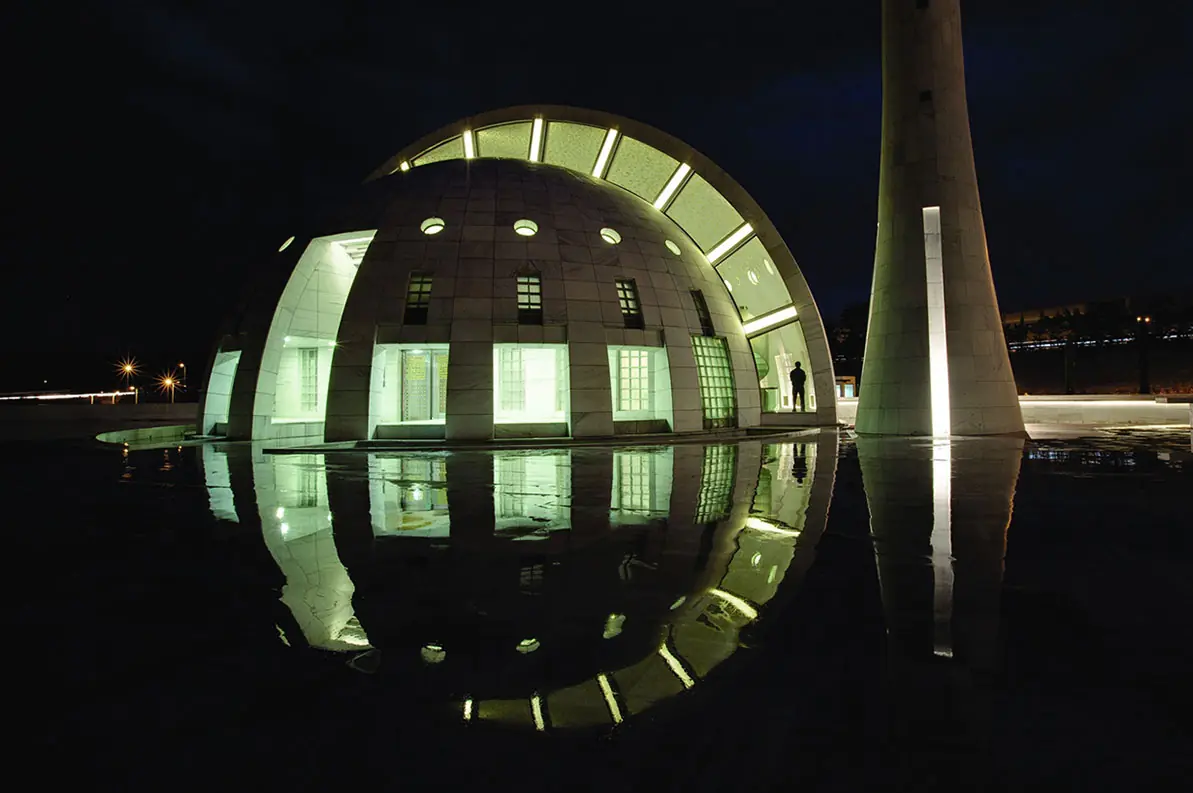
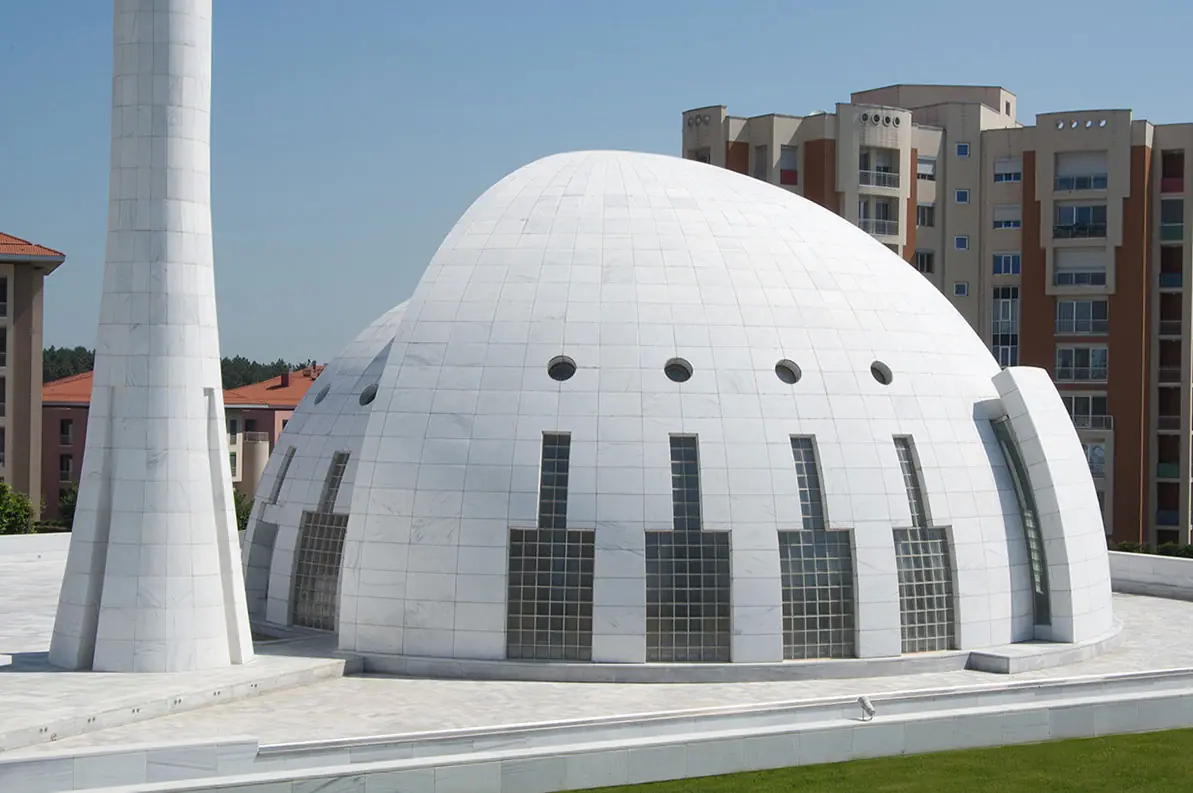
A hemispherical mosque in Ümraniye (2010, Adnan Kazmaoğlu): a white marble shell standing over a sheet of water, lit through a ring of Kufic-etched glass between its two shells.
- Minarets
- 1
- Built
- 2003–2010
- Architect
- Adnan Kazmaoğlu
- Patron
- KİPTAŞ, the housing arm of the Istanbul municipality
- District
- Ümraniye / Tepeüstü
History
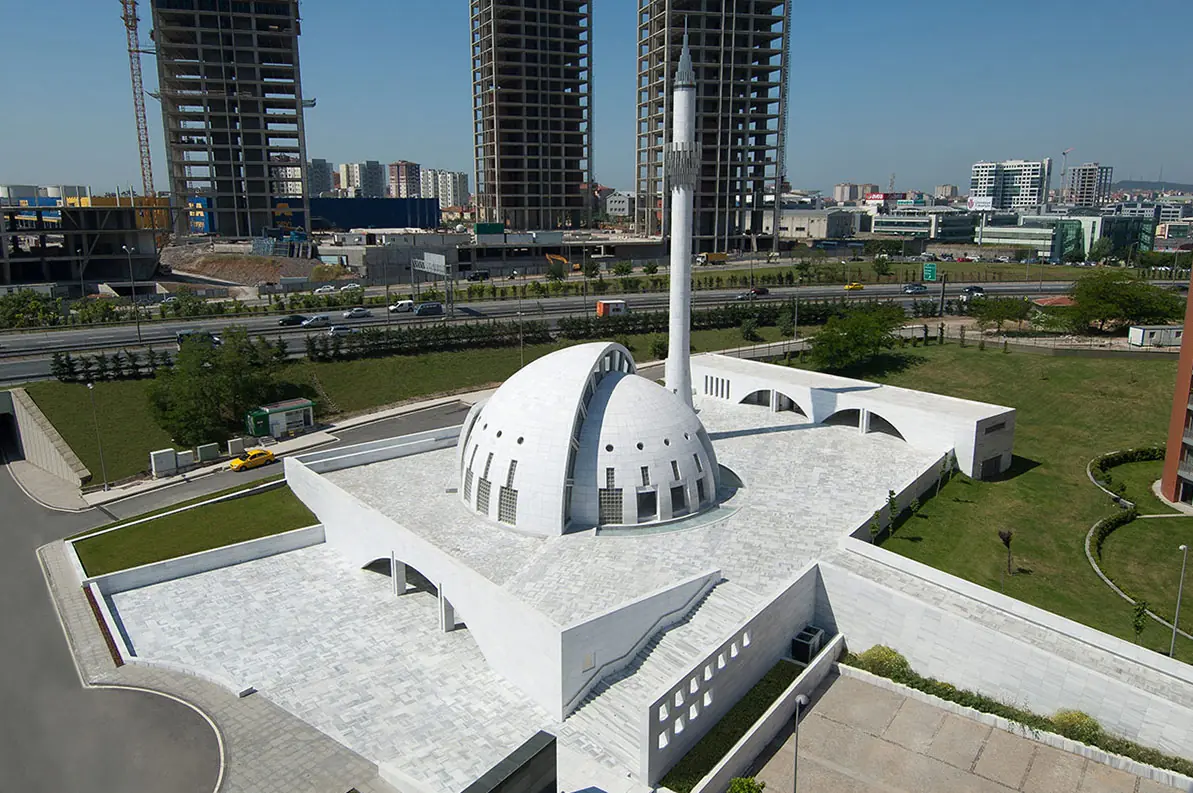
The mosque stands in Tepeüstü, a quarter of Ümraniye on the Asian side, among the residential towers, malls and interchanges built here over the last twenty years. The client was KİPTAŞ, the housing company of the Istanbul municipality: this was built as the centre of a new neighbourhood, not as a monument. Adnan Kazmaoğlu drew the design in 2003, construction was finished in 2010, and the mosque opened during Ramadan of that year. It holds about three hundred people in some 530 m² — small by Istanbul standards — but the complex also took in a library, a 250-seat conference hall and a foyer, so the building doubles as the quarter's cultural house.
Architecture
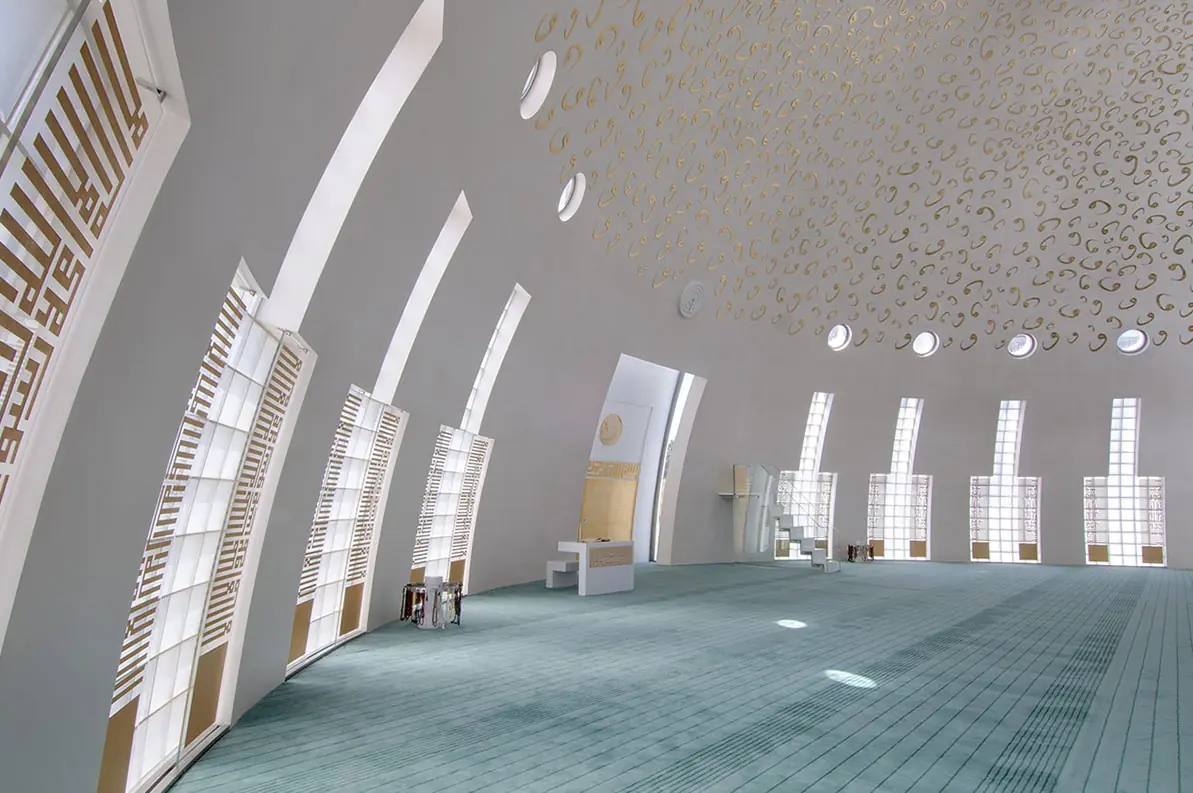
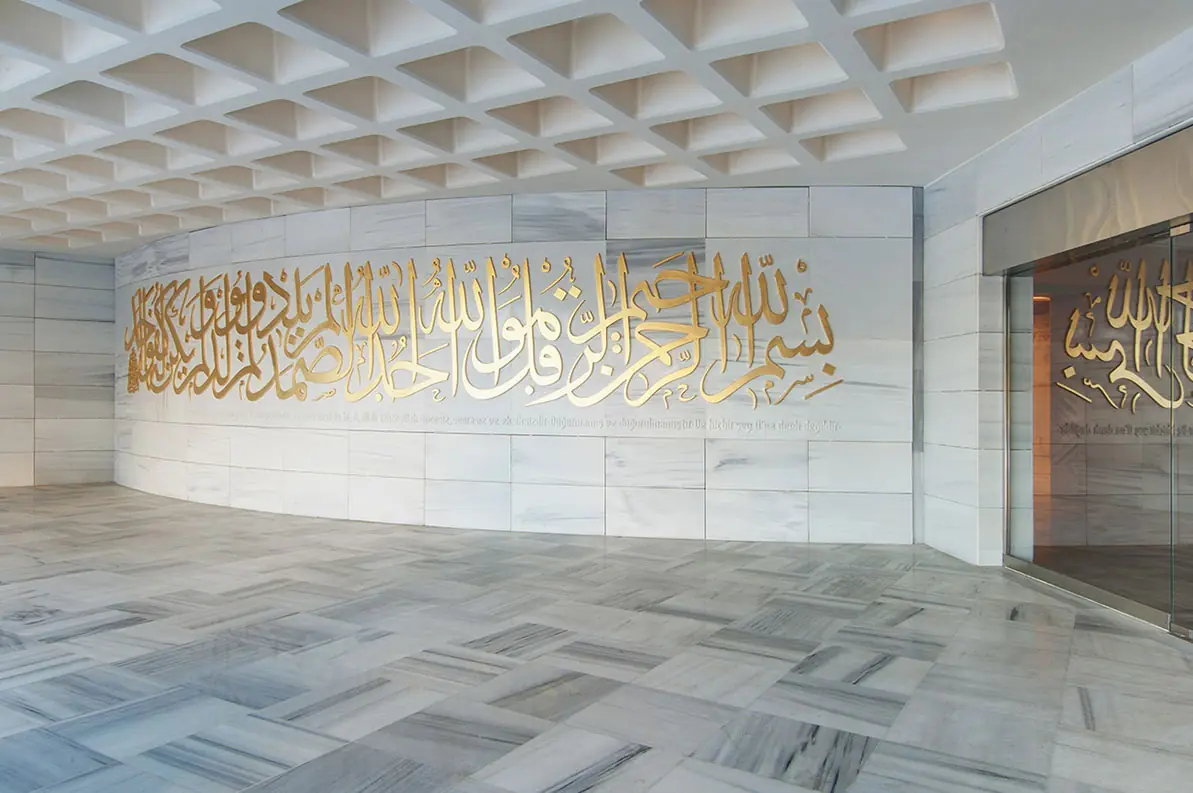
The mosque is built as a circle — the figure of the universe and of endlessness — and assembled from two hemispheres set one inside the other: the larger outer one stands for the world to come, the smaller inner one for this world. Between their rims runs a ring of light divided into eleven sections; its glass is etched with Kufic script, so daylight enters the hall already strained through writing. Inside, the dome is drawn out in rib-like sails with tall narrow windows between them, and gold vav letters are scattered across the vault — the letter through which Sufi tradition reads the whole alphabet as a single name. The building is set over a sheet of water covering half the site: it cuts the mosque off from the highway and car parks around it, and at night, when the ring between the shells is lit, the reflection completes the hemisphere into a full sphere. The materials hold one register: white marble outside and in, stainless steel, gilding on the inscriptions. There is one minaret, slender and free-standing; instead of a şerefe balcony it is girdled by a crown of metal rods.
Facts
- The design is by Adnan Kazmaoğlu, drawn in 2003; construction was completed in 2010. tr.wikipedia.org
- The mosque holds 300 people and covers about 530 m². tr.wikipedia.org
- The client was KİPTAŞ, the housing company of the Istanbul municipality; the mosque opened during Ramadan 2010. risalehaber.com
- The building consists of two interlocking hemispheres: the larger stands for the afterlife, the smaller for this world, and the circle itself is taken as the sign of the universe and eternity. risalehaber.com
- The illumination ring between the two shells is divided into eleven sections; its glass is etched with Kufic script and filters daylight into the hall. architizer.com
- The main structure is positioned over a water surface covering half the site, isolating the building from its surroundings both functionally and symbolically. architizer.com
- The complex includes a library of some 500 books, a 250-seat conference hall and a foyer. risalehaber.com
Photographs