Modern
Sancaklar Mosque
2011–2012 · Büyükçekmece
A dome-less underground mosque (2012, Emre Arolat) cut into a slope above Çekmece Lake. An austere, cave-like hall lit by slivers of daylight — Turkey's most internationally awarded modern mosque (RIBA, WAF).
- Minarets
- 1
- Built
- 2011–2012
- Architect
- Emre Arolat
- Patron
- The Sancaklar family (Sancaklar Foundation)
- District
- Büyükçekmece
History
The Sancaklar Mosque stands in Büyükçekmece on the western edge of Istanbul, about 25 km from the historic core, on a slope overlooking Çekmece Lake amid a neighbourhood of suburban housing. It was commissioned by the Sancaklar family through their foundation, who wanted a mosque for this district. The design is by Emre Arolat's practice (EAA — Emre Arolat Architecture, founded by Arolat with Gonca Paşolar); construction ran from 2011 to 2013 and the mosque opened in 2012. Sancaklar immediately became an event in world architecture: it deliberately abandons the familiar image of a mosque with a great dome and a formal façade and offers instead a radically austere, almost cave-like prayer space. The building won the ArchDaily 'Religious Building of the Year' award (2015) and the RIBA Award for International Excellence (2018), and the BBC series Civilisations called it one of the most striking religious creations of modern times.
Architecture
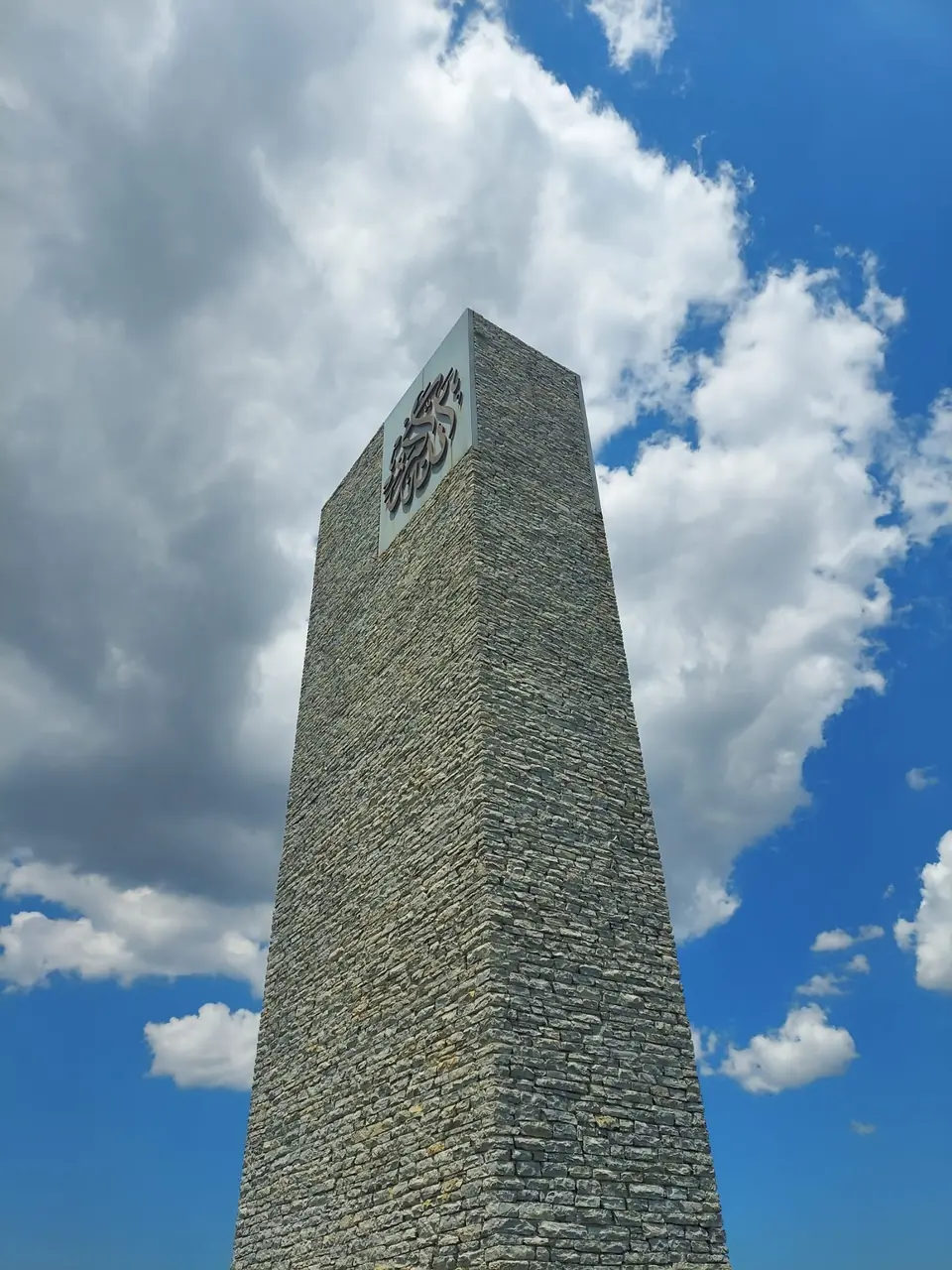
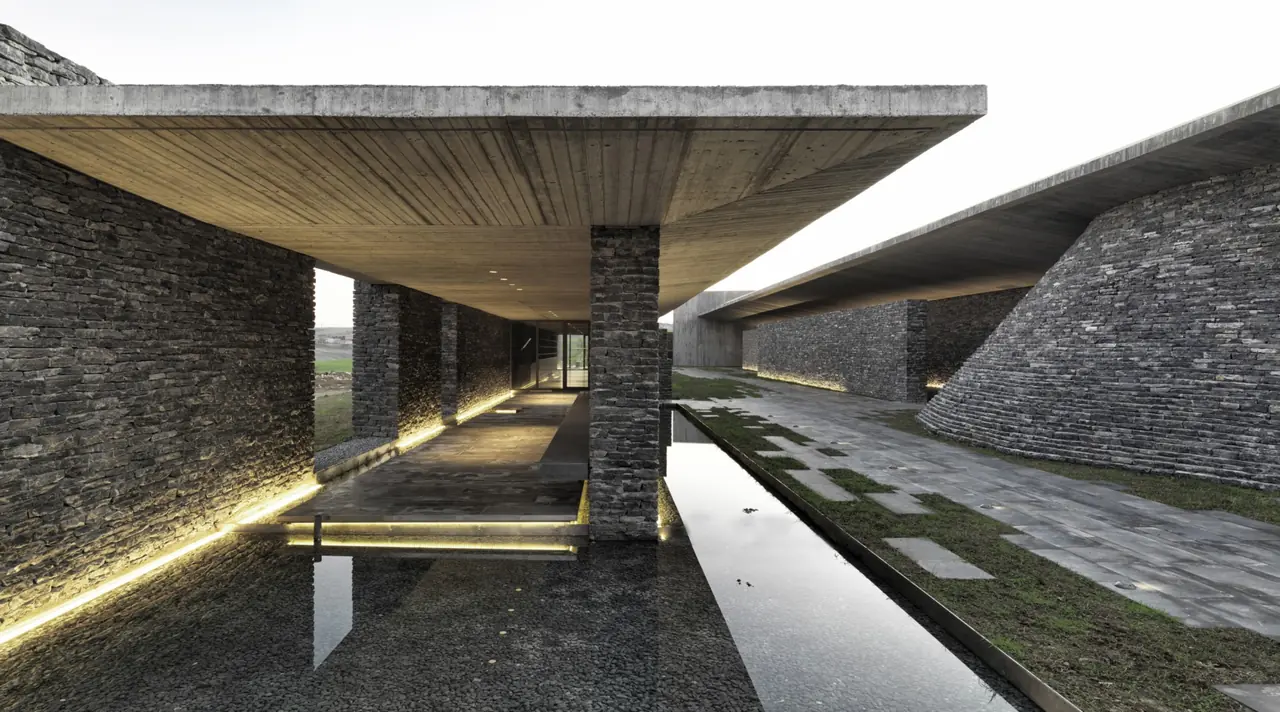
Sancaklar is set into the hillside and lies almost entirely below ground: the only visible elements are the horizontal walls of the forecourt, the terraced drystone landscape, and a single vertical mass — a minaret that reads more as a watchtower than a classical şerefe. The mosque has no dome; doing without it is the building's central architectural gesture. The prayer hall of roughly 700 m² (on a 1,300 m² site) is conceived as a simple cave-like space: you descend a stair into it, leaving the noise of the city above. Inside are rough walls of local kayrak stone, a board-marked concrete qibla wall that curves with a subtle directional break, and a narrow vertical slit for the mihrab. Light enters from above through cuts and fissures in the ceiling, falling in bands across the stone; the minbar is made of plain semi-circular stone steps. The whole architectural language is the materiality of stone, concrete and light in place of ornament and gilding.
Facts
- The mosque is deliberately built without a dome and without a formal façade — only the courtyard, drystone terraces and a vertical tower-minaret are visible from outside. en.wikipedia.org
- The architect is Emre Arolat (practice EAA — Emre Arolat Architecture); the prayer hall is about 700 m² on a 1,300 m² site. archdaily.com
- The building is almost entirely buried in a slope overlooking Çekmece Lake in Büyükçekmece, about 25 km west of Istanbul's historic core. dezeen.com
- The interior is a cave-like space: a board-marked concrete qibla wall, a narrow vertical mihrab, and daylight entering in bands through cuts in the ceiling. en.wikipedia.org
- It won the ArchDaily 'Religious Building of the Year' award (2015) and the RIBA Award for International Excellence (2018). archdaily.com
Photographs