Early Ottoman
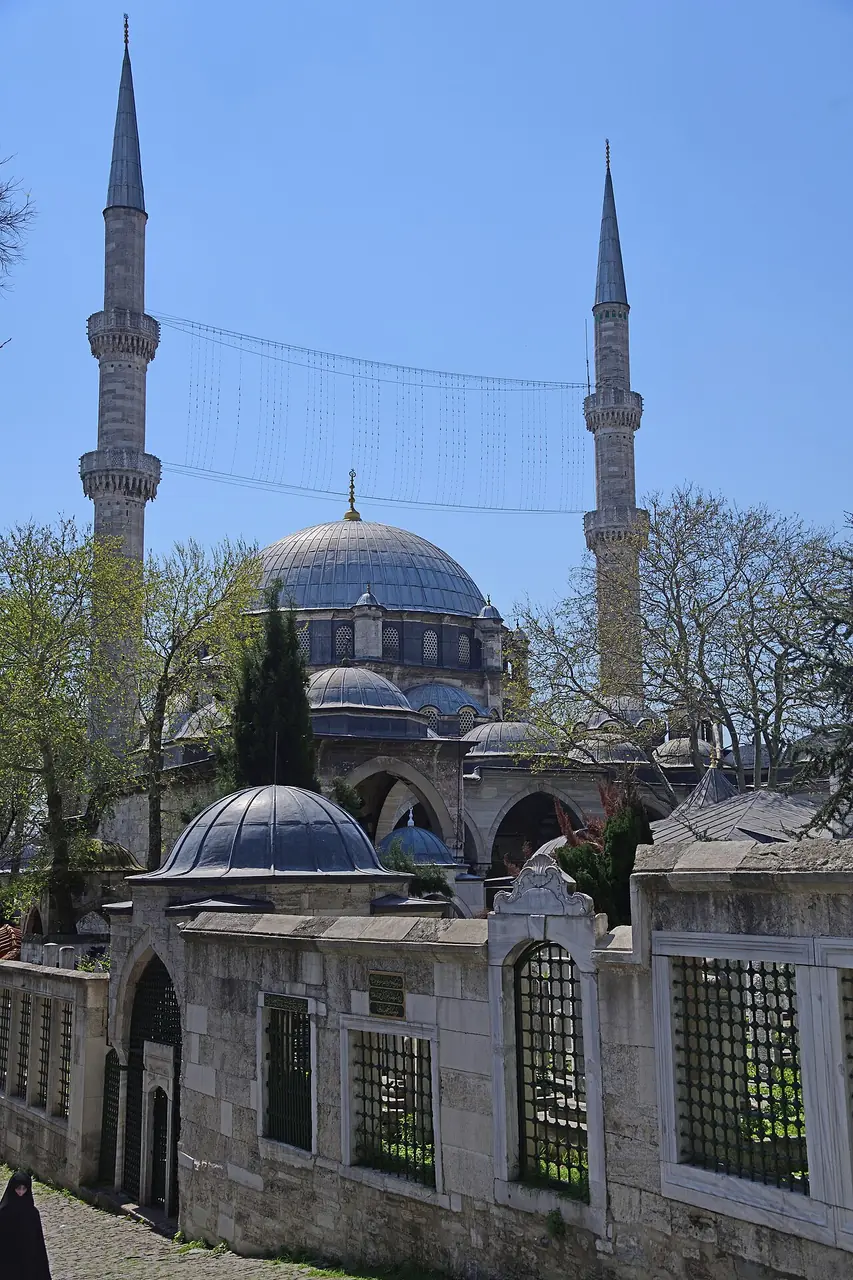
Eyüp Sultan Mosque
1458–1800 · Eyüp
The first Ottoman mosque in conquered Constantinople (1458) and burial place of Abu Ayyub al-Ansari — the Prophet's companion said to have fallen at the Arab siege of 674–78. Site of the 'girding of the sword of Osman' — the Ottoman coronation ritual. Current fabric is Selim III's 1798–1800 rebuild on an octagonal-baldaquin plan inspired by Sinan's Sokollu Mehmed Pasha at Azapkapı.
- Minarets
- 2
- Built
- 1458–1800
- Architect
- Architect unknown
- Patron
- Mehmed II (1458) & Selim III (1798–1800)
- District
- Eyüp
- rebuilt after
- Selim III demolition, 1798
History
The Eyüp Sultan Mosque was the first mosque built by the Ottomans in conquered Constantinople and is one of Turkey's most revered Islamic shrines. In 1458, only five years after the conquest, Mehmed II the Conqueror built a külliye on the site of the tomb of Abu Ayyub al-Ansari — the standard-bearer and companion of the Prophet Muhammad, said to have fallen during the Arab siege of Constantinople of 674–678. According to tradition, the location of Abu Ayyub's grave was revealed in a dream to Mehmed II's teacher Akşemseddin on the eve of the Ottoman conquest. Because of the mosque's sanctity, senior Ottoman officials and members of the dynasty were buried nearby, and the whole district grew into a vast necropolis. By the late 18th century the building was in a ruinous state from earthquake damage; in 1798 Selim III ordered everything other than the minarets to be pulled down and rebuilt. Work was completed in 1800. The mosque is also where new sultans were traditionally girded with the sword of Osman I — the Ottoman equivalent of a coronation.
Architecture
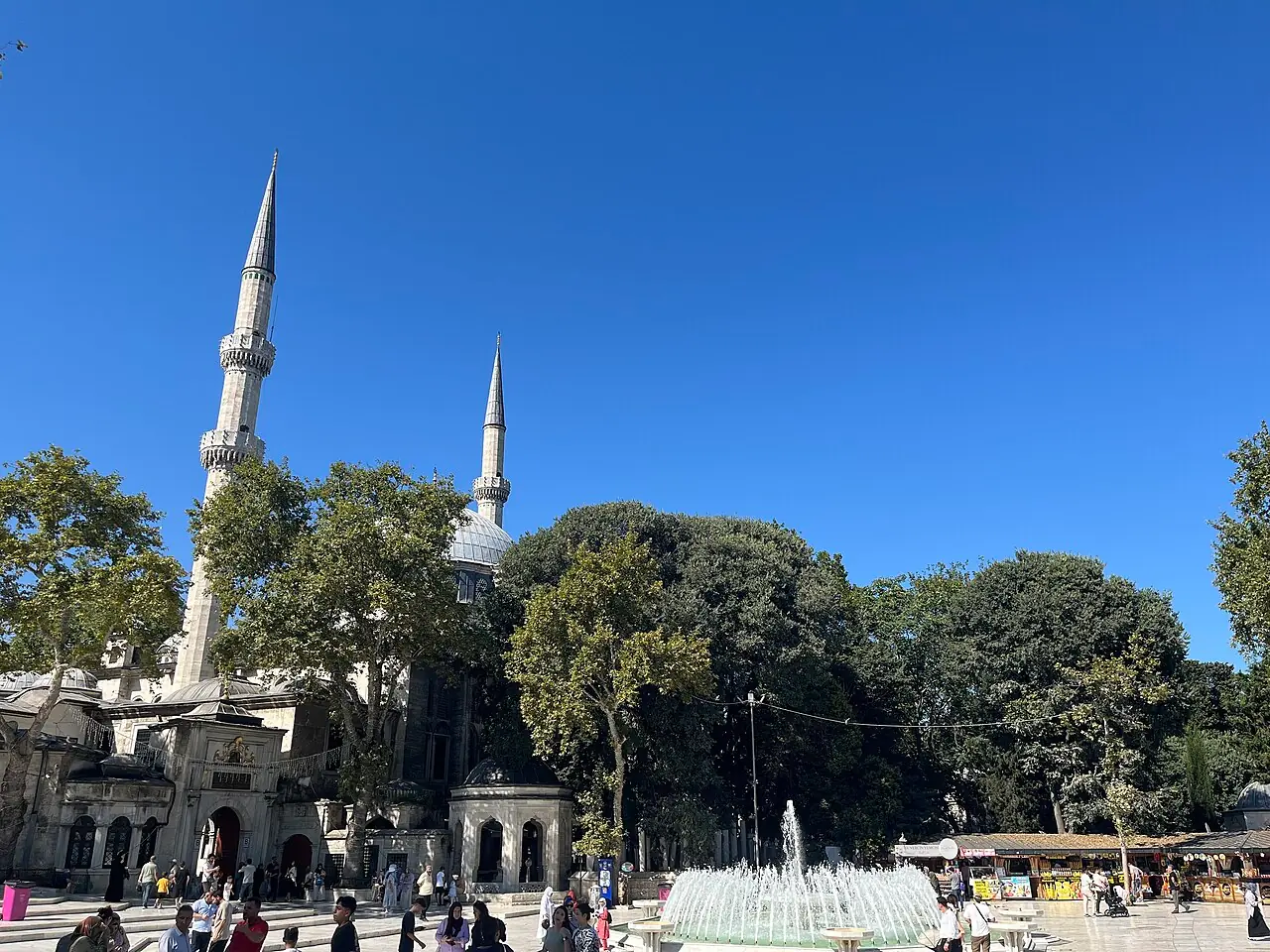
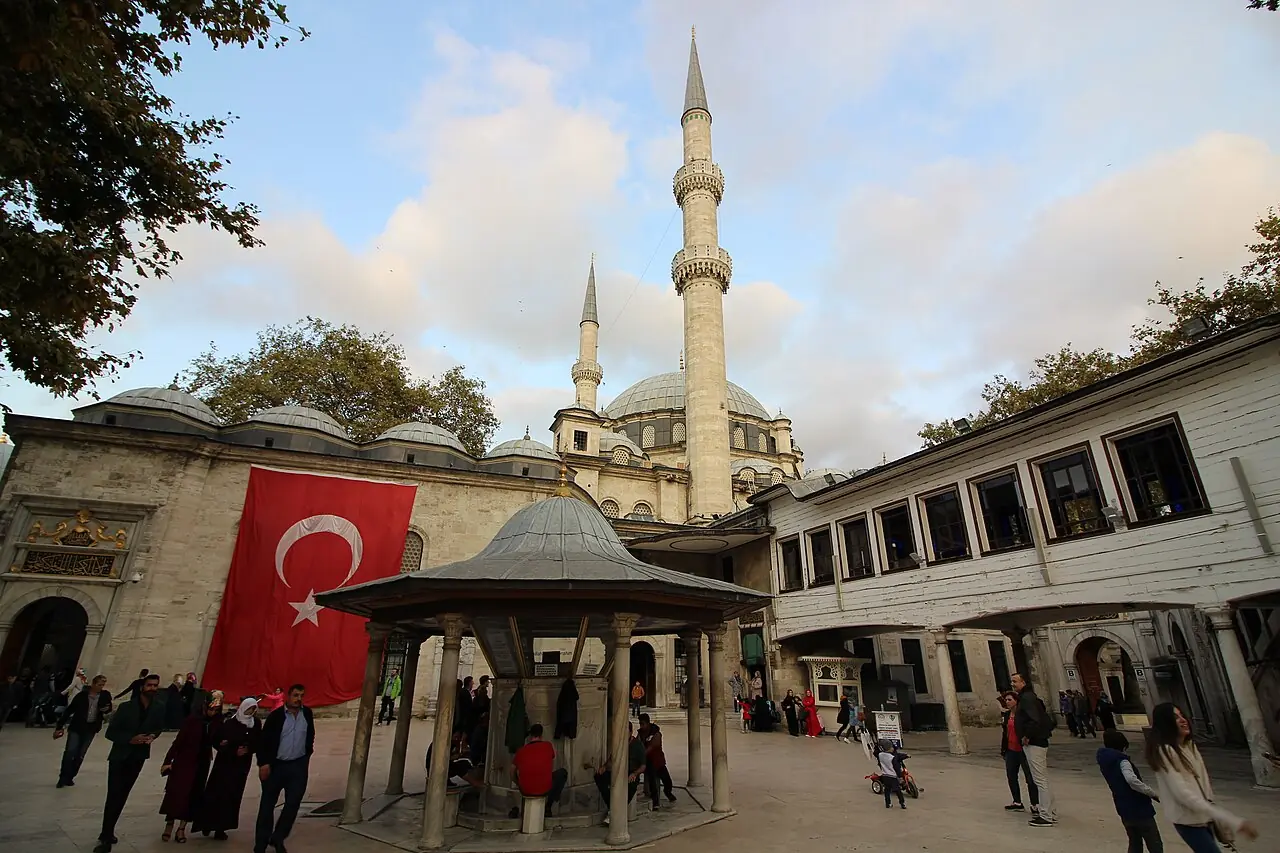
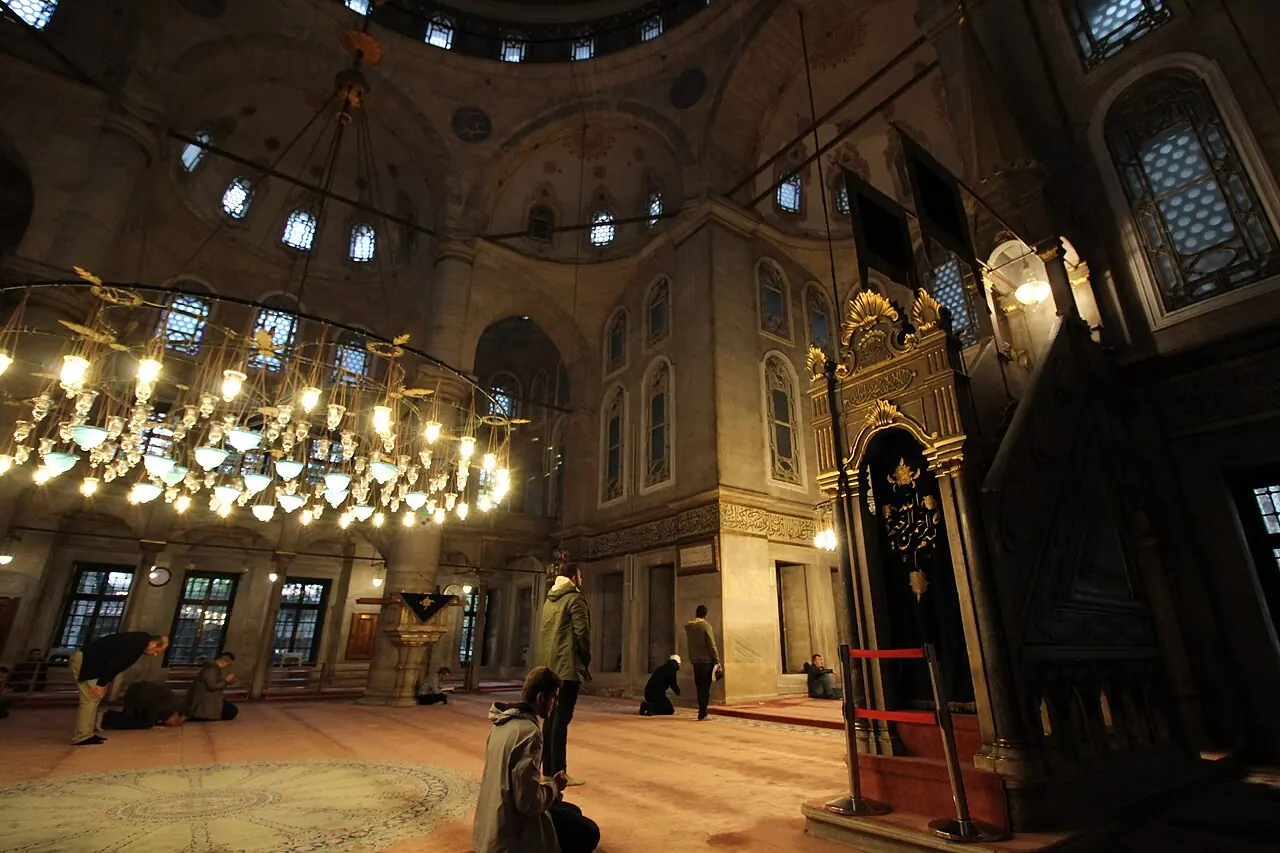
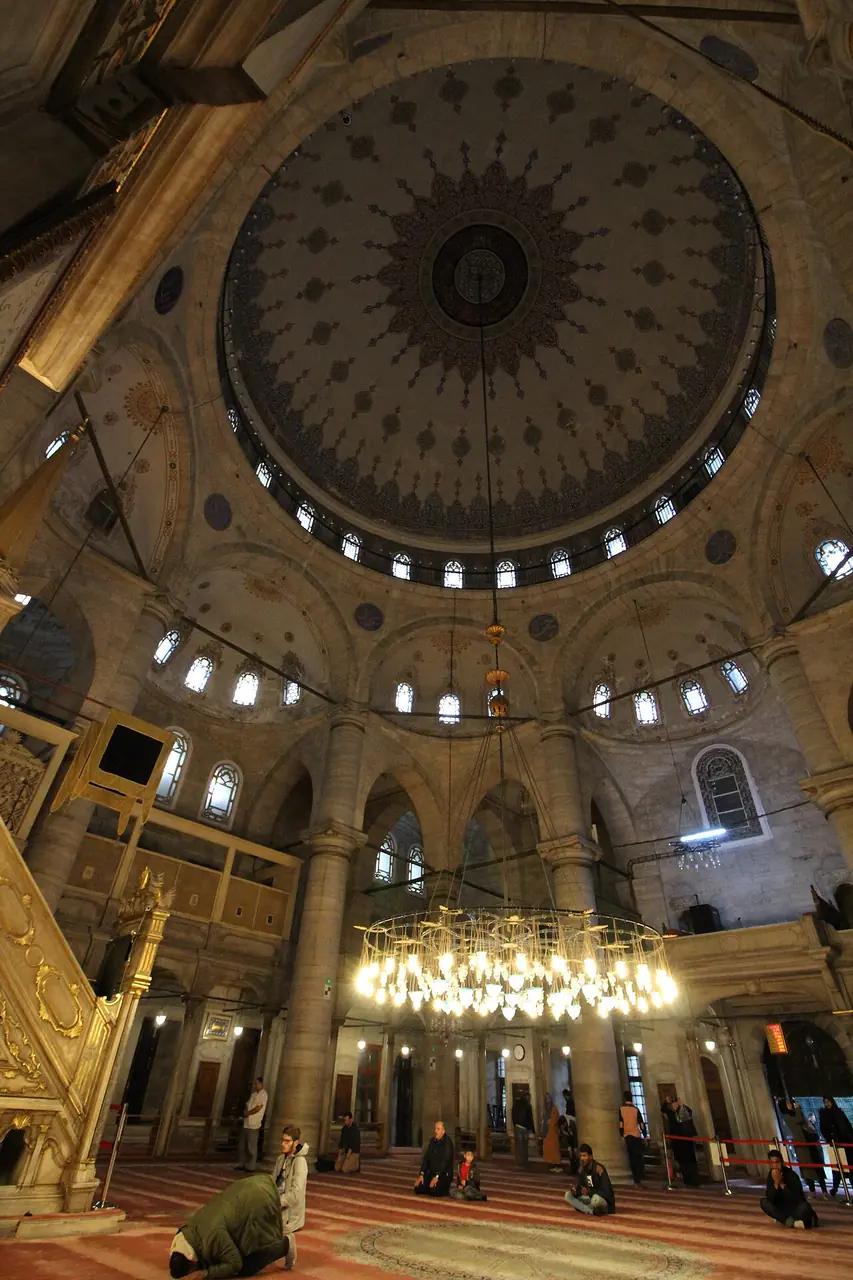
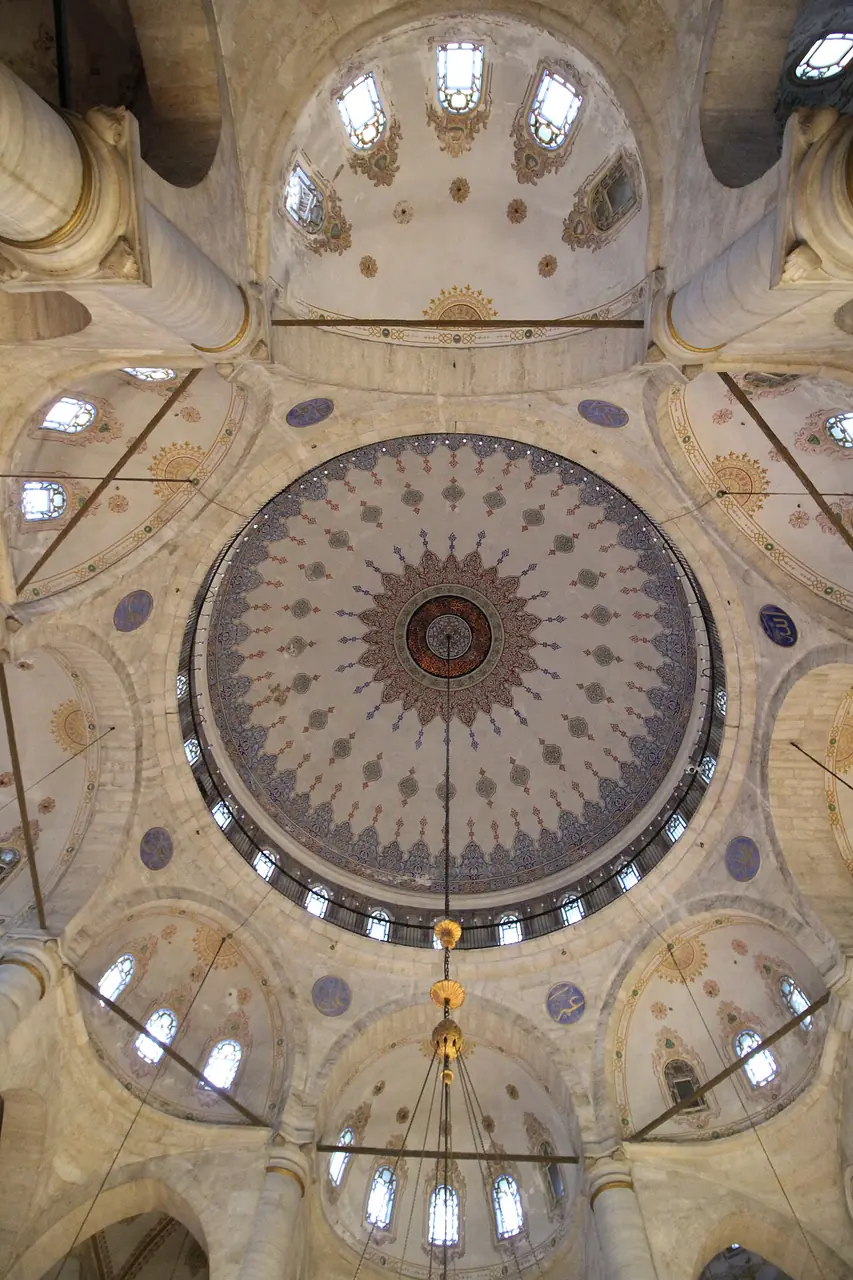
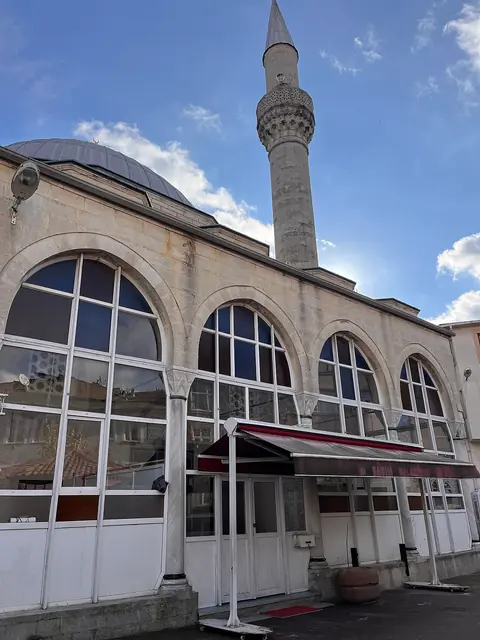
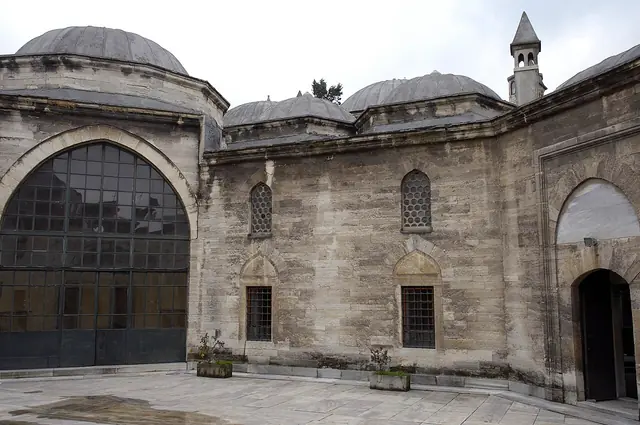
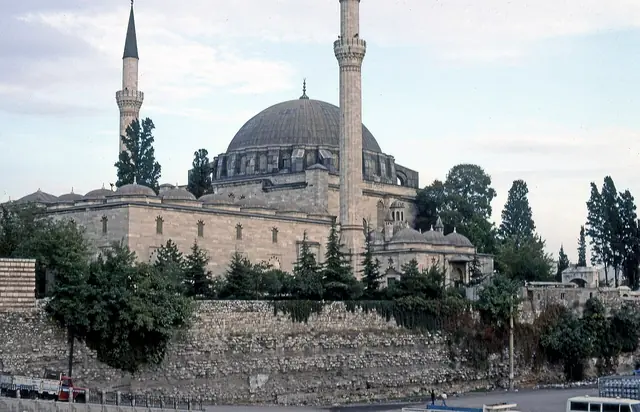
Selim III's rebuilt mosque, though late (1798–1800), remains faithful to the 16th-century Classical Ottoman style and is specifically compared to Sinan's Sokollu Mehmed Pasha Mosque at Azapkapı: a central dome carried on an octagonal baldaquin of piers, flanked by semi-domes. The two minarets, each with two balconies, survive from the earlier building. The courtyard is shaded by plane trees and centred on a fountain; beyond a lattice screen stands the main object of pilgrimage — the separate türbe of Abu Ayyub al-Ansari, whose interior is lined with exquisite 17th-century İznik tiles. By special sanction of Selim III, Western-influenced Ionic motifs and marble panels appear in the decoration without abandoning the central Ottoman plan. Around the mosque spreads the famous Eyüp cemetery on the hillside overlooking the Golden Horn — a landscape immortalised in 19th-century European painting and literature.
Facts
- First mosque built by the Ottomans in conquered Constantinople — only 5 years after the city's fall in 1453. en.wikipedia.org
- The mosque rises over the tomb of Abu Ayyub al-Ansari, the Prophet Muhammad's standard-bearer and companion, who (by tradition) died during the Arab siege of Constantinople of 674–678. en.wikipedia.org
- The location of the grave was 'revealed' in a dream to Akşemseddin, Mehmed II's teacher, on the eve of the conquest — a foundational narrative for the first imperial mosque of Istanbul. en.wikipedia.org
- This was the traditional site of the 'girding of the sword of Osman I' (kılıç alayı) — the ritual installation of each new sultan, the Ottoman equivalent of a coronation. dailysabah.com
- In 1798 Selim III ordered everything but the minarets torn down and fully rebuilt; the new mosque was completed in 1800 — one of only two total rebuilds of an Istanbul imperial mosque (alongside Fatih, 1771) in four centuries of Ottoman rule. en.wikipedia.org
Photographs