Pre-Ottoman
Kalenderhane Mosque (Church of the Theotokos Kyriotissa)
1197–1204 · Fatih / Vefa
A late-12th-century Byzantine cross-domed church (Theotokos Kyriotissa) in Vefa that keeps its 12th-century marble revetment in situ. Assigned to the Kalenderi dervishes by Mehmed II and made a mosque in 1746; it once held the earliest fresco cycle of St Francis.
- Minarets
- 1
- Built
- 1197–1204
- Architect
- Byzantine & Ottoman masters
- Patron
- Byzantine founders unknown; after 1453 assigned to the Kalenderi dervishes by Mehmed II, formally made a mosque by Hacı Beşir Ağa (1746)
- District
- Fatih / Vefa
History
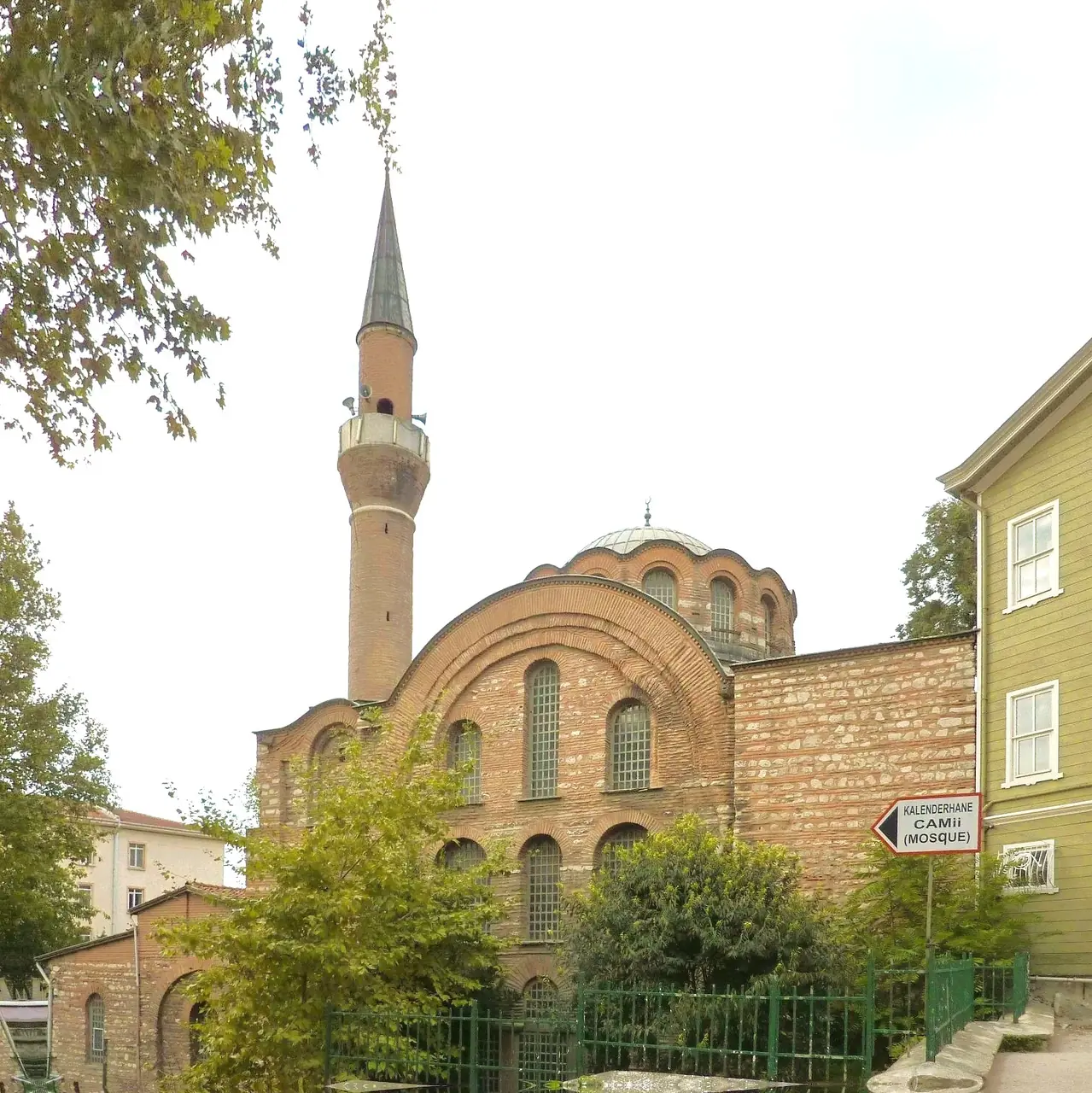
Kalenderhane is a former Byzantine church in the Vefa quarter of the Fatih district, almost certainly the church of the Theotokos Kyriotissa. The present building dates to the end of the 12th century, the last Comnenian phase (about 1197–1204), and stands over earlier structures. After the conquest of Constantinople in 1453, Mehmed II personally assigned the church to the Kalenderi dervish order, which set up a zaviye and an imaret (public kitchen) here — hence the name 'Kalenderhane.' It formally became a mosque in 1746, when Hacı Beşir Ağa (the chief black eunuch of Topkapı Palace) installed a mihrab, minbar and mahfil. During the brief Latin occupation (1204–1261) the church served as a Roman Catholic one.
Architecture
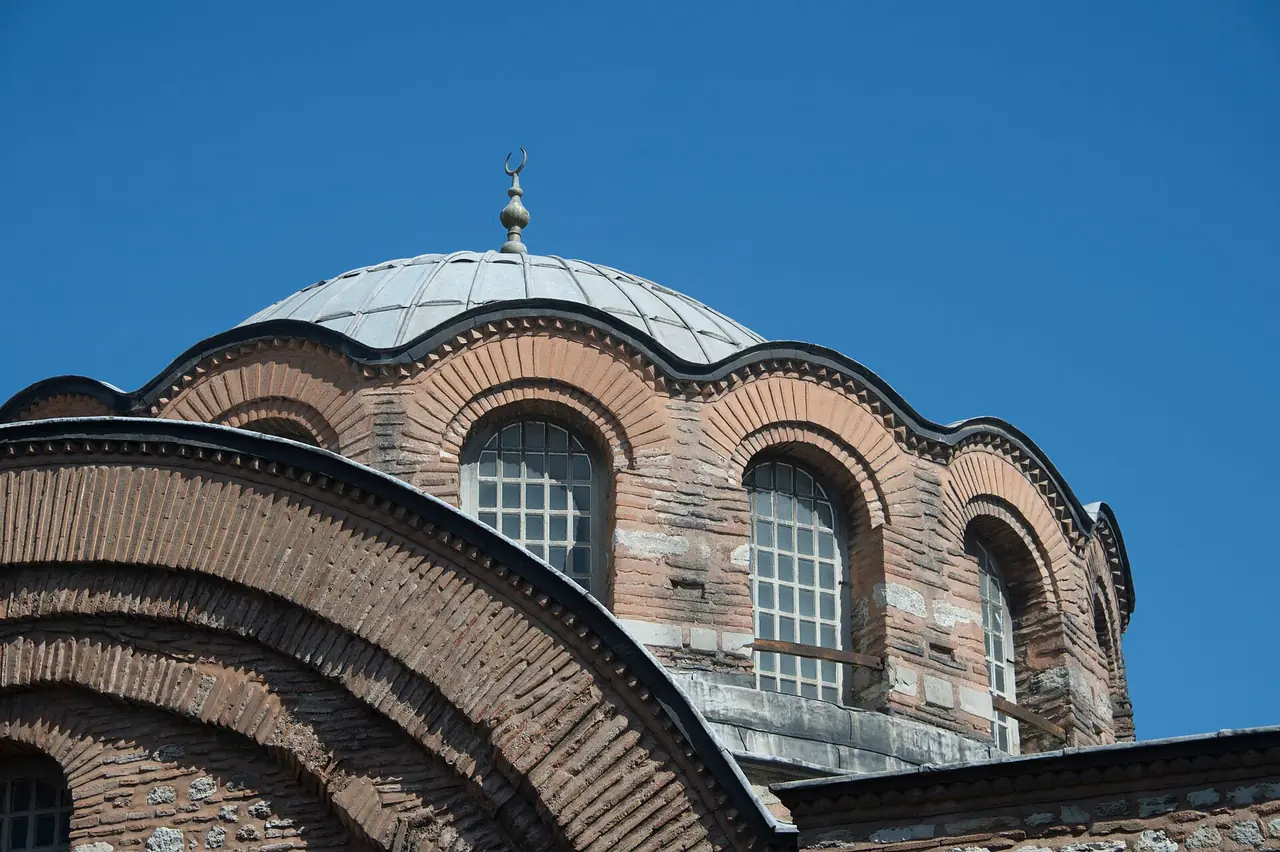
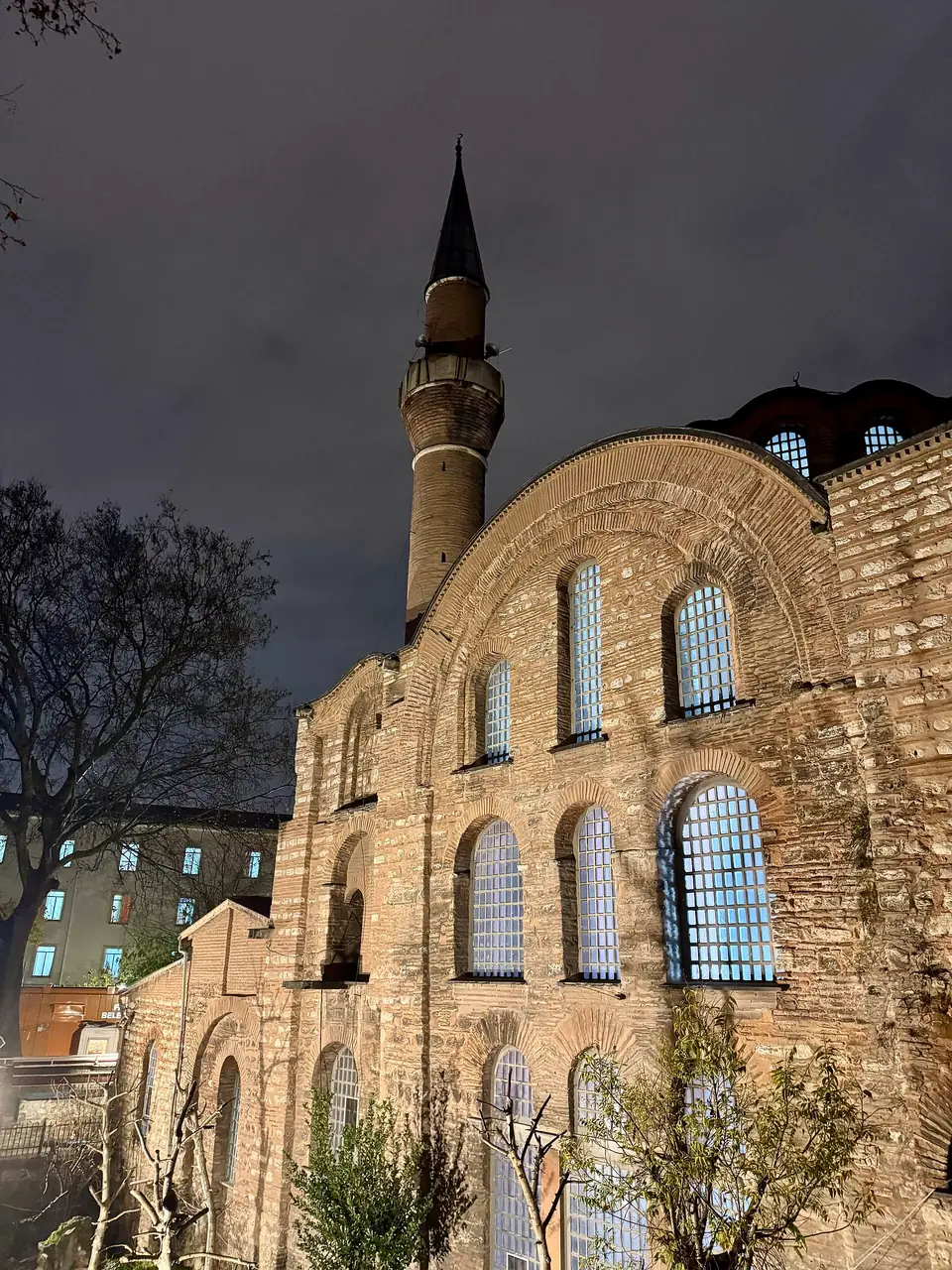
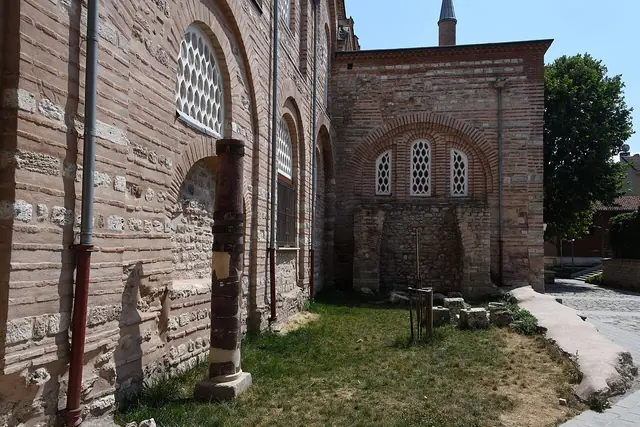
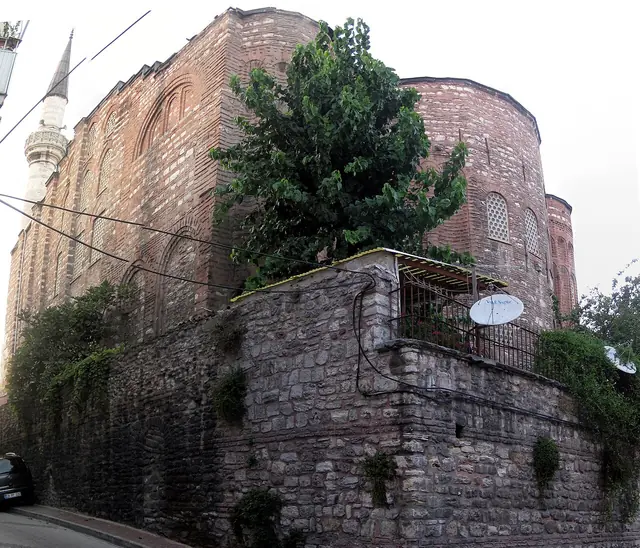
The building follows a central Greek-cross plan with deep barrel vaults over the arms and is crowned by a dome on 16 ribs; the masonry is typically Byzantine, alternating brick and stone. Kalenderhane's chief treasure is its exceptionally well-preserved 12th-century marble revetment in situ: coloured marble panels and carved frames that give a rare sense of how a rich Middle Byzantine interior looked. In the Latin period (probably the early 1250s) the southern chapel received a fresco cycle of the life of Saint Francis of Assisi — the earliest known extensive cycle of its kind (the frescoes are now in the Istanbul Archaeological Museums). The subsidiary prothesis and diakonikon chapels also survive. The present minaret was rebuilt in the 1970s restoration. The builders are unknown: neither inscriptions nor the 1966–1975 excavations yielded a name.
Facts
- The building is almost certainly the late-12th-century Byzantine church of the Theotokos Kyriotissa (Comnenian period, about 1197–1204). en.wikipedia.org
- After 1453 Mehmed II personally gave the church to the Kalenderi dervishes (zaviye and imaret), which is the origin of its name; it formally became a mosque in 1746 under Hacı Beşir Ağa. en.wikipedia.org
- A central Greek-cross plan with deep vaults and a 16-ribbed dome; the original 12th-century marble decoration survives in situ. en.wikipedia.org
- Its southern chapel holds the earliest known extensive fresco cycle of the life of Saint Francis of Assisi, painted in the Latin period (about the 1250s); the frescoes are now in the Istanbul Archaeological Museums. en.wikipedia.org
- In the 1970s the building was studied and restored to its 12th-century state by Cecil L. Striker and Doğan Kuban. en.wikipedia.org
Photographs
.jpg)
.jpg)