Pre-Ottoman
Yeraltı Mosque (Underground Mosque)
1753 · Beyoğlu / Karaköy
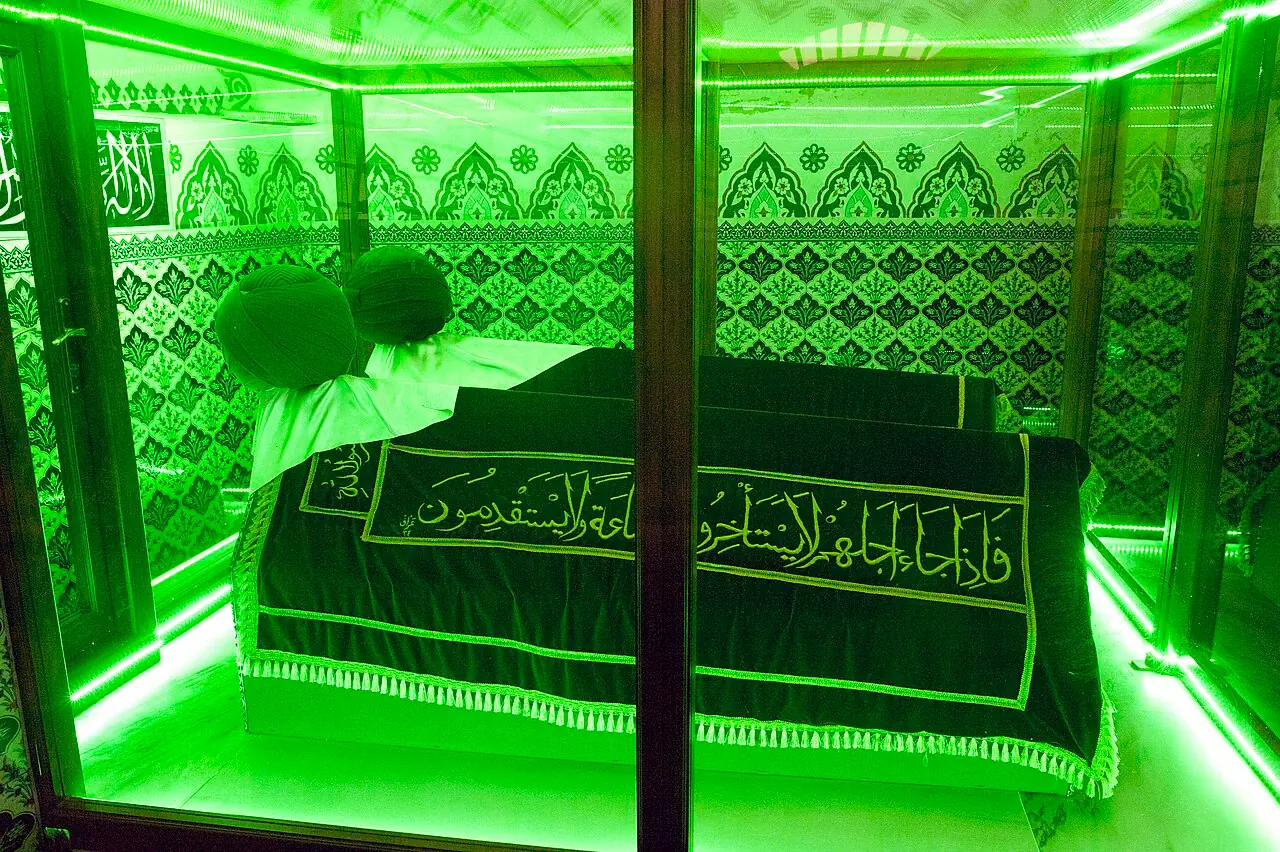
An underground mosque in the cellar of the Byzantine Galata tower that anchored the chain sealing the Golden Horn. A forest of squat piers shelters the tombs of early Arab-siege warriors.
- Built
- 1753
- Architect
- Architect unknown
- Patron
- Grand Vizier Köse Bahir Mustafa Pasha (under Mahmud I)
- District
- Beyoğlu / Karaköy
History
The Underground Mosque occupies the cellar of a Byzantine fortification tower of Galata — the so-called Kastellion, which anchored one end of the great chain that sealed the entrance to the Golden Horn. The tower and chain are recorded as early as the second Arab siege of Constantinople (717–718), and the chain was later reused by Emperor Nikephoros II Phokas against the Rus' in 969. After 1453 the Ottomans used the vault as an arsenal, cistern, and customs house. By tradition, in 1640 a dervish was shown in a dream the resting place of Muslims secretly buried here — warriors of the early Arab sieges. In the mid-18th century, Grand Vizier Köse Bahir Mustafa Pasha, under Sultan Mahmud I, turned the vault into a mosque; the works fell around the 1754 earthquake. Sources differ on the exact date of conversion (1752/1753, completed c. 1756; 1757 also circulates).
Architecture
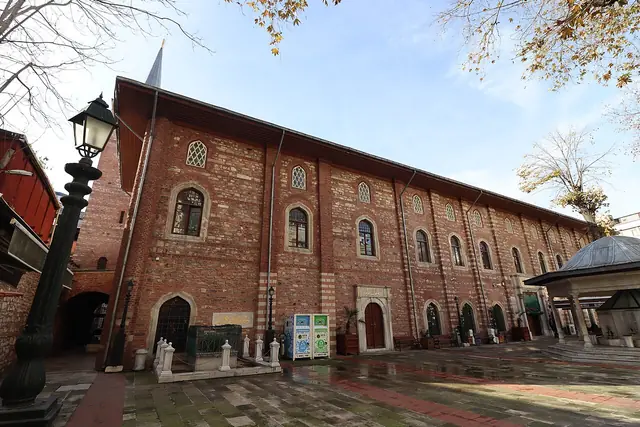
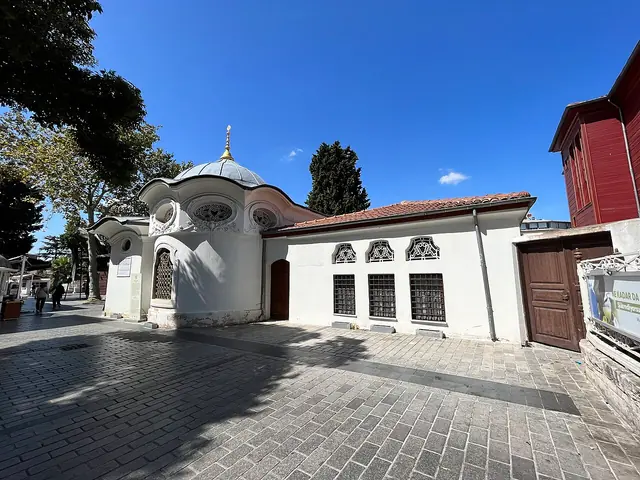
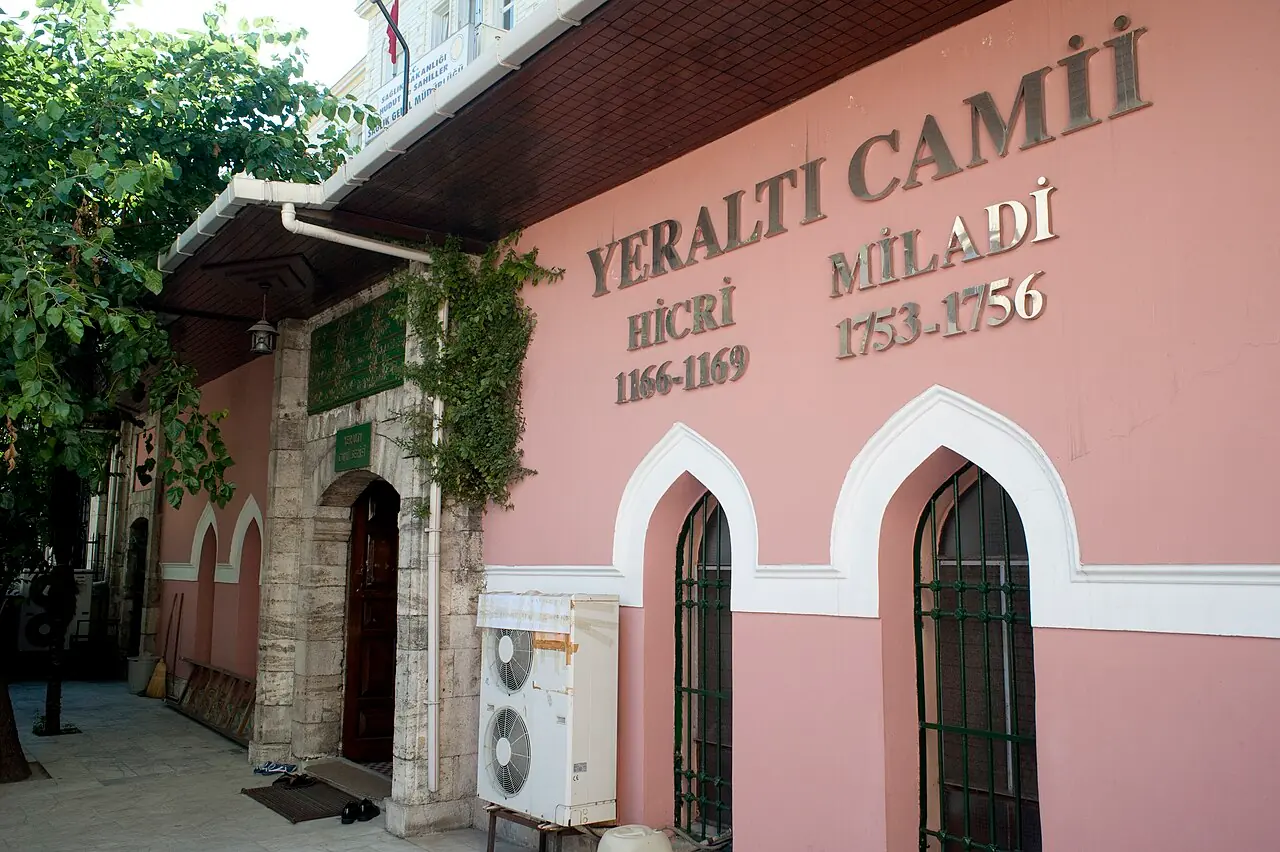
The prayer hall is a low underground space of groin vaults carried on a dense grid of squat, massive piers — a 'forest of columns' rather than a domed mosque. The Byzantine fortification walls are about 2.25 m thick, and the hall measures roughly 50 × 40 m. The ceilings are low and the lighting dim, lending an unusual atmosphere. There is no dome over the main hall; a small dome marks only the tomb chamber. The Ottomans added a mihrab, minbar, and iron-grilled, glazed enclosures around the venerated warriors' graves. From outside the mosque is barely legible — it has no prominent minaret (a minaret was once rebuilt but is no longer there) and is all but invisible from street level.
Facts
- The mosque occupies the cellar of the Byzantine Castle of Galata (Kastellion), the tower that anchored the chain sealing the Golden Horn. thebyzantinelegacy.com
- The chain and tower are recorded from the second Arab siege of Constantinople (717–718); the chain was reused against the Rus' in 969 under Nikephoros II Phokas. thebyzantinelegacy.com
- It enshrines the tombs of Muslims — warriors of the early Arab sieges; tradition holds their location was revealed to a dervish in a dream in 1640. en.wikipedia.org
- The interior is a low underground hall on a grid of squat piers with groin vaults; the walls are about 2.25 m thick. thebyzantinelegacy.com
- The vault was converted into a mosque in the mid-18th century by Grand Vizier Köse Bahir Mustafa Pasha under Sultan Mahmud I. en.wikipedia.org
Photographs