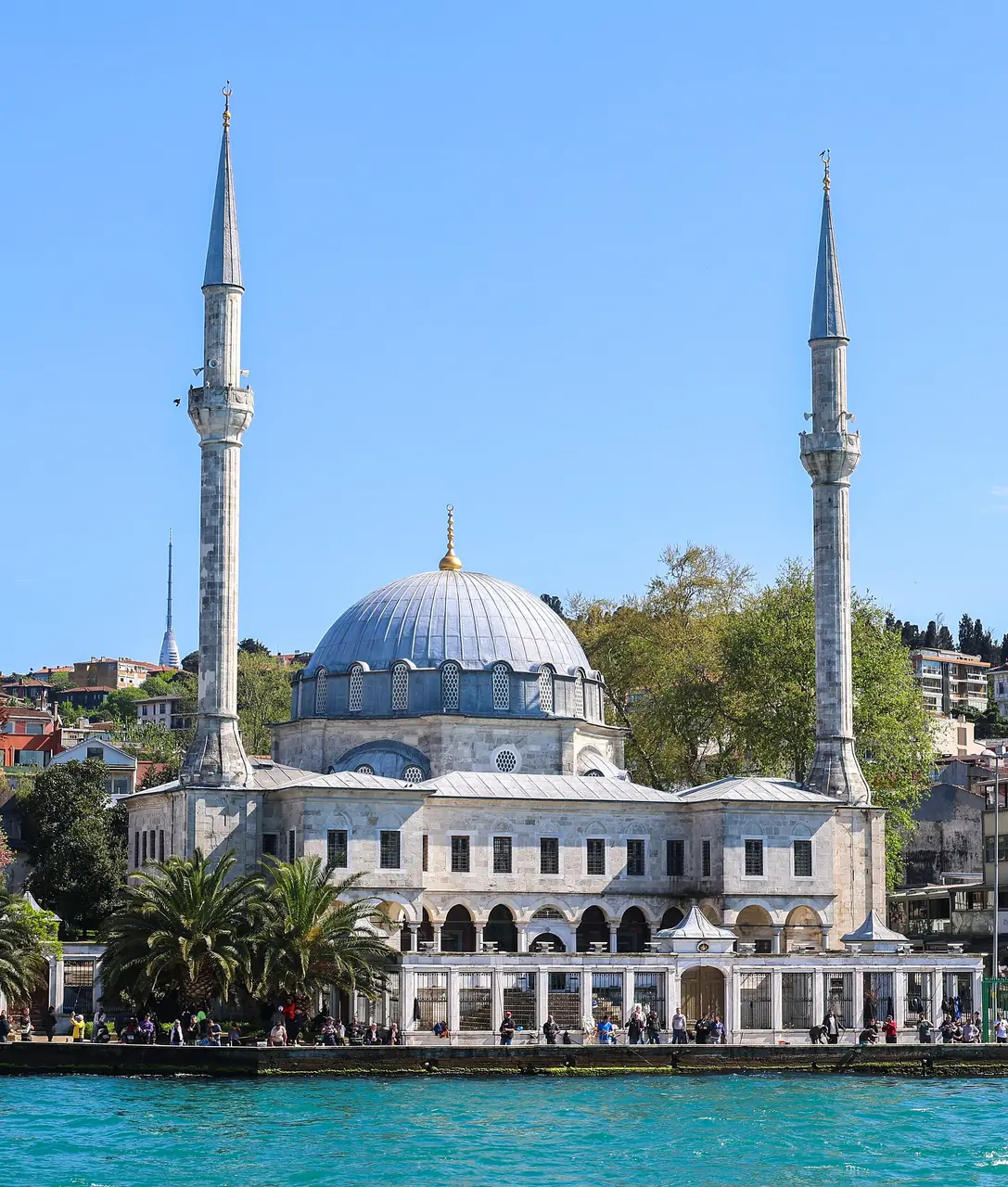
Late Ottoman / Baroque
Beylerbeyi Mosque
1777–1778 · Üsküdar / Beylerbeyi
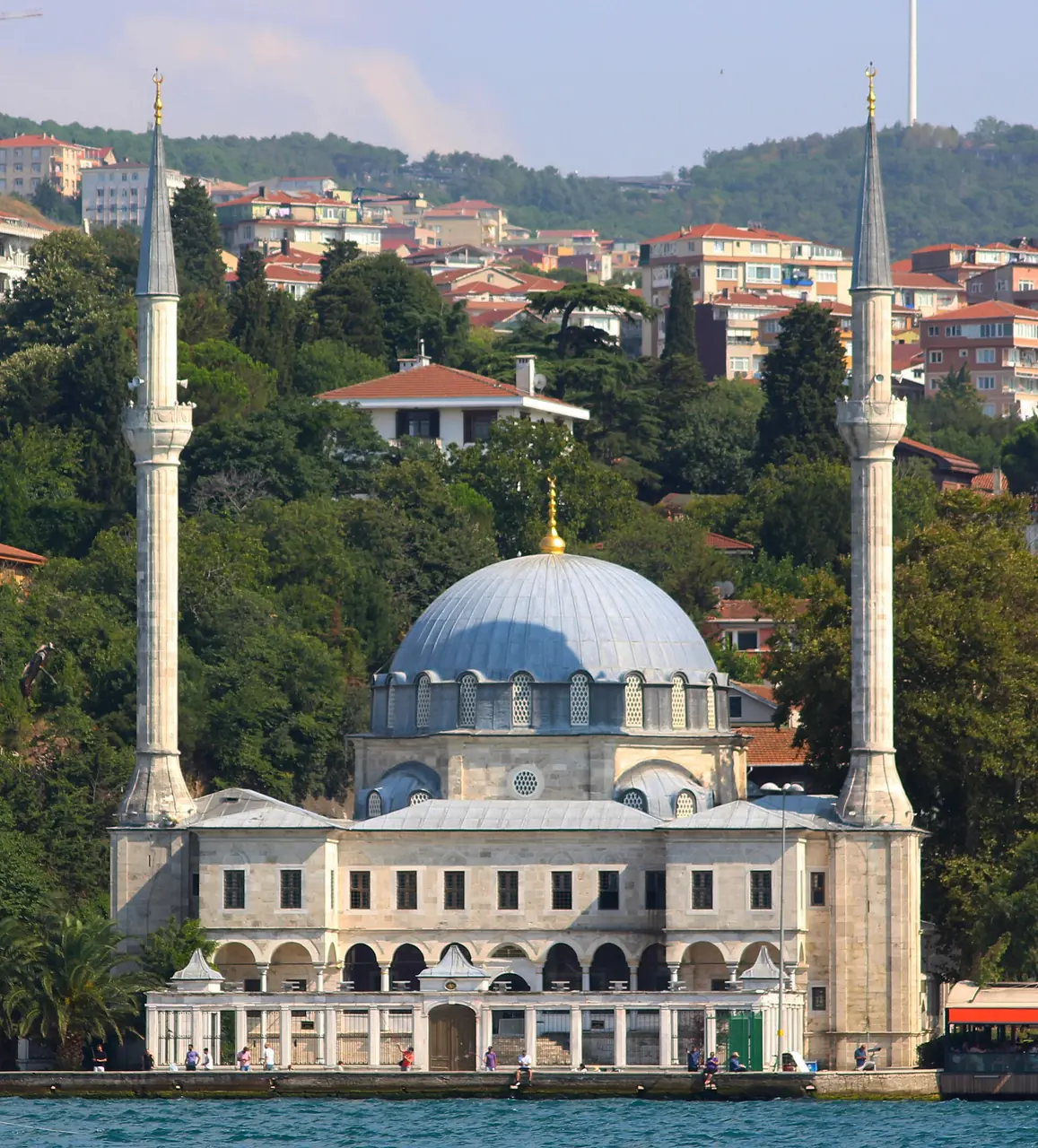
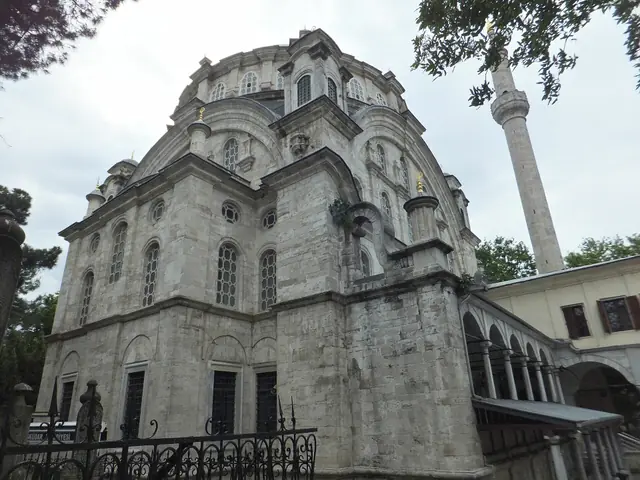
The imperial Hamid-i Evvel Mosque (1778, Abdülhamid I) on the Asian shore of the Bosphorus beside Beylerbeyi Palace — the first Istanbul mosque deliberately turned to face the water, its courtyard replaced by a two-storey pavilion with the sultan's apartment. Mature Ottoman Baroque.
- Dome
- 14.5 m
- Minarets
- 2
- Built
- 1777–1778
- Architect
- Mehmed Tahir Agha
- Patron
- Sultan Abdülhamid I, in memory of his mother Rabia Şermi Kadın
- District
- Üsküdar / Beylerbeyi
History
Beylerbeyi Mosque (officially the Hamid-i Evvel Mosque) stands on the Asian shore of the Bosphorus in the Beylerbeyi quarter, beside the later Beylerbeyi Palace. Sultan Abdülhamid I had it built in 1777–1778 (begun 3 April 1777, completed 15 August 1778) and dedicated it to his mother, Rabia Şermi Kadın. It is one of the pioneering monuments of the mature Ottoman Baroque: under Abdülhamid I ever more foreign masters were working in Istanbul and Baroque forms became firmly established in imperial architecture. Under Mahmud II a renovation of 1820–1821 reshaped parts of the building and gave it its present pair of minarets (the original had one).
Architecture
The mosque's most influential idea is its orientation to the water: waterside mosques had existed before, but Beylerbeyi was the first clearly designed to turn its main façade toward the Bosphorus shore. In place of the traditional courtyard, a wide two-storey pavilion containing an imperial apartment (hünkâr kasrı) fronts the prayer hall, fusing the sultan's lodge and the mosque into a single seaside palace-mosque. The raised prayer hall, reached by a multi-stepped staircase, is a single domed space about 14.5 m across. A U-shaped gallery with marble Corinthian-style columns, a marble mihrab under a semi-dome, and a mix of 16th–17th-century Iznik and Kütahya tiles enrich the interior. Restrained pointed arches and the symmetrical twin minarets frame the Bosphorus front in the Baroque taste of Abdülhamid I's reign. The attribution to Mehmed Tahir Ağa rests on his post as chief court architect at the time.
Facts
- The first Istanbul mosque clearly designed to present its main façade toward the water — the Bosphorus shore. en.wikipedia.org
- Built by Sultan Abdülhamid I in 1777–1778 and dedicated to the memory of his mother, Rabia Şermi Kadın. en.wikipedia.org
- The architect was probably the chief imperial architect Mehmed Tahir Ağa; an attribution to Edirneli Agop Ağa has also been suggested. en.wikipedia.org
- In place of the traditional courtyard, the façade is occupied by a wide two-storey pavilion with the sultan's apartment, facing the sea. dailysabah.com
- The present two minarets and much of the current form date to the 1820–1821 renovation under Mahmud II (the original had a single minaret); the interior mixes 16th–17th-century Iznik and Kütahya tiles. en.wikipedia.org
Photographs
.jpg)