Late Ottoman / Baroque
Nuruosmaniye Mosque
1748–1755 · Fatih / Çemberlitaş
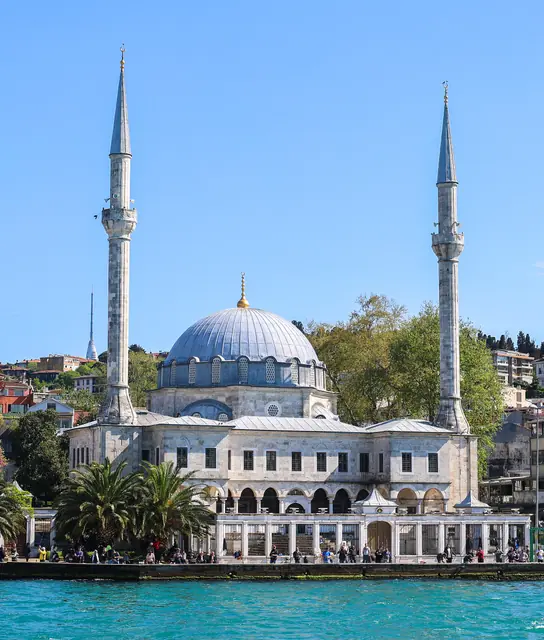
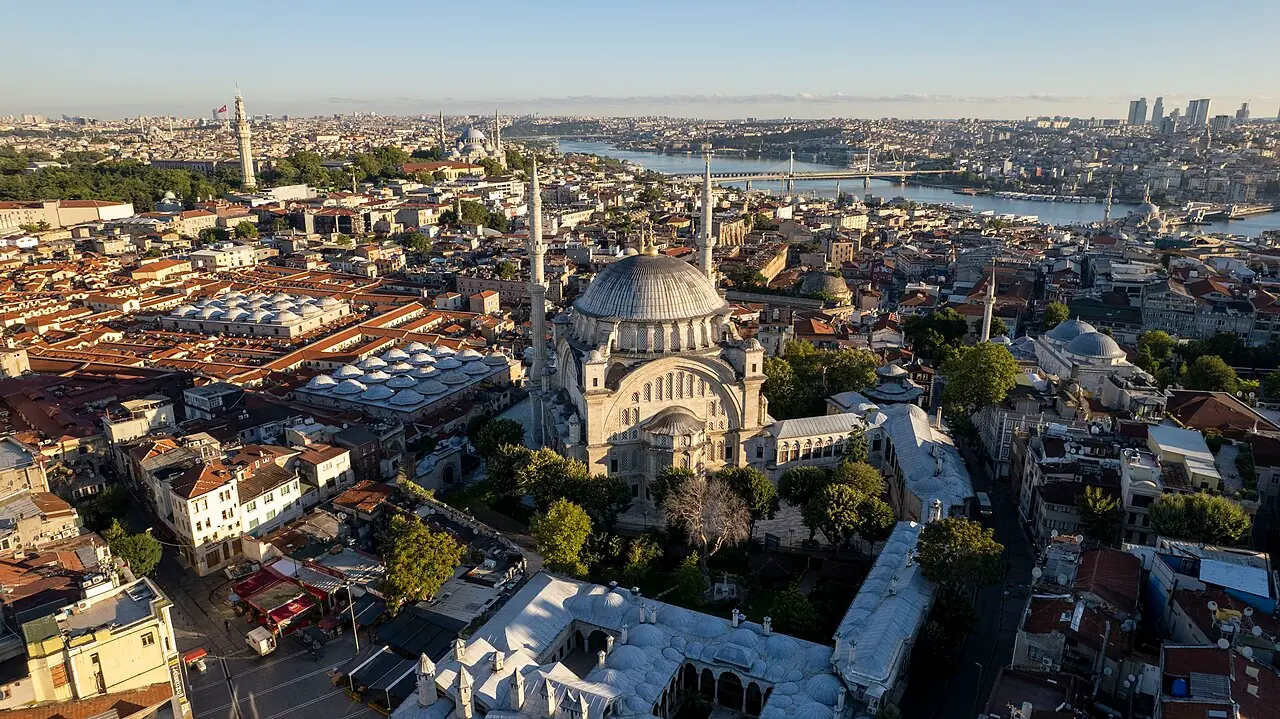
The first monumental Ottoman Baroque mosque — a deliberate break from two centuries of classical Ottoman style. Unique horseshoe (D-shaped) courtyard plan borrowed from European Baroque squares; 25.4 m single dome without semi-domes, rising directly on four light-pierced walls. First major imperial Ottoman mosque led by a non-Muslim architect (Simeon Kalfa, Greek Christian).
- Dome
- 25.4 m
- Height
- 43.5 m
- Minarets
- 2
- Built
- 1748–1755
- Architect
- Simeon Kalfa
- Patron
- Mahmud I & Osman III
- District
- Fatih / Çemberlitaş
History
The Nuruosmaniye Mosque ('The Light of Osman') is the first monumental example of Ottoman Baroque and a pivotal break from two centuries of classical Ottoman style. Construction began in 1748 under Sultan Mahmud I and was completed in 1755 by his brother and successor Osman III — whose name the finished mosque bears. The chief architect was the Greek Christian Simeon Kalfa, the first non-Muslim ever to lead a major imperial Ottoman mosque project. The complex sits in the Çemberlitaş district, directly at the gate of the Grand Bazaar and raised over a Byzantine cistern. The külliye includes a madrasa, imaret, library, public fountain (sebil), and the mausoleum of Şehsüvar Sultan, mother of Osman III. In 2016 the complex was added to Turkey's UNESCO World Heritage Tentative List. The mosque marks a deliberate rejection of the classical 'central dome + four semi-domes' scheme in favour of European Baroque vocabulary — scrolled consoles, curved façades, round-headed arches, and pilasters.
Architecture
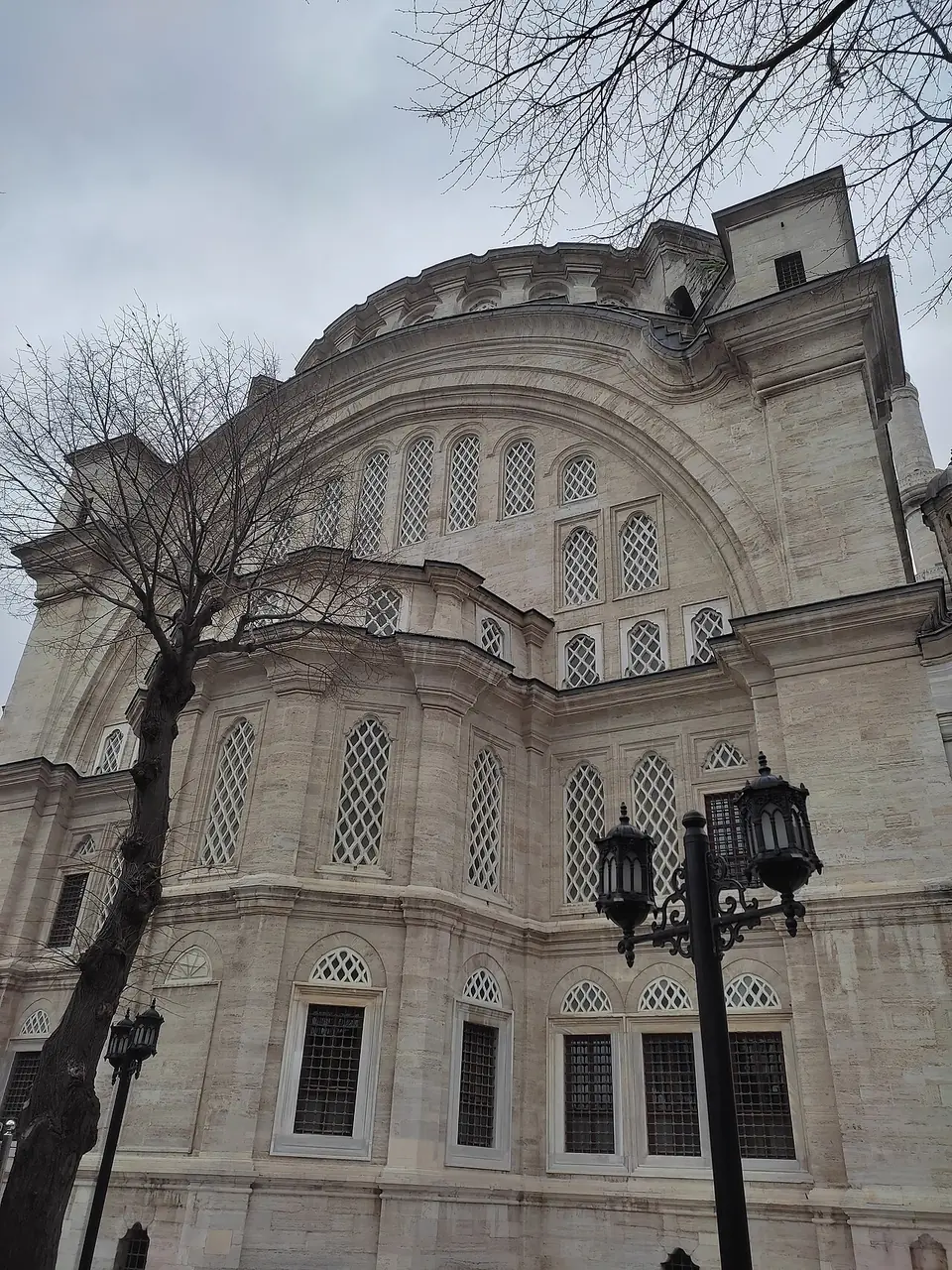
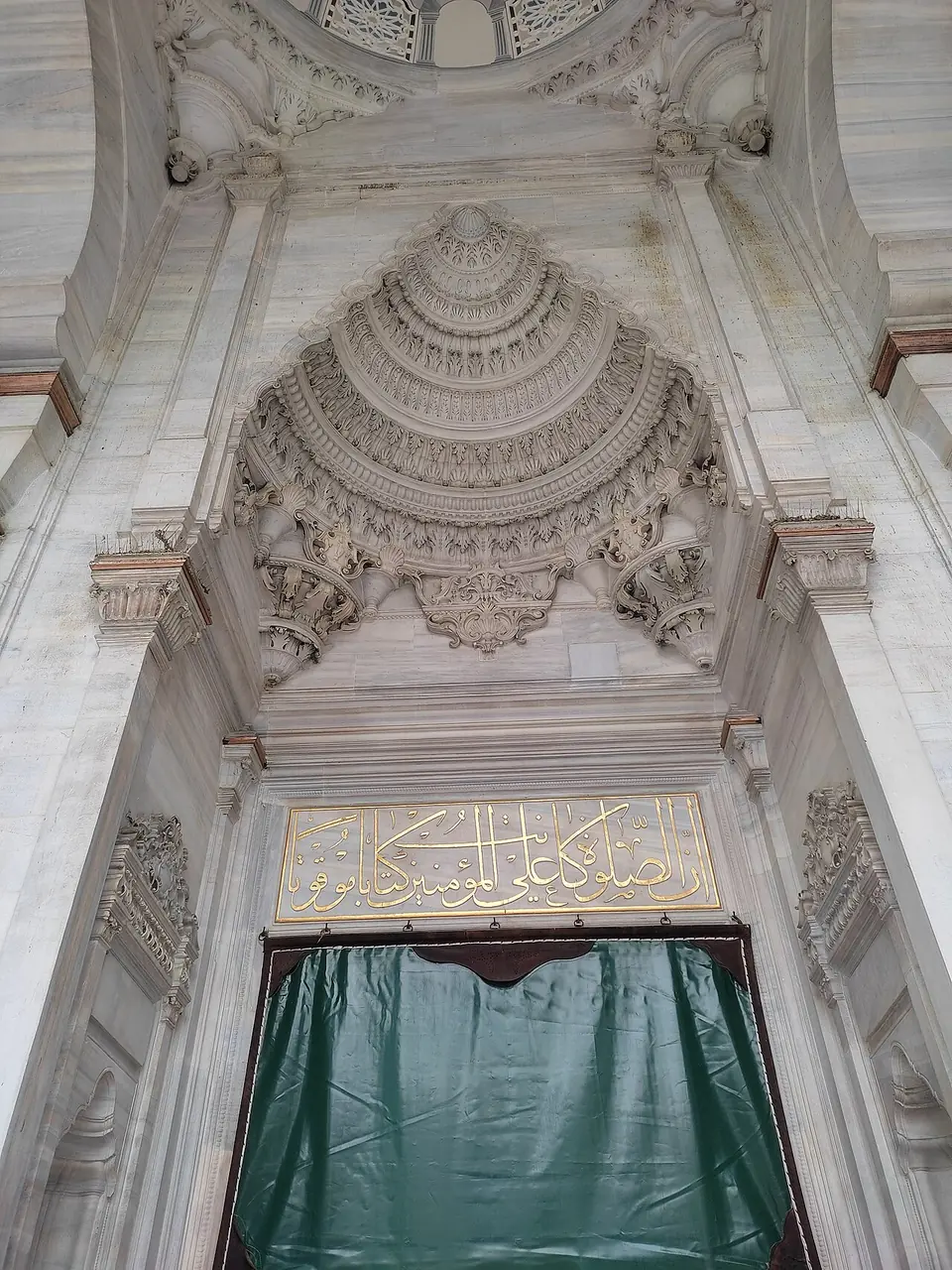
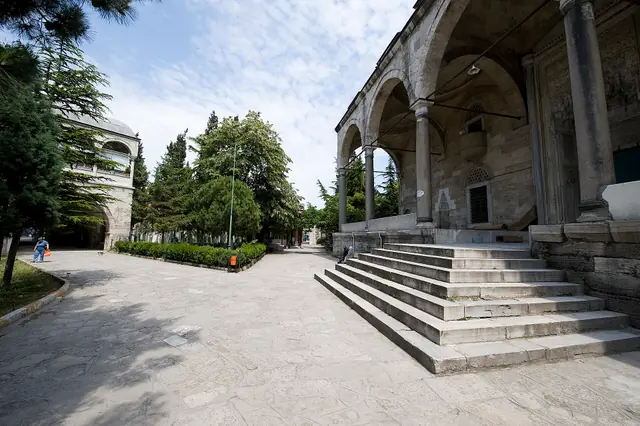
The prayer hall is covered by a single dome 25.4 m in diameter and 43.5 m high — the third-largest historic dome in Istanbul after Hagia Sophia and Süleymaniye. Unlike Sinan's classical scheme, there are no semi-domes; the dome rests directly on four massive arched walls pierced by dozens of windows (32 in each of the four pendentives), creating the halo of light that gives the mosque its name. Two minarets with two balconies each. The most distinctive feature of the complex is its courtyard, which breaks with the rectangular Ottoman tradition in favour of a horseshoe — a D-shaped plan unique in Ottoman architecture and directly borrowed from European Baroque squares. The façades are richly decorated with motifs never before used in Ottoman building: scrolls, shell-crests, cable and round mouldings, undulating cornices, concave-convex façade movement, round arches, engaged pilasters, and fluted capitals. The stone carving shows the influence of Western European Baroque engravings, which were widely circulated at Mahmud I's court.
Facts
- First monumental example of Ottoman Baroque — a pivotal break from two centuries of classical Ottoman style. en.wikipedia.org
- Chief architect Simeon Kalfa was a Greek Christian — the first non-Muslim ever to lead a major imperial Ottoman mosque project. en.wikipedia.org
- The dome is 25.4 m in diameter and 43.5 m high — the third-largest historic dome in Istanbul after Hagia Sophia (31.87 m) and Süleymaniye (26.5 m). en.wikipedia.org
- The courtyard has a horseshoe (D-shaped) plan — unique in Ottoman architecture and directly borrowed from European Baroque squares. en.wikipedia.org
- Begun in 1748 by Mahmud I but completed in 1755 by his brother and successor Osman III — whose name gave the mosque its title 'Light of Osman'. visit.istanbul
Photographs