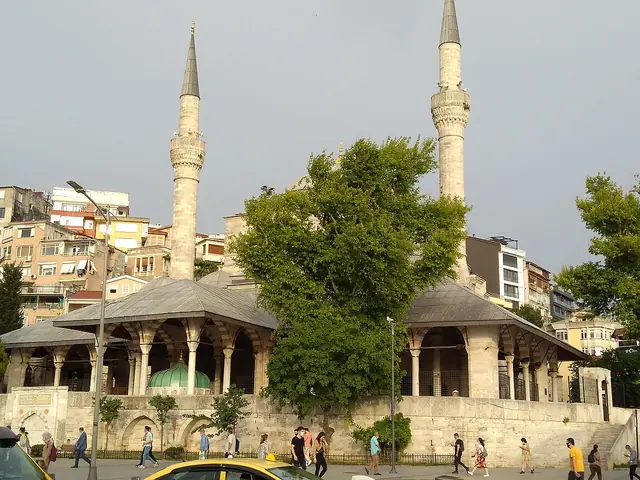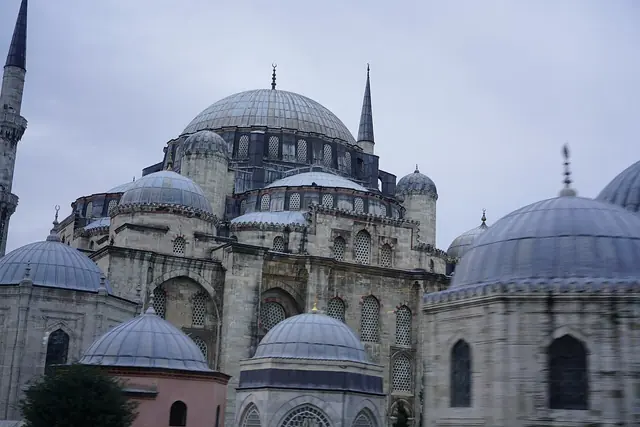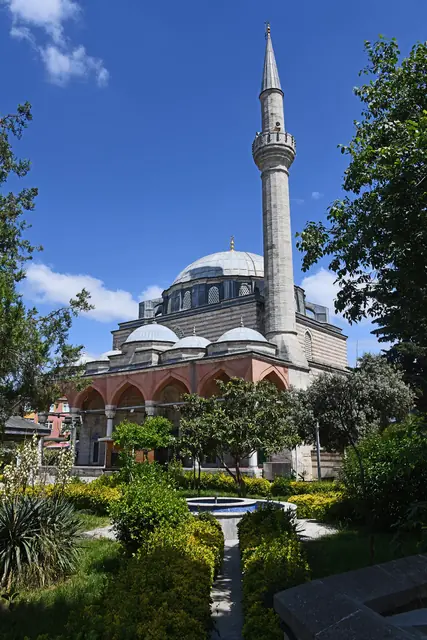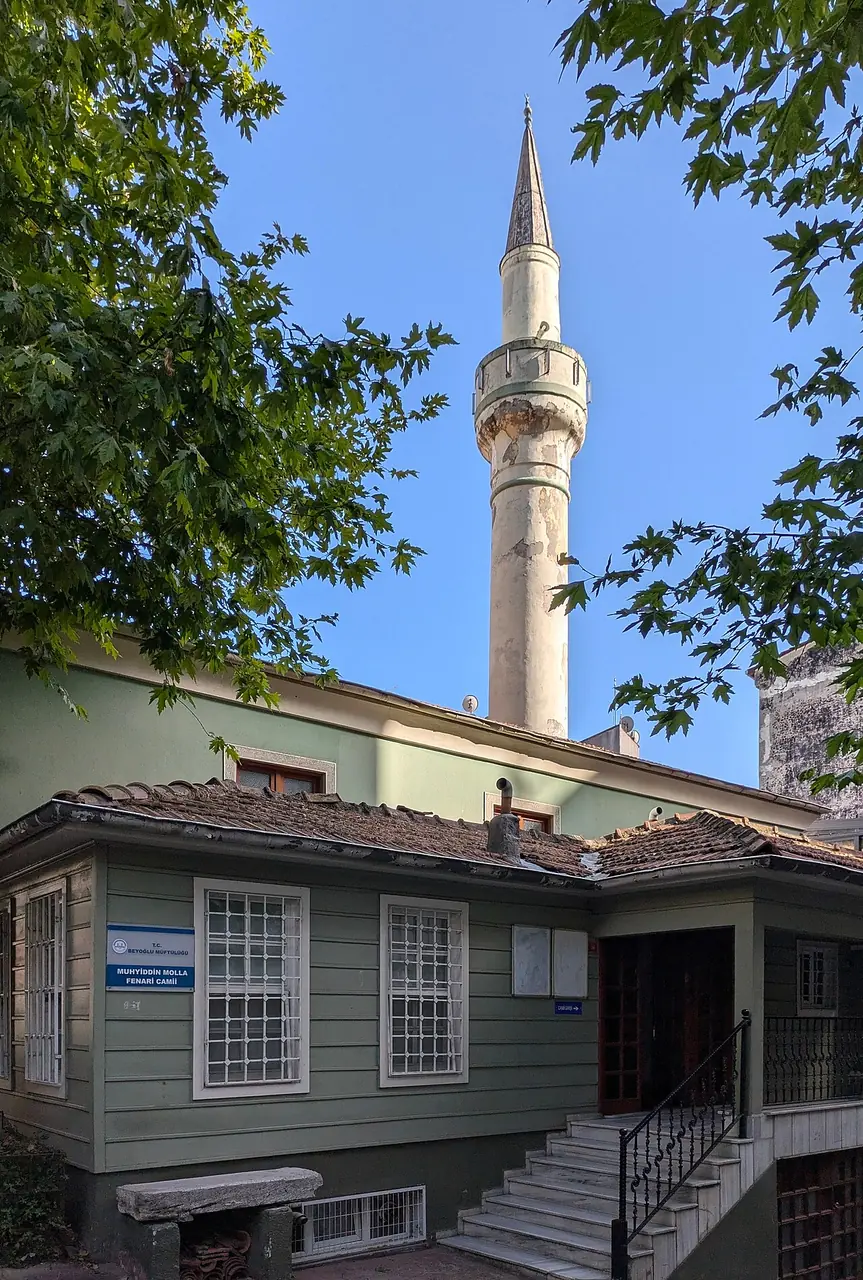
Sinan / Classical
Çukurcuma Mosque (Muhyiddin Molla Fenari)
1541–1547 · Beyoğlu / Çukurcuma
Small neighbourhood mahalle mosque in Beyoğlu — a rare Sinan commission on the Galata side of the Golden Horn, designed for an influential şeyhülislam with a lineage going back to the first chief mufti of the Ottoman Empire.
- Minarets
- 1
- Built
- 1541–1547
- Architect
- Mimar Sinan
- Patron
- Fenerizade Şeyhülislam Muhyiddin Mehmed Efendi
- District
- Beyoğlu / Çukurcuma
History
The Muhyiddin Molla Fenari Mosque, commonly known as Çukurcuma Mosque, was built between 1541 and 1547 in the Çukurcuma neighbourhood of Beyoğlu by order of Şeyhülislam Muhyiddin Mehmed Efendi (Fenerizade) — a third-generation descendant of Molla Fenari, the first şeyhülislam of the Ottoman Empire. The architect was Mimar Sinan, during his early tenure as chief court architect. The patron died the following year (1548) and is buried in Eyüpsultan. The building has been repeatedly altered after neighbourhood fires, and its original 16th-century fabric survives only in part.
Architecture
Çukurcuma Mosque belongs to the group of small neighbourhood (mahalle) mosques Sinan designed for mid-ranking patrons rather than for the sultan. It is a simple rectangular prayer hall with a single minaret and no monumental dome. Unlike Sinan's imperial commissions, here he worked with tight budgets and vernacular techniques: brick-and-stone masonry, timber roofing, and modest decoration. The mosque sits in the dense urban fabric of historic Beyoğlu — unusual in Sinan's time, when most Ottoman mosques were built in traditionally Muslim quarters of the old walled city.
In Sinan's evolution
Sinan's early mimarbaşı phase (1541–1547), contemporaneous with Şehzade Mosque (1543–48). Represents the 'small scale' pole of his output — neighbourhood mosques for mid-level patrons, where he worked with vernacular techniques and tight budgets rather than imperial monumentality. Important as evidence that Sinan's early work was not limited to imperial commissions.
Sinan Tree →Facts
- The patron was a third-generation descendant of Molla Fenari, the first şeyhülislam (chief mufti) of the Ottoman Empire. gezibilen.com
- One of Sinan's rare early commissions on the Galata/Beyoğlu side — built before the district became predominantly Muslim. gezibilen.com
- Located in the Çukurcuma neighbourhood made famous by Orhan Pamuk's Museum of Innocence — the historic quarter grew up around this mosque. letstraveltoturkiye.com
- Belongs to Sinan's early period (1541–1547) — contemporary with Şehzade Mosque but in a completely different scale and typology. gezibilen.com
- Patron Muhyiddin Mehmed Efendi died in 1548, shortly after the mosque's completion; his tomb is in Eyüpsultan. gezibilen.com