Sinan / Classical
Şehzade Mosque
1543–1548 · Fatih / Şehzadebaşı
First fully four-way symmetric semi-dome plan (central dome + 4 semi-domes) in Istanbul — a structural template that defined Ottoman imperial mosque architecture for over a century and was directly copied by the Blue Mosque, Yeni Cami, and others.
- Dome
- 18.42 m
- Height
- 37 m
- Minarets
- 2
- Built
- 1543–1548
- Architect
- Mimar Sinan
- Patron
- Suleiman the Magnificent (in memory of his son Şehzade Mehmed, died 1543)
- District
- Fatih / Şehzadebaşı
History
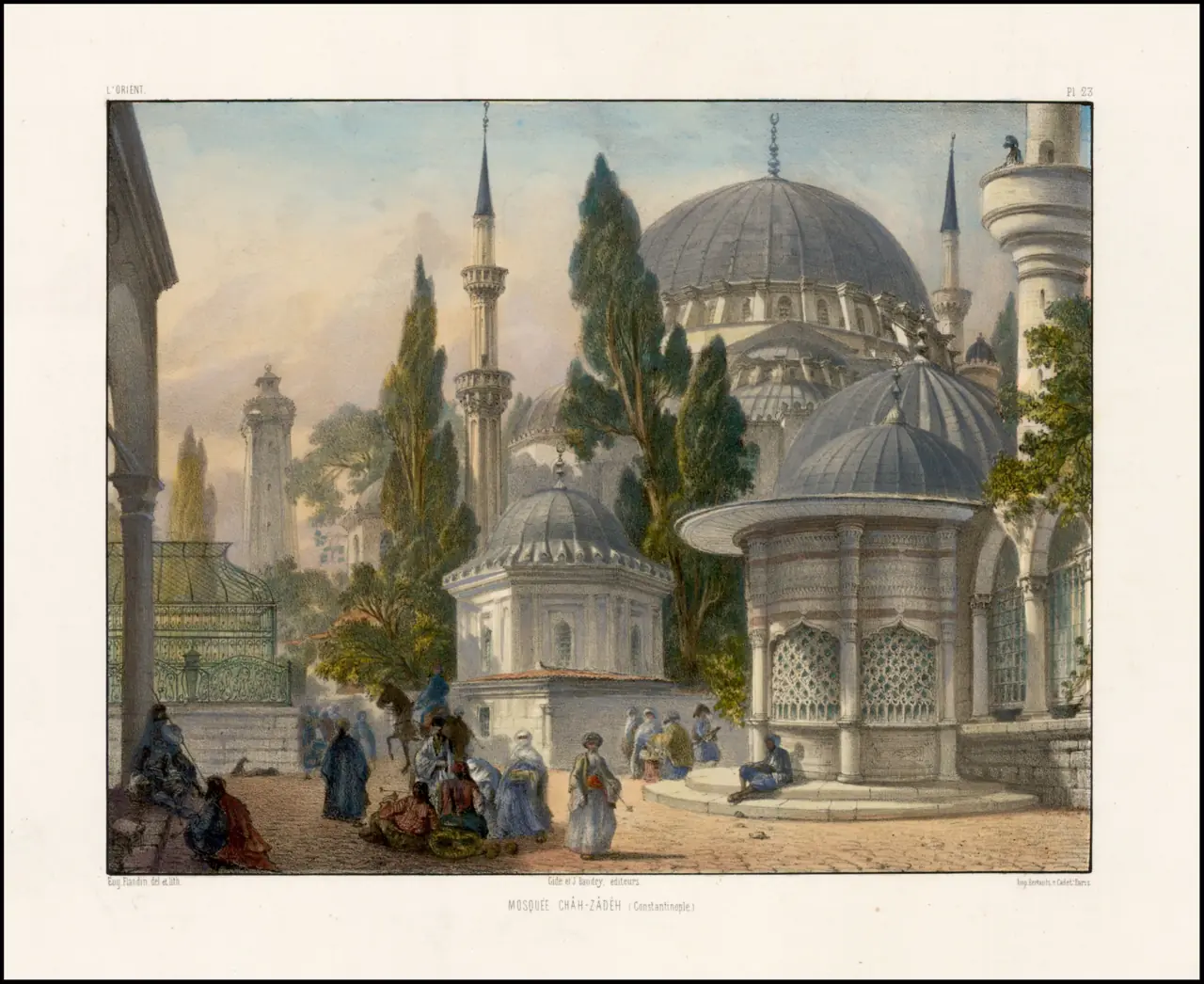
The Şehzade Mosque was commissioned by Suleiman the Magnificent as a memorial to his son Şehzade Mehmed, who died in 1543 at the age of 22 while serving as governor of Manisa. Construction was entrusted to Mimar Sinan — recently appointed chief imperial architect in 1539 — and completed in 1548. This was Sinan's first major imperial commission in his role as mimarbaşı. Located on the Third Hill of Istanbul in the Fatih district, the mosque anchors a külliye comprising a madrasa, caravanserai, soup kitchen, and primary school. Şehzade Mehmed himself is buried in a richly decorated mausoleum within the complex. Remarkably, Sinan was simultaneously building the Mihrimah Sultan complex in Üsküdar, completing both in 1548.
Architecture
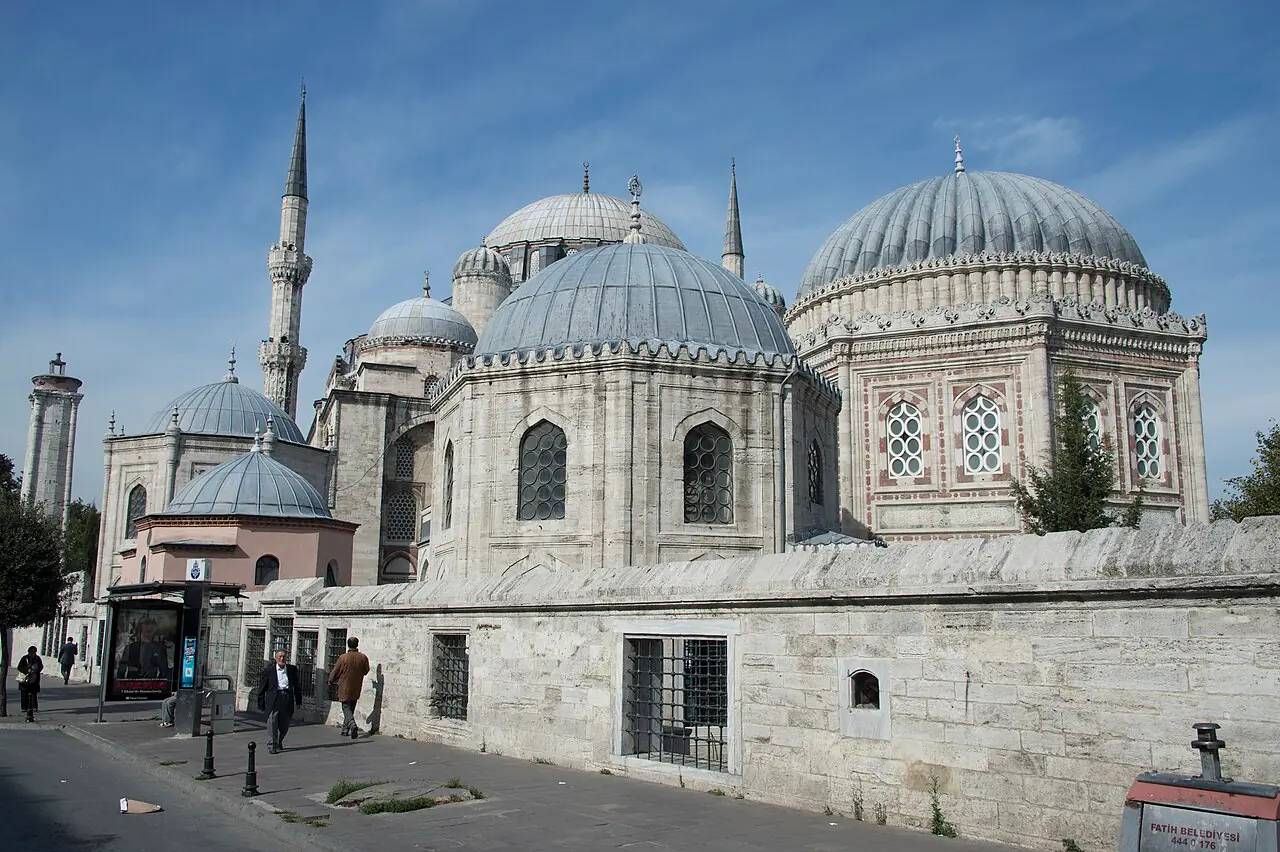
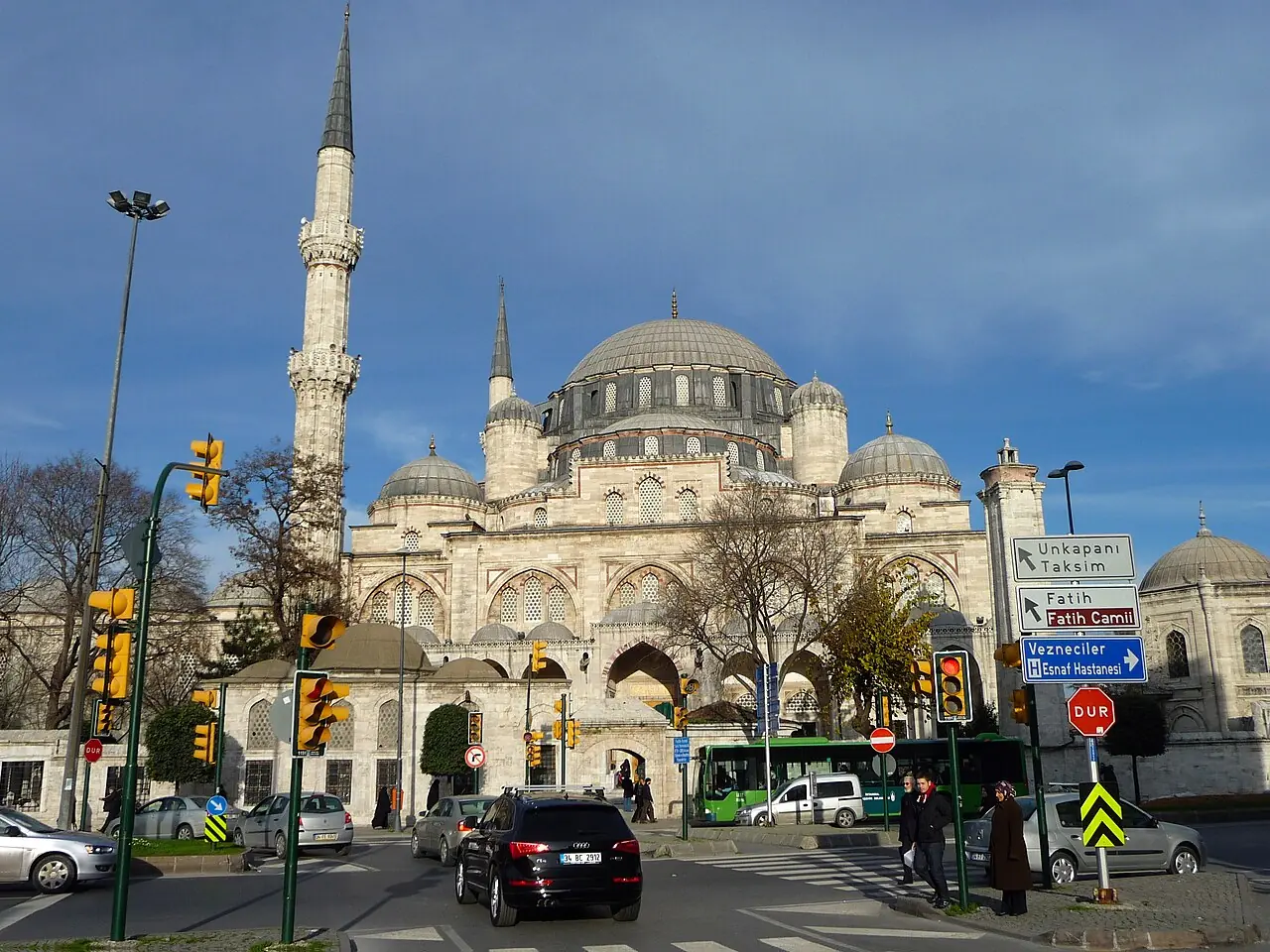
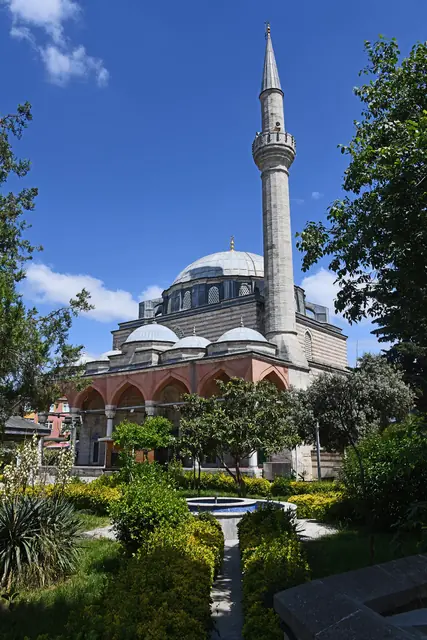
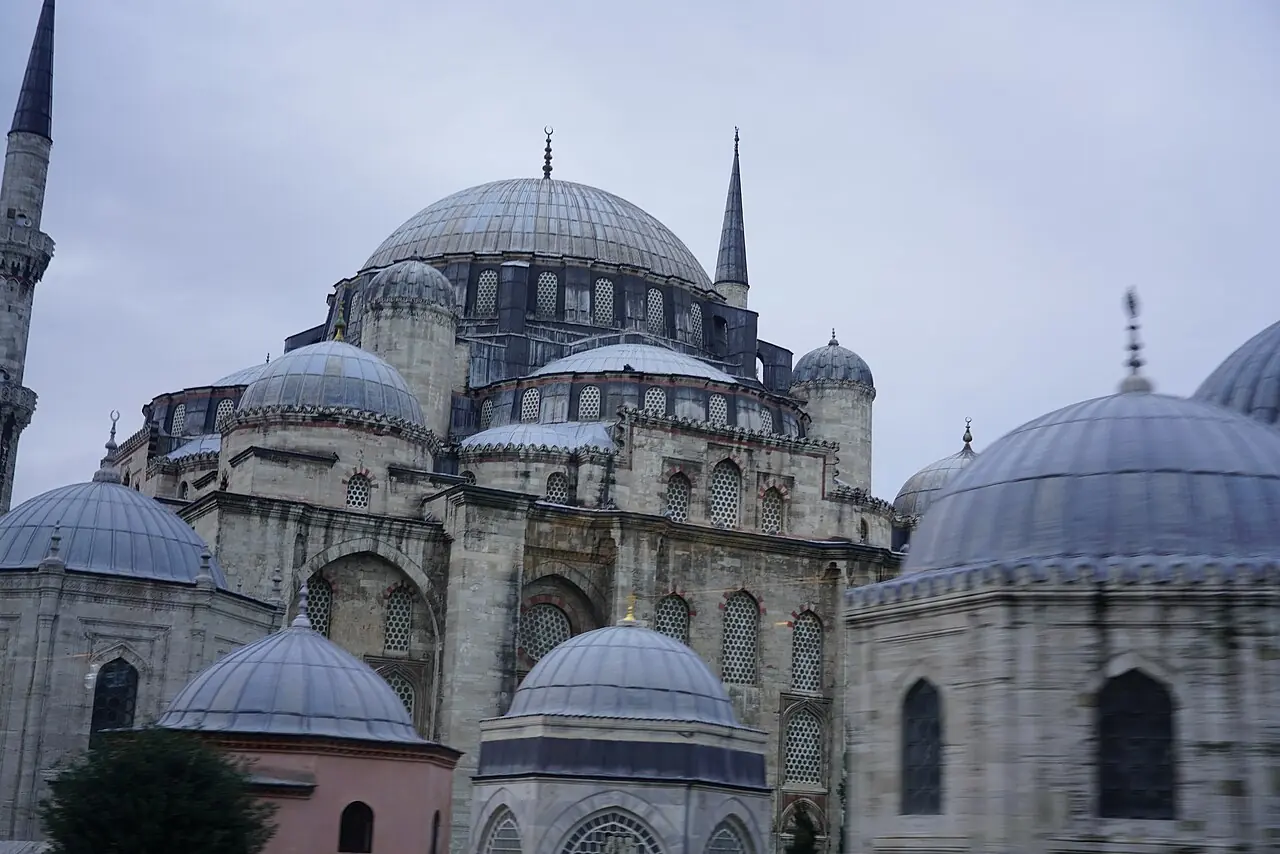
The mosque has a square plan; its central dome, 18.42 m in diameter and 37 m high, rests on four massive piers. The critical innovation is a fully symmetrical system of four semi-domes — one on each side of the central dome — with four smaller corner domes completing the octagon of roofing. This was the first mosque in Istanbul to achieve full four-way symmetry in its dome scheme, creating a unified interior space uninterrupted by colonnade screens. The structural formula proved enormously influential: it was adopted directly by the designers of the Blue Mosque (Sultanahmet, 1609–16), the Yeni Cami (1665), and later the Mehmet Ali Mosque in Cairo. The mosque has two minarets. The tomb of Şehzade Mehmed is noted for its exceptionally rich interior decoration, including Timurid-influenced tilework.
In Sinan's evolution
Earliest position — Sinan's first imperial commission as mimarbaşı and his self-described 'apprentice work' (çıraklık eseri). Represents the first successful resolution of full four-way symmetry in domed mosque space. Despite Sinan's self-deprecation, it became the most imitated structural formula in later Ottoman mosque design.
Sinan Tree →Facts
- Sinan himself described Şehzade as his 'apprentice work' (çıraklık eseri) — the first step in a trilogy ending with the Selimiye in Edirne as his 'masterwork'. dailysabah.com
- The four semi-dome symmetric plan was copied by the architects of the Blue Mosque, Yeni Cami (Eminönü), the Mehmet Ali Mosque in Cairo, and the Great Mosque of Homs. islamreligionguardian.com
- Sinan completed the Şehzade and the Üsküdar Mihrimah Sultan complex simultaneously, both finished in 1548 — an extraordinary simultaneous output. tr.wikipedia.org
- Despite Sinan's own dissatisfaction with this mosque, its structural formula set the canonical template for Ottoman imperial mosque design for over a century. aa.com.tr
- The tomb of Şehzade Mehmed is considered one of the most richly decorated in Istanbul, featuring Timurid-influenced tilework. islamreligionguardian.com
Photographs