Sinan / Classical
Mehmed Ağa Mosque (Çarşamba)
1585 · Fatih / Çarşamba
First major Istanbul külliye built by a palace eunuch — Habeşî Mehmed Ağa, the Ottoman Empire's inaugural Chief Harem Eunuch — with an interior that uniquely co-displays 16th-century İznik, 16th-century Kütahya, and 18th-century Tekfur Palace underglaze tiles in one prayer hall.
- Minarets
- 1
- Built
- 1585
- Architect
- Mimar Davud Agha
- Patron
- Habeşî Mehmed Ağa, first Dârüssaâde Ağası (Chief Harem Eunuch) of the Ottoman Empire
- District
- Fatih / Çarşamba
History
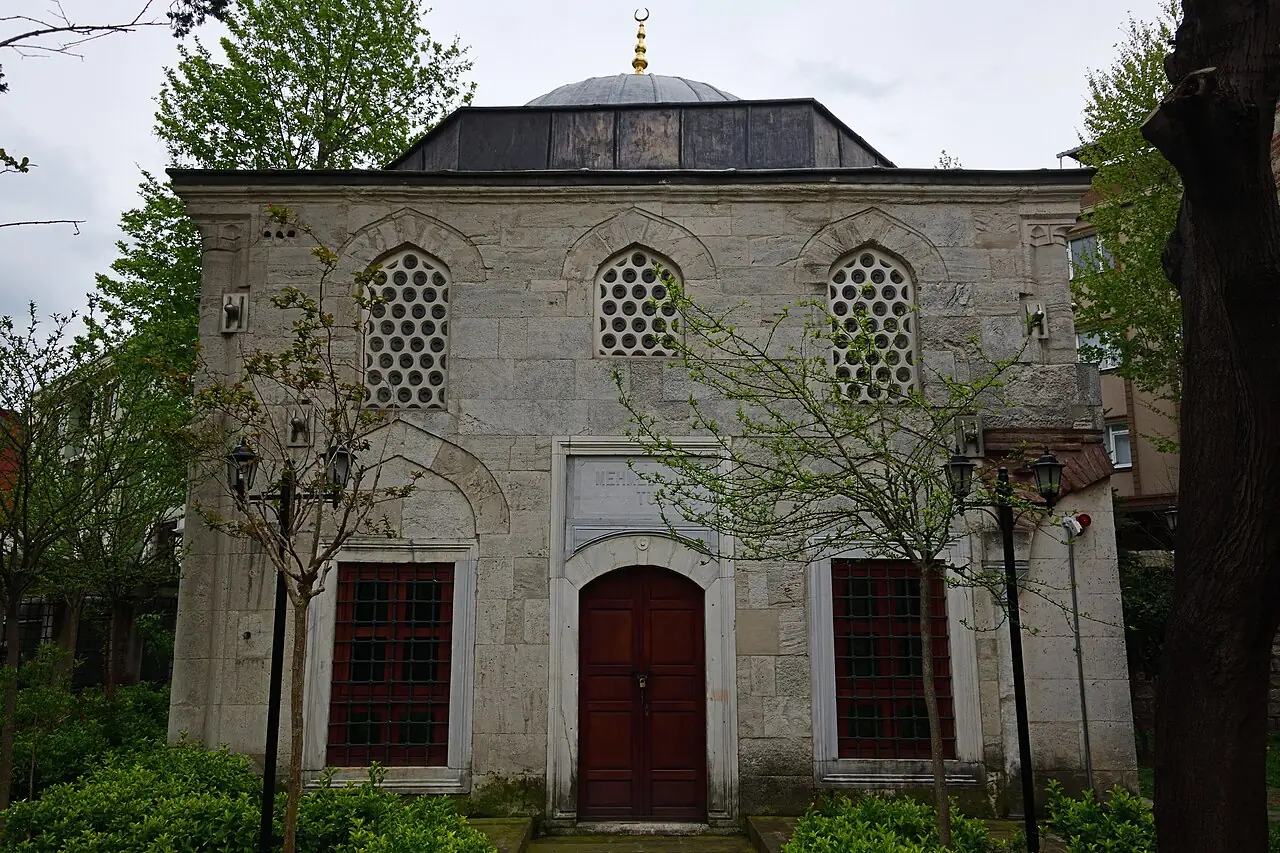
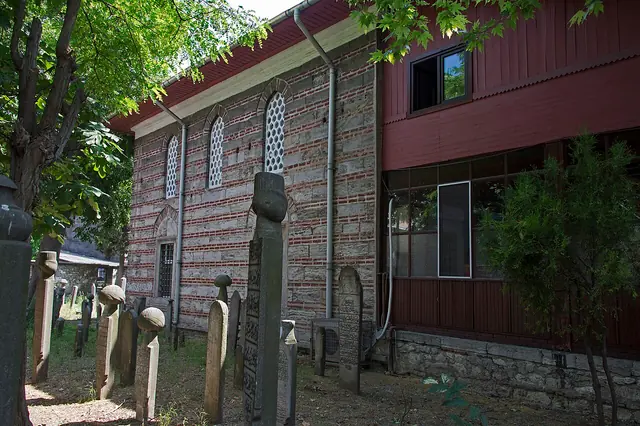
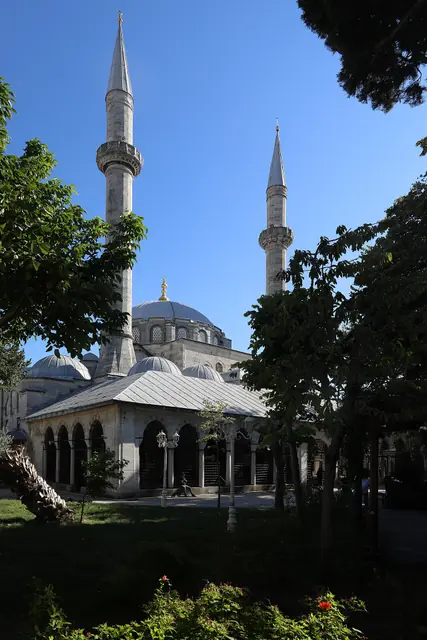
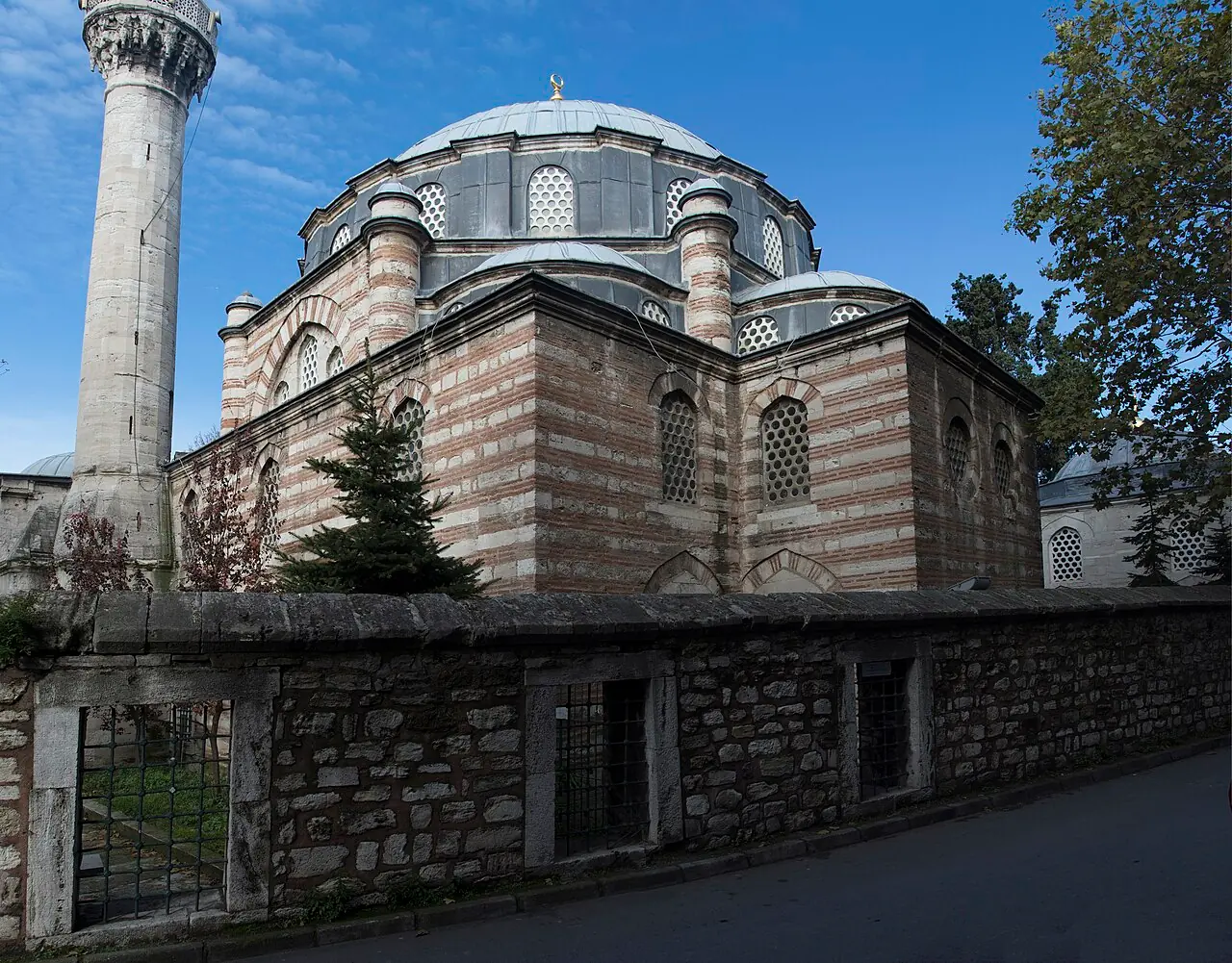
The Mehmed Ağa Mosque sits in the Çarşamba neighbourhood of Fatih and was built in 1585 for Habeşî (Abyssinian) Mehmed Ağa — the first Dârüssaâde Ağası (Chief Harem Eunuch) of the Ottoman Empire, serving under Sultan Murad III. In 1582 Mehmed Ağa became the first black eunuch to fill the newly separated post of Dârüssaâde Ağası, which placed him third in protocol after the Grand Vizier and the Şeyhülislâm; in December 1586 he was also given administration of the Haramayn waqfs. He died in 1590 and is buried in the complex's türbe. The külliye included the mosque, a Dârülhadis (school of Hadith), a double hamam, a Halveti tekke, the founder's türbe, and two fountains; the completion year 1585 is recorded on an inscription above the eastern gate. The Mehmed Ağa külliye is the first major religious-educational complex in Istanbul built by a palace eunuch.
Architecture
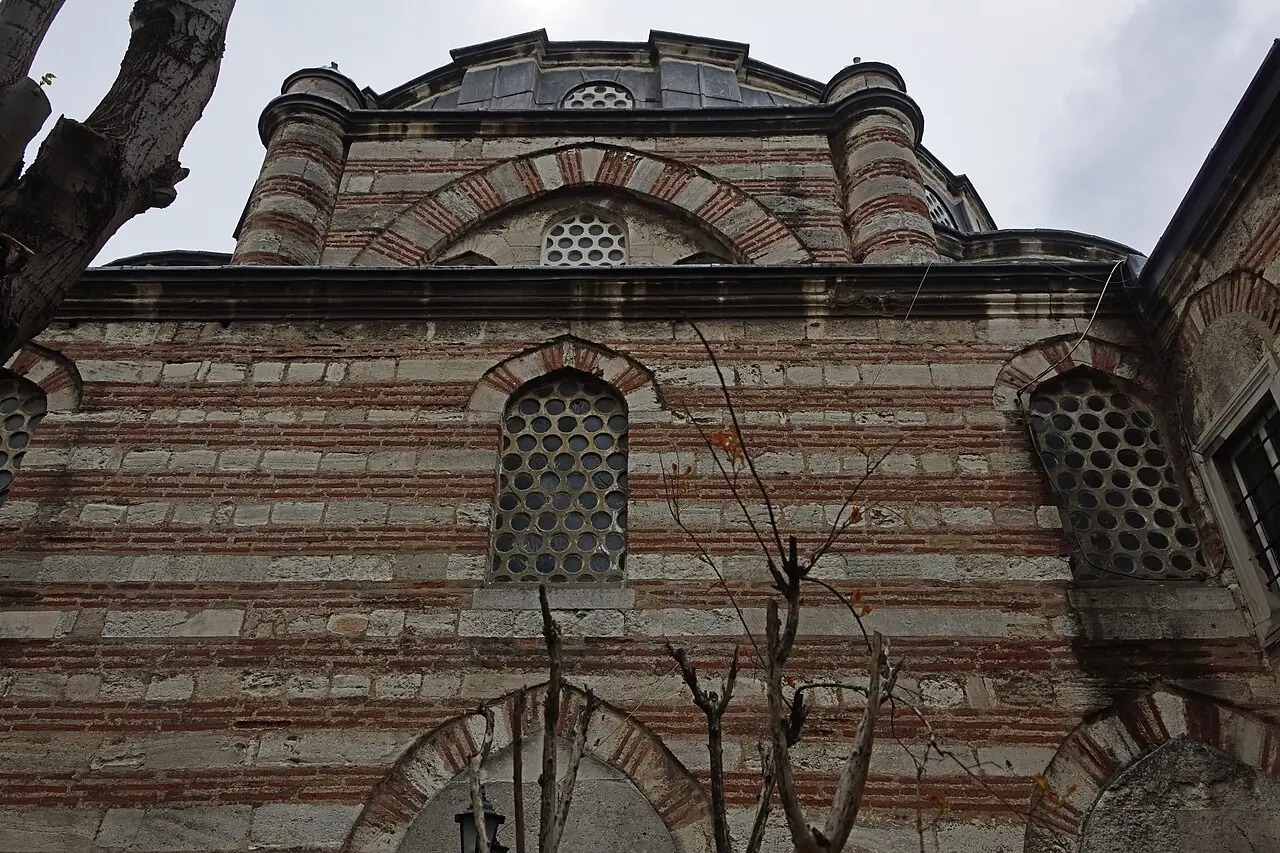
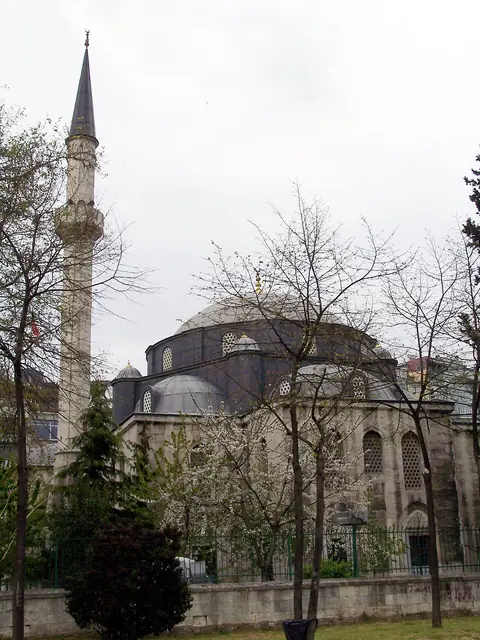
The mosque has a rectangular plan with a single minaret and standard small-mosque massing. The architect is Mimar Davud Ağa — Sinan's apprentice and his successor as chief imperial architect — named in the inscription over the courtyard's eastern gate. The mosque went up while Sinan still headed the corps of court architects, but Sinan's own involvement in the design is not documented. The Dârülhadis of the complex is explicitly finished by Sinan himself in August–September 1585. The interior is celebrated for a polyphony of underglaze-painted ceramic decoration: 16th-century İznik tiles form the main revetment, with contemporary Kütahya tiles, plus early-18th-century Tekfur Palace tiles added in later repairs — making the mosque a rare single-interior survey of Ottoman tile traditions across two centuries.
In Sinan's evolution
1585 — Sinan's final period; the mosque is transitional between Sinan and Davud Ağa (the inscription credits Davud Ağa, but the Dârülhadis component of the complex was completed by Sinan himself in Aug–Sep 1585). Represents the mechanism by which Sinan's atelier passed to Davud Ağa, who succeeded him as chief architect in 1588. A marker of Sinan's institutional legacy as much as his individual design authorship.
Sinan Tree →Facts
- The patron, Habeşî Mehmed Ağa, was the first Chief Harem Eunuch (Dârüssaâde Ağası) of the Ottoman Empire, appointed in 1582. brill.com
- His külliye is the first major Istanbul complex built by a palace eunuch. islamansiklopedisi.org.tr
- The interior combines tiles from three workshops: 16th-century İznik, 16th-century Kütahya, and 18th-century Tekfur Palace — all executed in underglaze technique. kulturelmiras.ibb.istanbul
- An inscription over the eastern gate records completion in 1585; the complex's Dârülhadis was finished by Sinan himself in August–September of that year. islamansiklopedisi.org.tr
- Architect attribution is layered: the inscription names Davud Ağa (Sinan's apprentice), but scholarly consensus holds that Sinan began the design and Davud Ağa completed it while Sinan was on pilgrimage. tr.wikipedia.org
Photographs