Sinan / Classical
Hacı Evhad Mosque (Yedikule)
1585 · Fatih / Yedikule
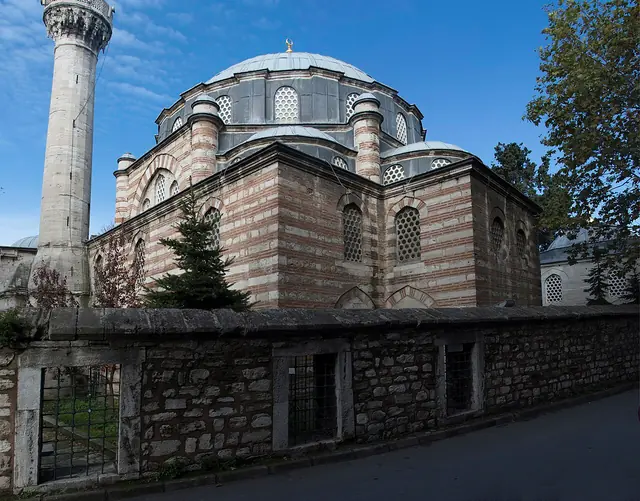
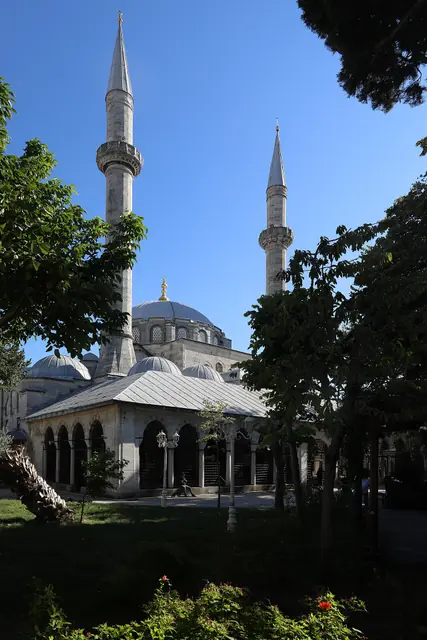
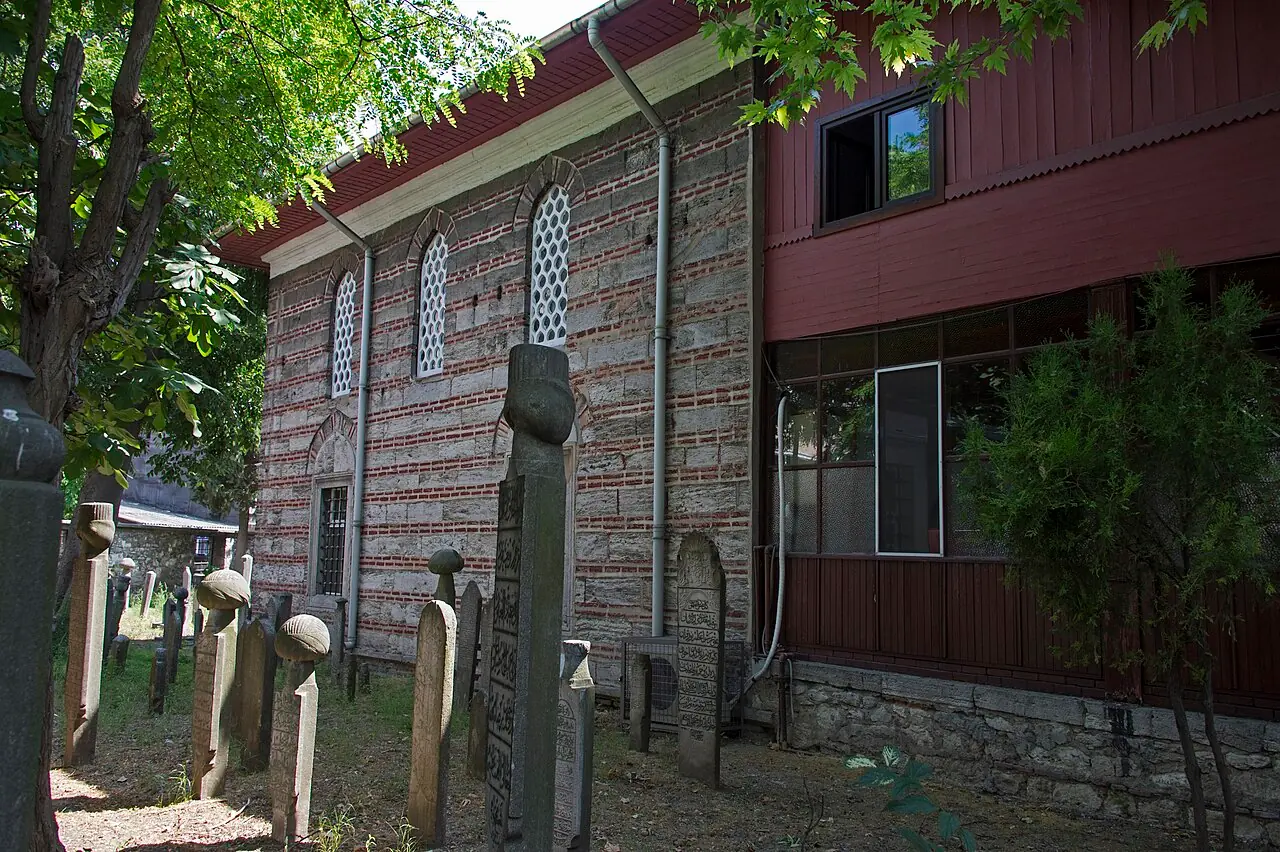
Late-Sinan small mahalle mosque with a concealed wooden dome beneath a pitched roof and Byzantine-style banded masonry (two brick courses to one stone), built as the centre of a neighbourhood külliye just inside the Theodosian Walls above Yedikule.
- Minarets
- 1
- Built
- 1585
- Architect
- Mimar Sinan
- Patron
- Hacı Evhad (Hacı Evhadüddin)
- District
- Fatih / Yedikule
History
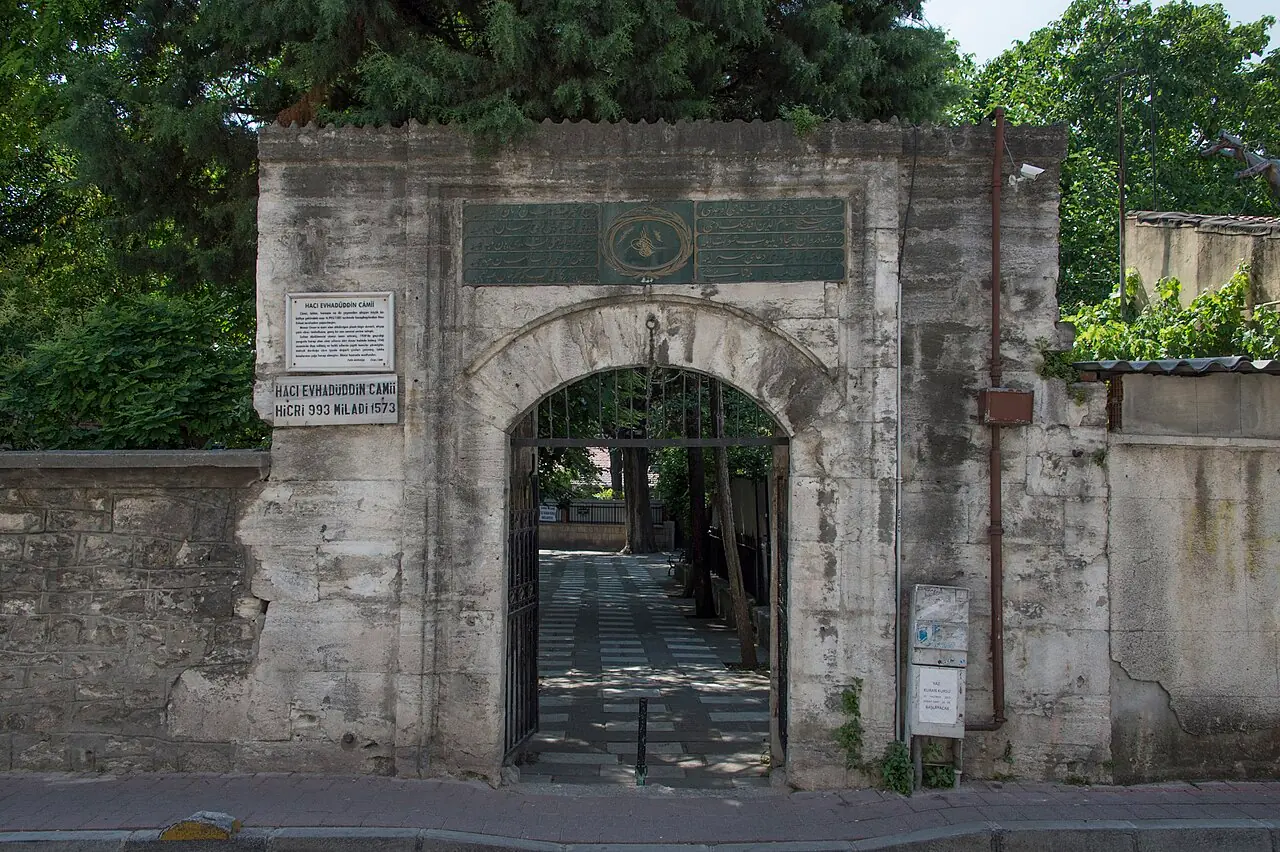
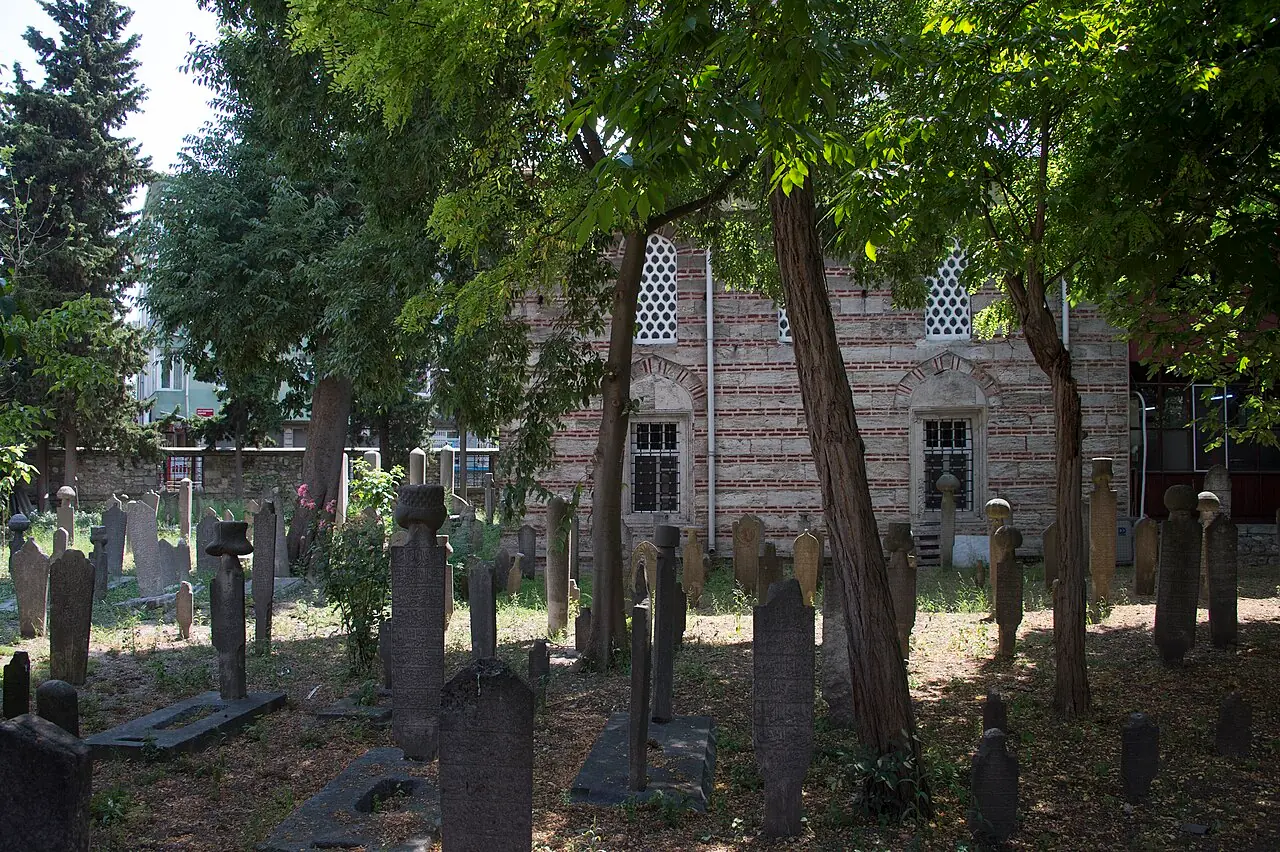
The Hacı Evhad Mosque was built in 1585 in the Yedikule quarter at Istanbul's north-western corner, just inside the Theodosian land walls. Its patron, Hacı Evhad (Hacı Evhadüddin), also lent his name to the surrounding neighbourhood, and the architect listed is Mimar Sinan — this is among his last works, since Sinan died in 1588. The mosque originally anchored a small külliye with a tekke, a hamam, and fountains (çeşme); according to Hadîkatü'l-cevâmi' zaviye cells once stood in the courtyard. A major restoration under Sultan Abdülmecid in 1850–1851 added a new courtyard fountain. The building had fallen into disrepair by the 1930s and was restored in 1945 by Nafia Gezer, her son Rahmi Gezer, and daughter-in-law Emine Dürnev; the current wooden minbar and galleries date from that campaign.
Architecture
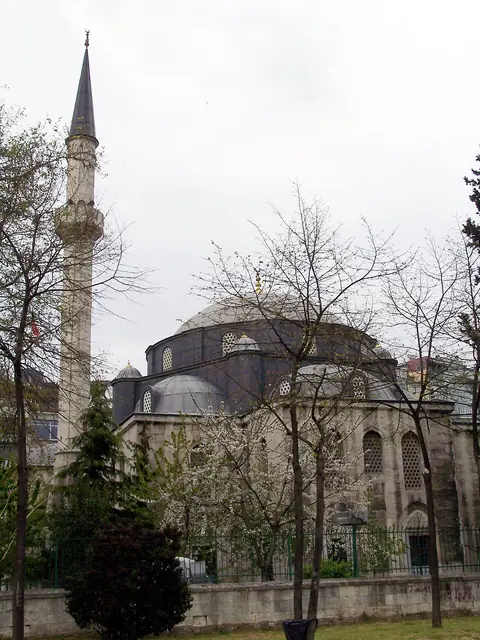
The mosque has a rectangular plan and belongs to Sinan's family of small mahalle commissions with a concealed timber dome — the visible exterior roof is pitched, while the prayer-hall ceiling is covered by a hidden wooden dome that once bore painted decoration. The walls are executed in the distinctive banded masonry of alternating two courses of brick and one course of ashlar stone, a Byzantine-derived technique Sinan re-used in several small urban commissions. The minaret is entirely of cut stone, with a very lightly tapered shaft and a muqarnas (stalactite) balcony corbel. The minbar and interior galleries are wooden work from the 1945 restoration. The courtyard is now enclosed with a modern wall. The absence of a large masonry dome is characteristic of Sinan's late small-scale commissions.
In Sinan's evolution
1585 — among the very last works attributed to Sinan (died 1588), contemporary with Ramazan Efendi, Mesih Mehmed Pasha, and Mehmed Agha mosques. Continues the late-career vernacular thread: rectangular plan, hidden wooden dome in lieu of masonry, banded Byzantine-style walls. Marks Sinan's sustained attention to mahalle-scale neighbourhood commissions even at 95+ years old.
Sinan Tree →Facts
- Dated to 1585, Hacı Evhad is among the very last mosques attributed to Sinan, who died in 1588. kulturenvanteri.com
- Its walls alternate two courses of brick with one of ashlar stone — a characteristic Byzantine-Ottoman banded masonry. islamansiklopedisi.org.tr
- Inside the rectangular hall sits a hidden timber dome invisible from outside the pitched roof; it was once covered in painted decoration. itohaber.com
- The original complex included a tekke, hamam, and fountains; Hadîkatü'l-cevâmi' records zaviye cells standing in the courtyard. islamansiklopedisi.org.tr
- The mosque was rescued from near-ruin in 1945 by Nafia Gezer, her son Rahmi Gezer, and daughter-in-law Emine Dürnev — the current wooden minbar and galleries date from their campaign. itohaber.com
Photographs