Sinan / Classical
Sokollu Mehmed Pasha Mosque, Kadırga
1567–1572 · Fatih / Kadırga
Four fragments of the Black Stone of the Kaaba embedded in mihrab, minbar, and entrance — more than Suleiman the Magnificent is said to have placed in the Süleymaniye, making this a uniquely sacred relic deposit in any Istanbul mosque.
- Dome
- 13 m
- Height
- 22.8 m
- Minarets
- 1
- Built
- 1567–1572
- Architect
- Mimar Sinan
- Patron
- Sokollu Mehmed Pasha and Ismihan Sultan
- District
- Fatih / Kadırga
History
The mosque was commissioned jointly by Grand Vizier Sokollu Mehmed Pasha — a Serbian-born devşirme recruit who served three sultans as the empire's highest official — and his wife Ismihan Sultan, a granddaughter of Suleiman the Magnificent. It was completed in 1571/72. The complex was erected on the site of the Byzantine Church of St. Anastasia, which had already collapsed before construction began.
Architecture
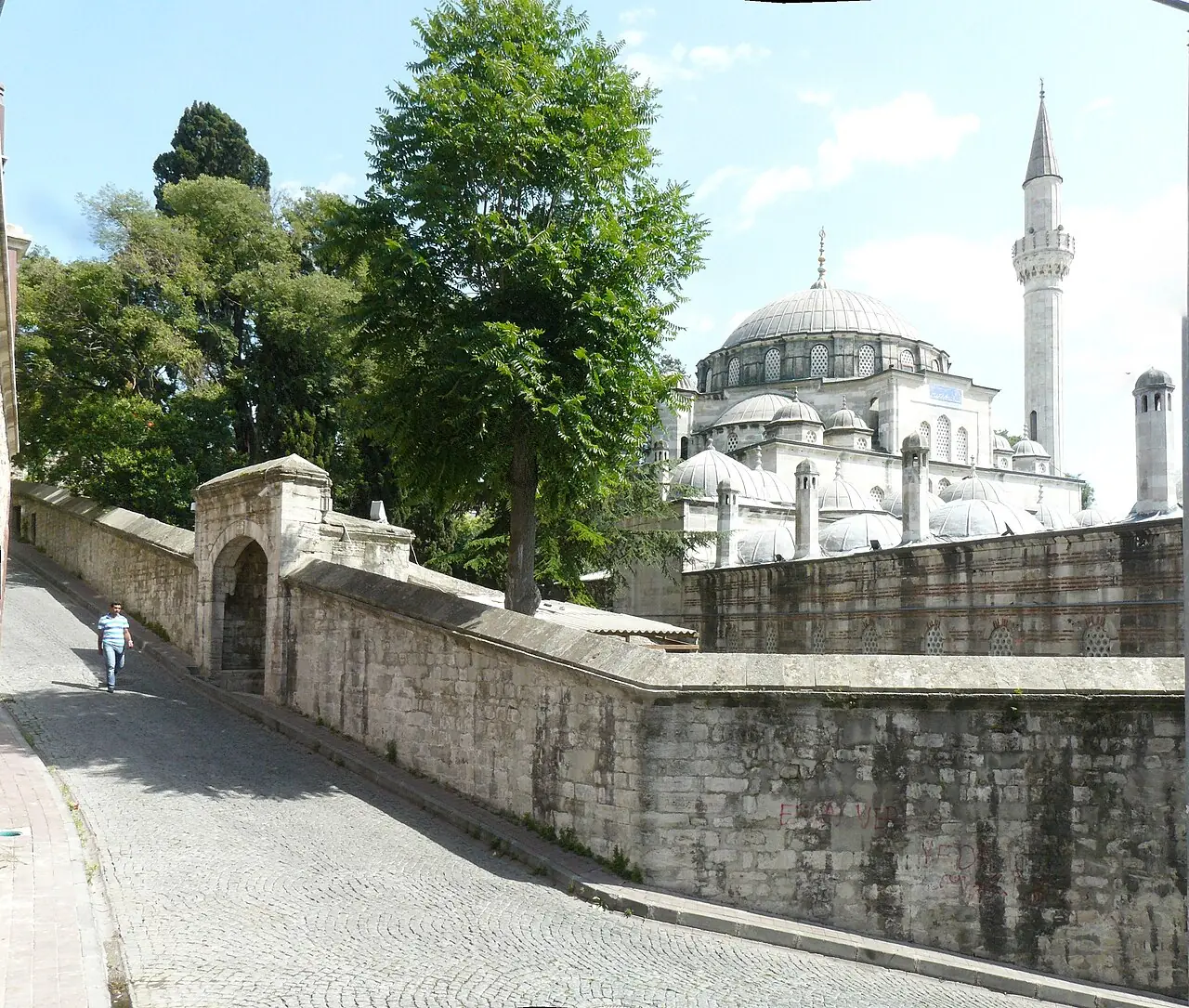
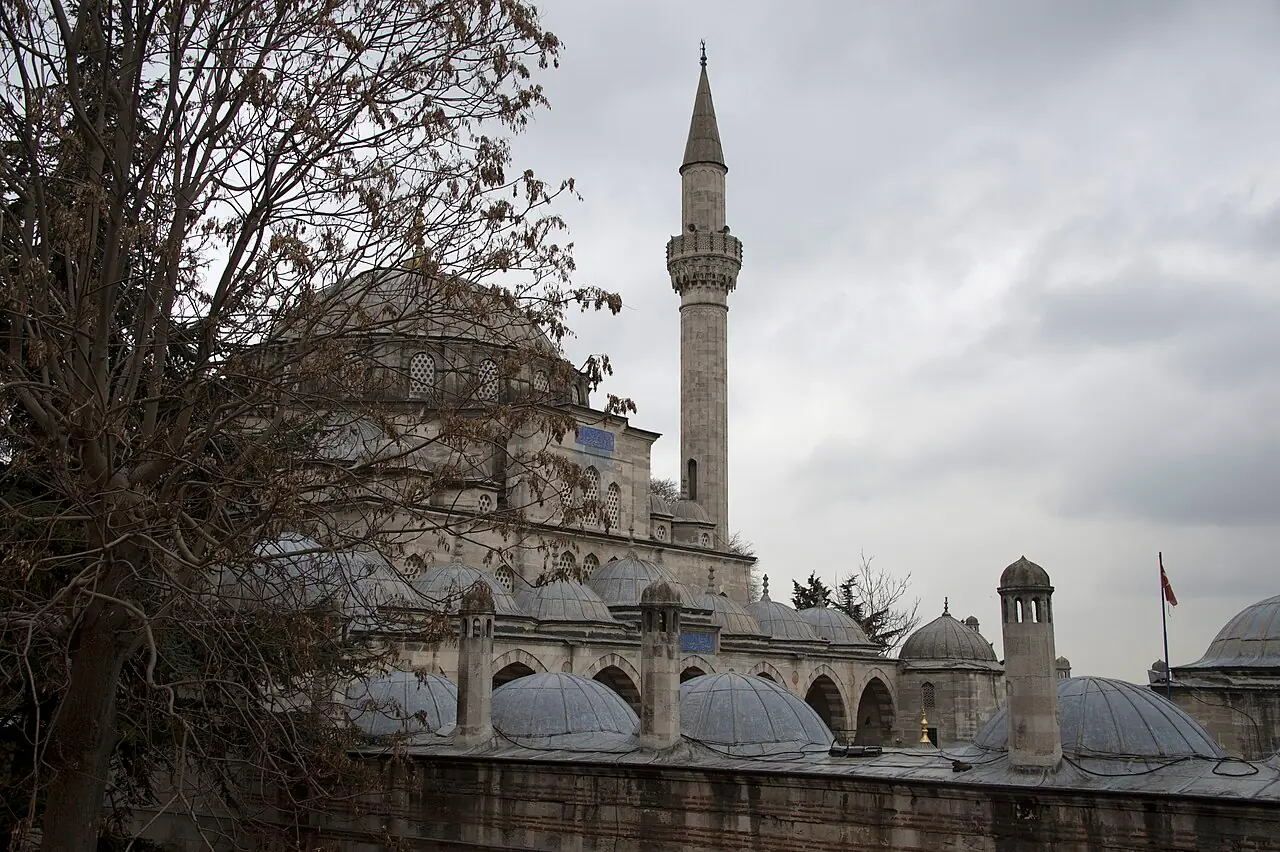
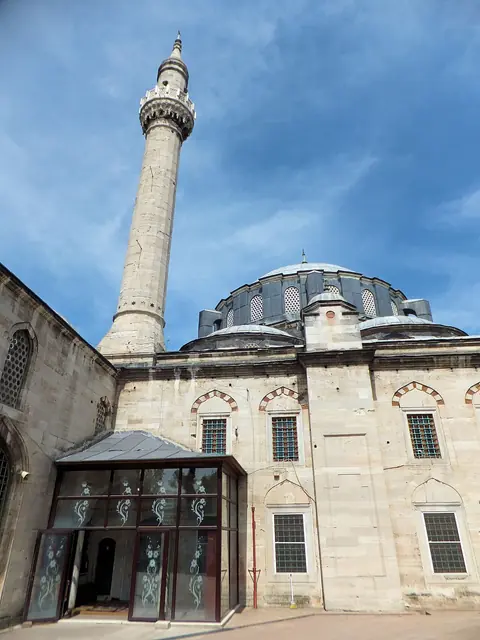
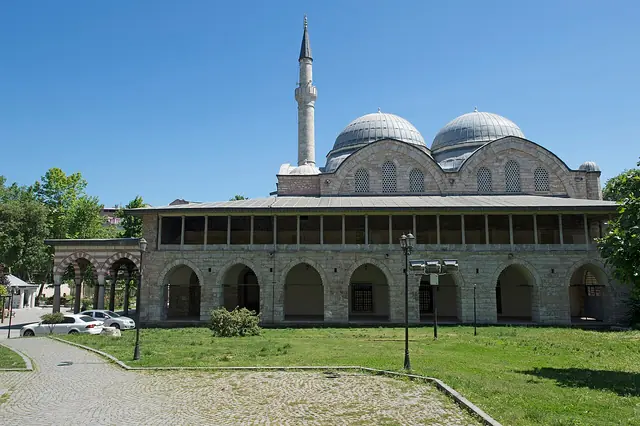
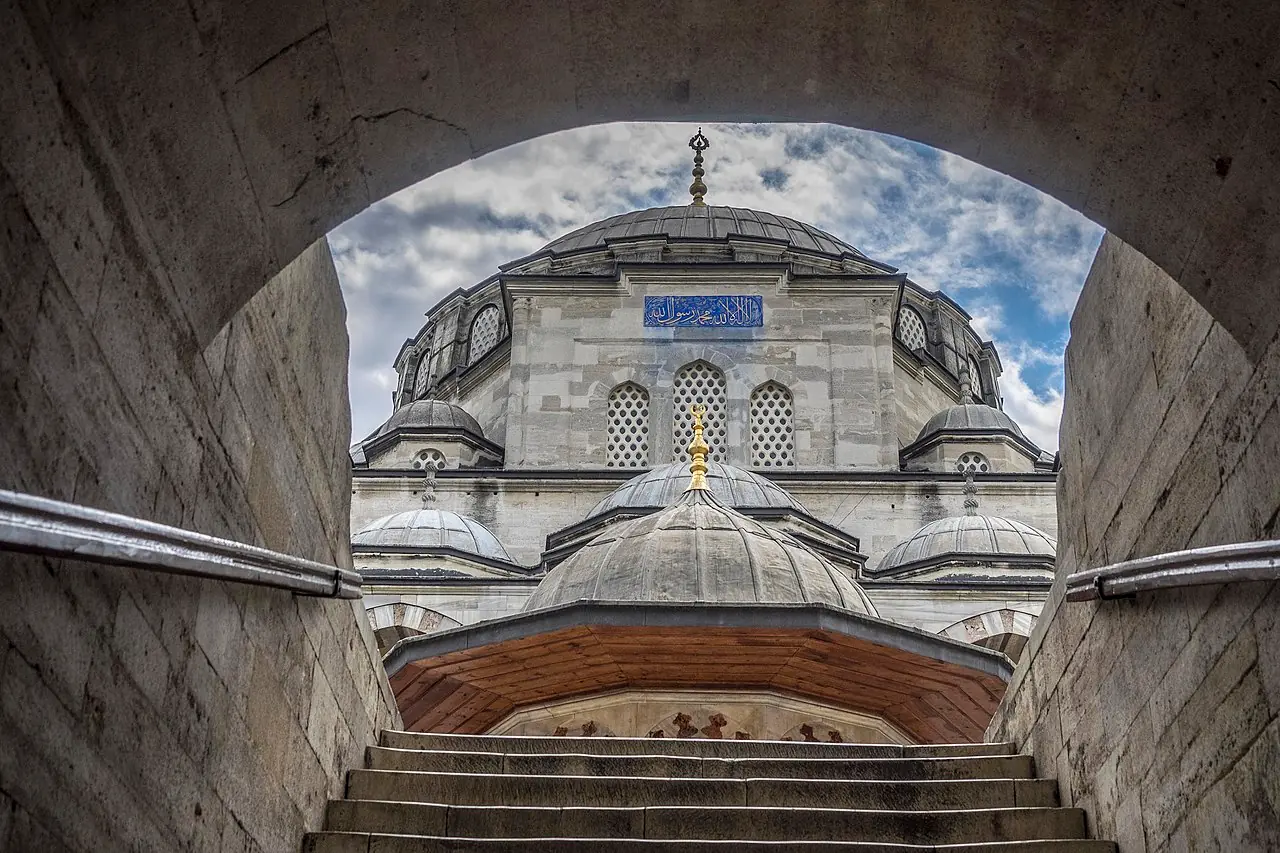
Sinan resolved the challenging steep-slope site by designing a two-storey courtyard: the lower storey was divided into shops whose rents funded the mosque's upkeep. The prayer hall follows a hexagon-in-rectangle scheme, covered by a central dome 13 m in diameter and 22.8 m high, with four small semi-domes at the corners. The interior walls are clad in Iznik tiles featuring blue, red, and green floral patterns of chrysanthemums and tulips, with calligraphic panels in white thuluth script on a blue ground.
In Sinan's evolution
Mid-to-late mature period (1571). The hexagonal plan with corner semi-domes represents a refined solution to an extreme topographic challenge — compact urban site on a steep slope. Sinan solved the problem with a two-storey commercial courtyard, a technique unparalleled among his Istanbul mosques.
Sinan Tree →Facts
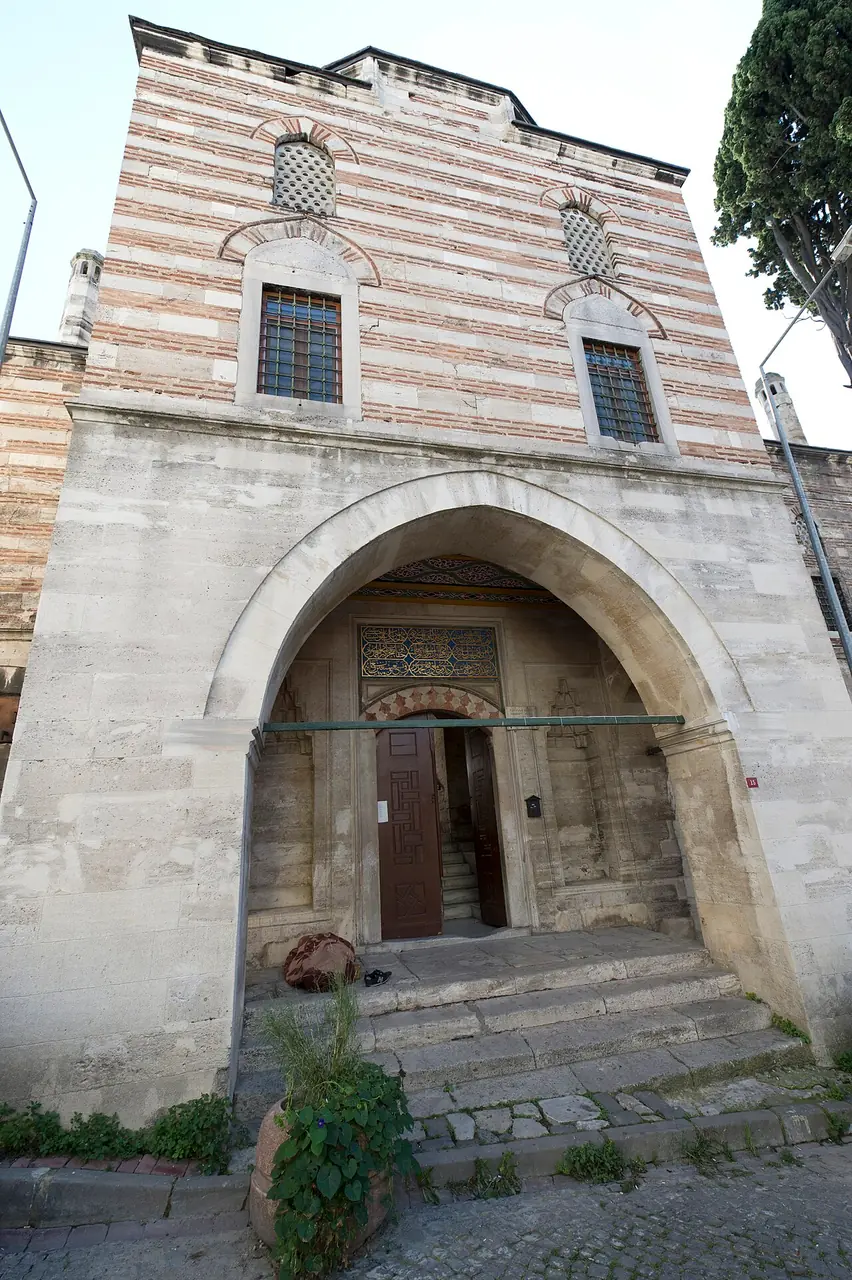
- The mosque preserves four fragments of the Black Stone of the Kaaba — placed at the entrance portal, the mihrab, above the minbar entrance, and under the minbar dome. Suleiman the Magnificent himself is said to have received only a single such fragment for the Süleymaniye Mosque, making the four pieces here an extraordinary mark of Sokollu's status. dailysabah.com
- Sinan's two-storey entrance courtyard — with commercial space on the lower level — is a rare solution to an extreme topographic challenge; the slope descends sharply toward the Sea of Marmara, making the northeast corner of the site much higher than the southwest. turkisharchaeonews.net
- The co-patron Ismihan Sultan was a granddaughter of Suleiman the Magnificent, lending the complex the prestige of an imperial dynastic commission despite being nominally a grand vizier's foundation. en.wikipedia.org
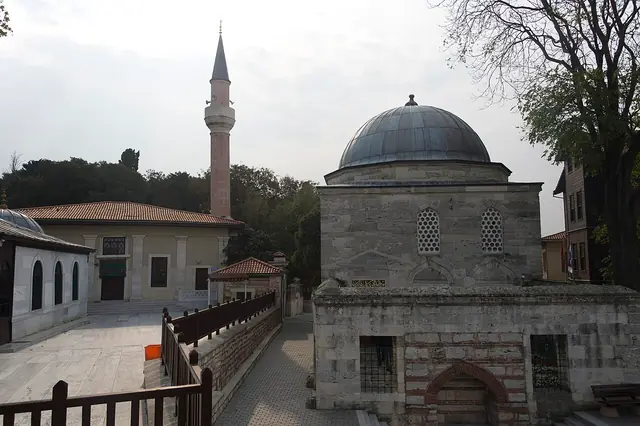
- The full complex — mosque, medrese, dervish lodge (tekke), latrines, and a reservoir with street fountain — was packed onto a constrained hillside plot, demonstrating Sinan's mastery of compact urban planning. istanbul-tourist-information.com
- Sokollu Mehmed Pasha, despite converting to Islam, successfully petitioned the sultan to restore the Serbian Orthodox Patriarchate of Peć — an act of reconciliation toward his Christian birth community. en.wikipedia.org
Photographs