Sinan / Classical
Sultan Ahmed Mosque (Blue Mosque)
1609–1617 · Fatih / Sultanahmet
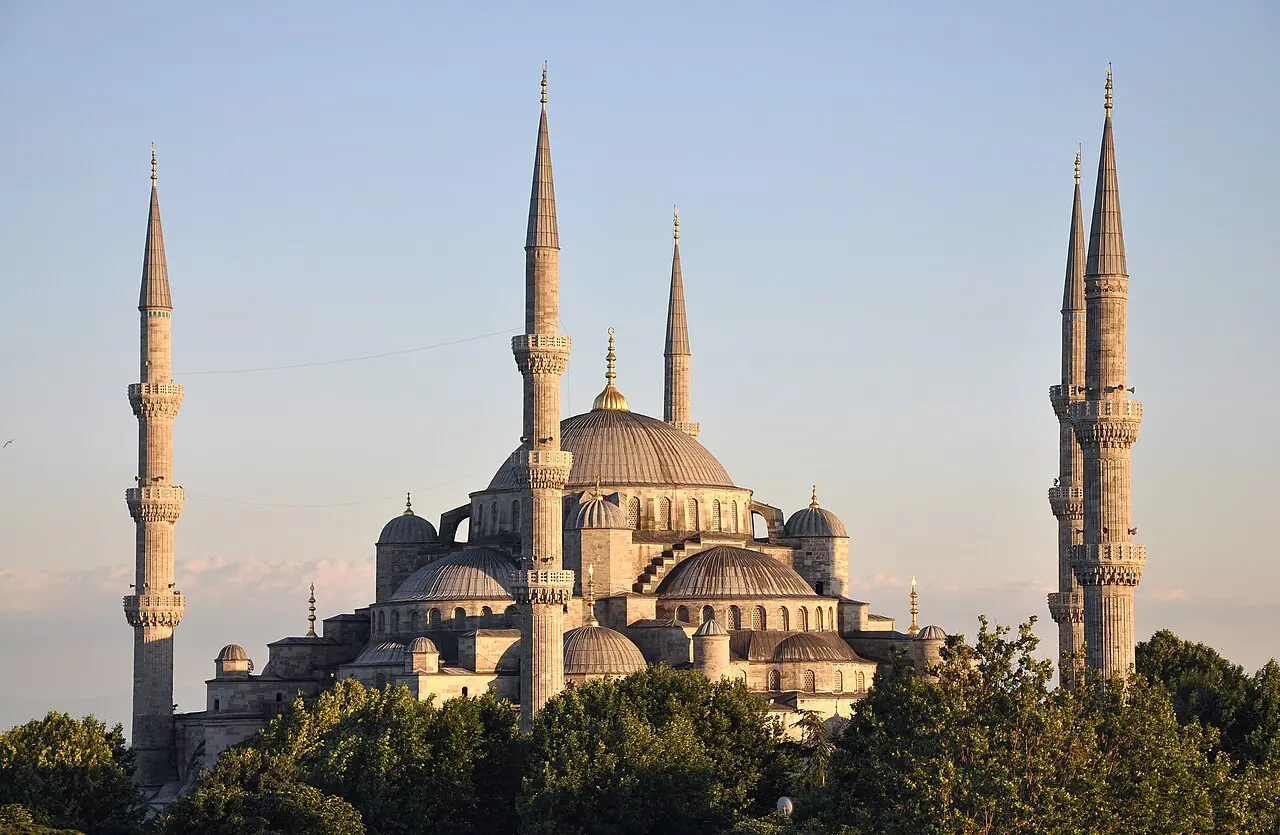
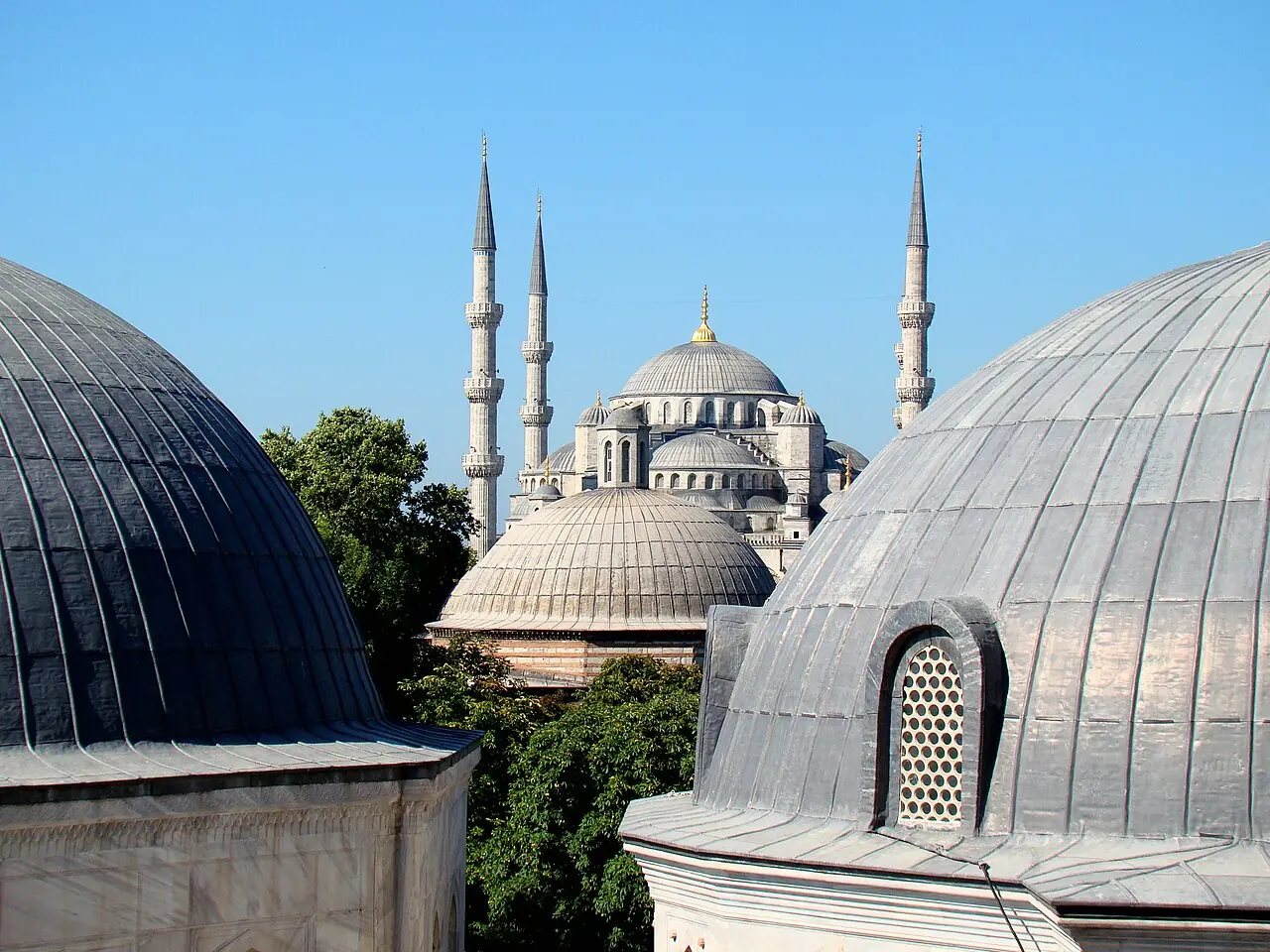
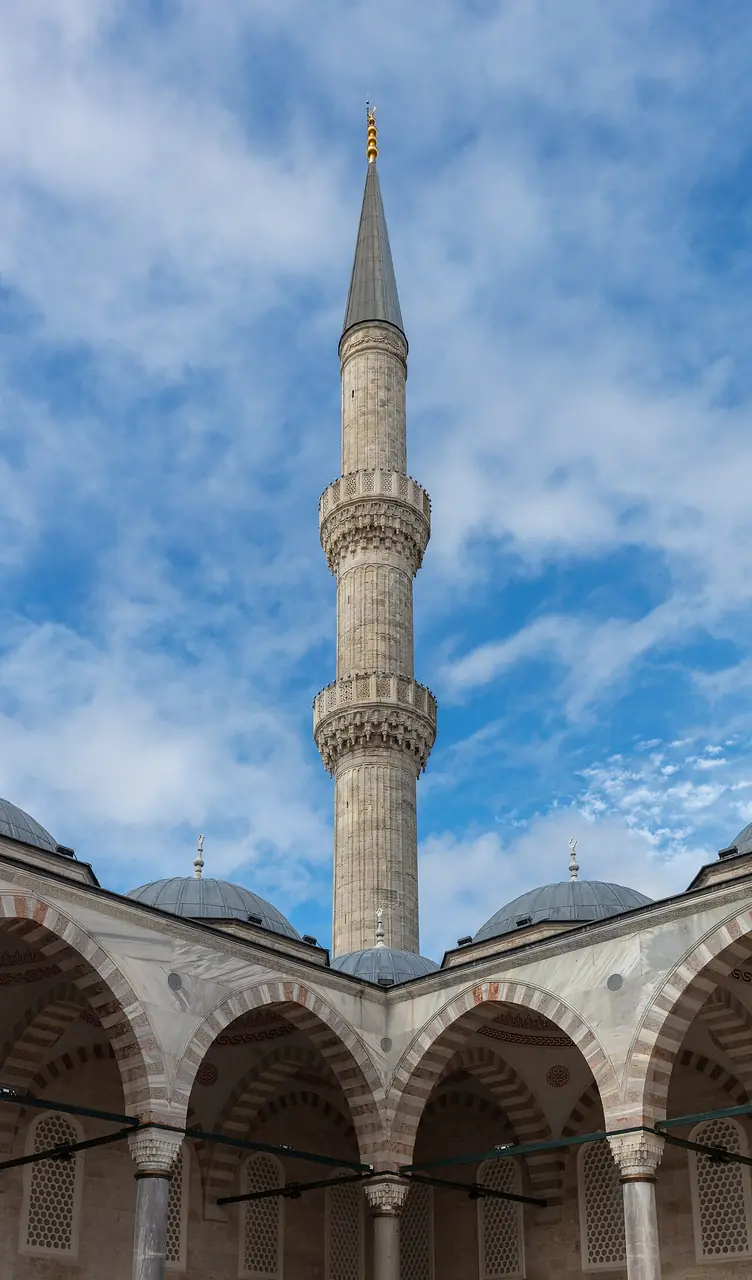
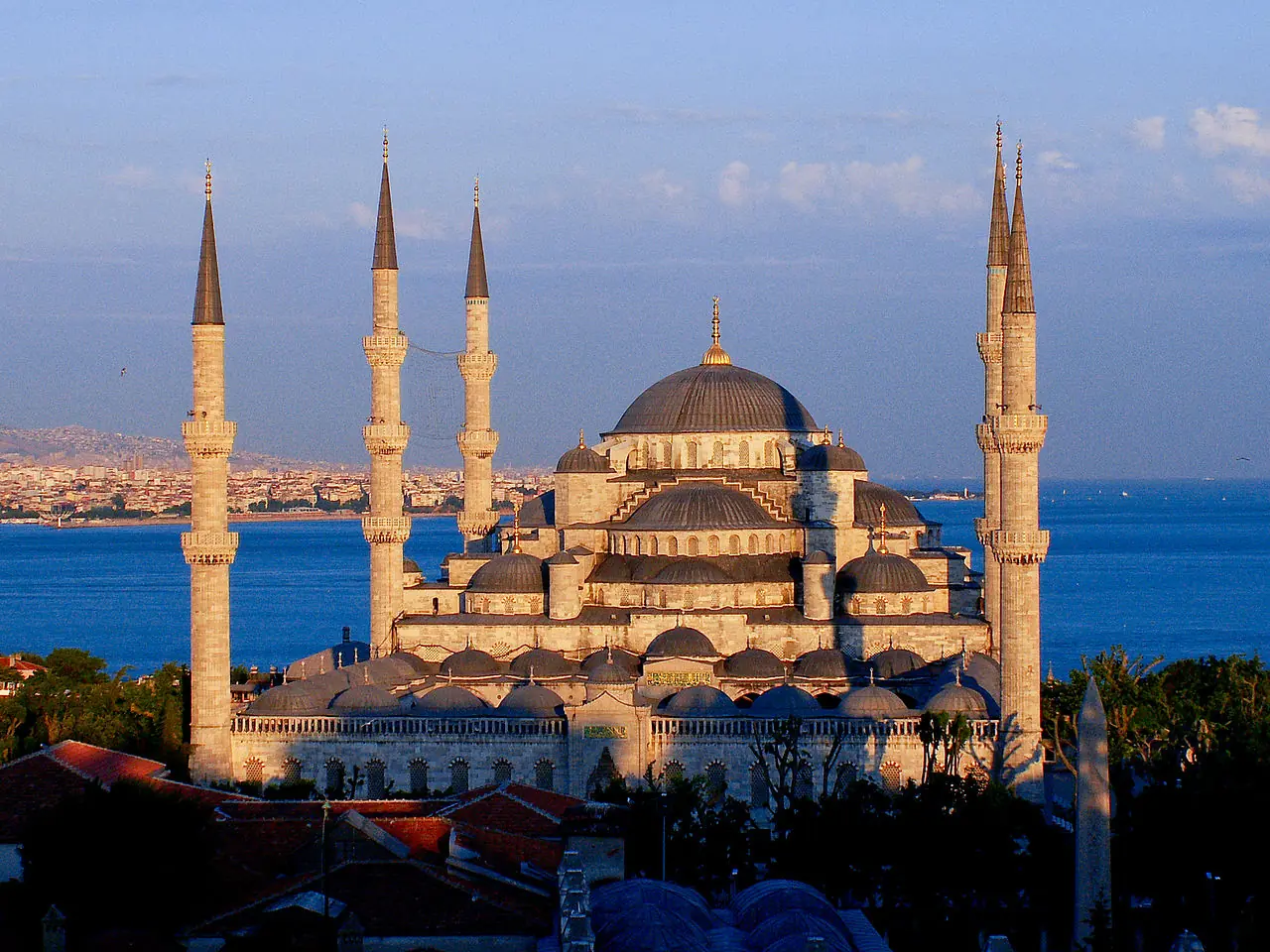
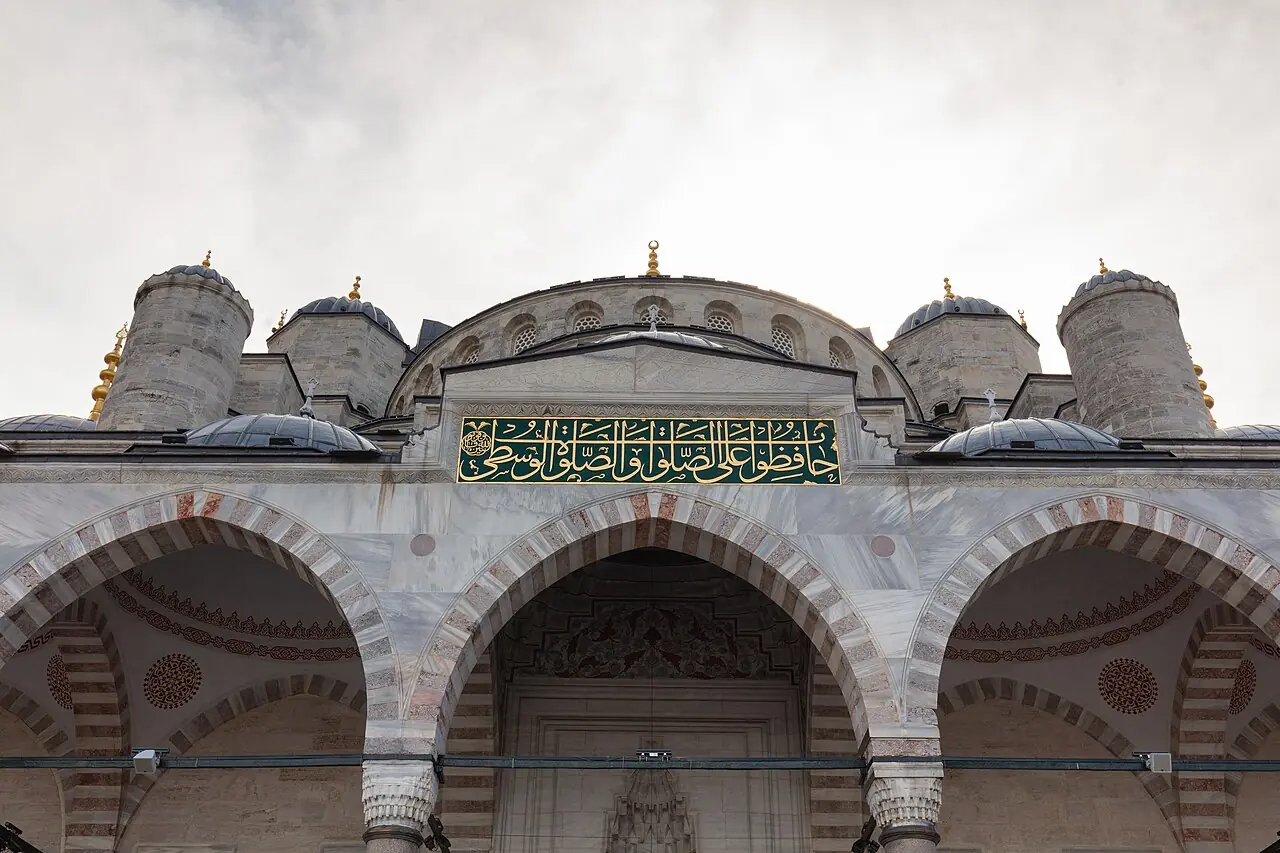
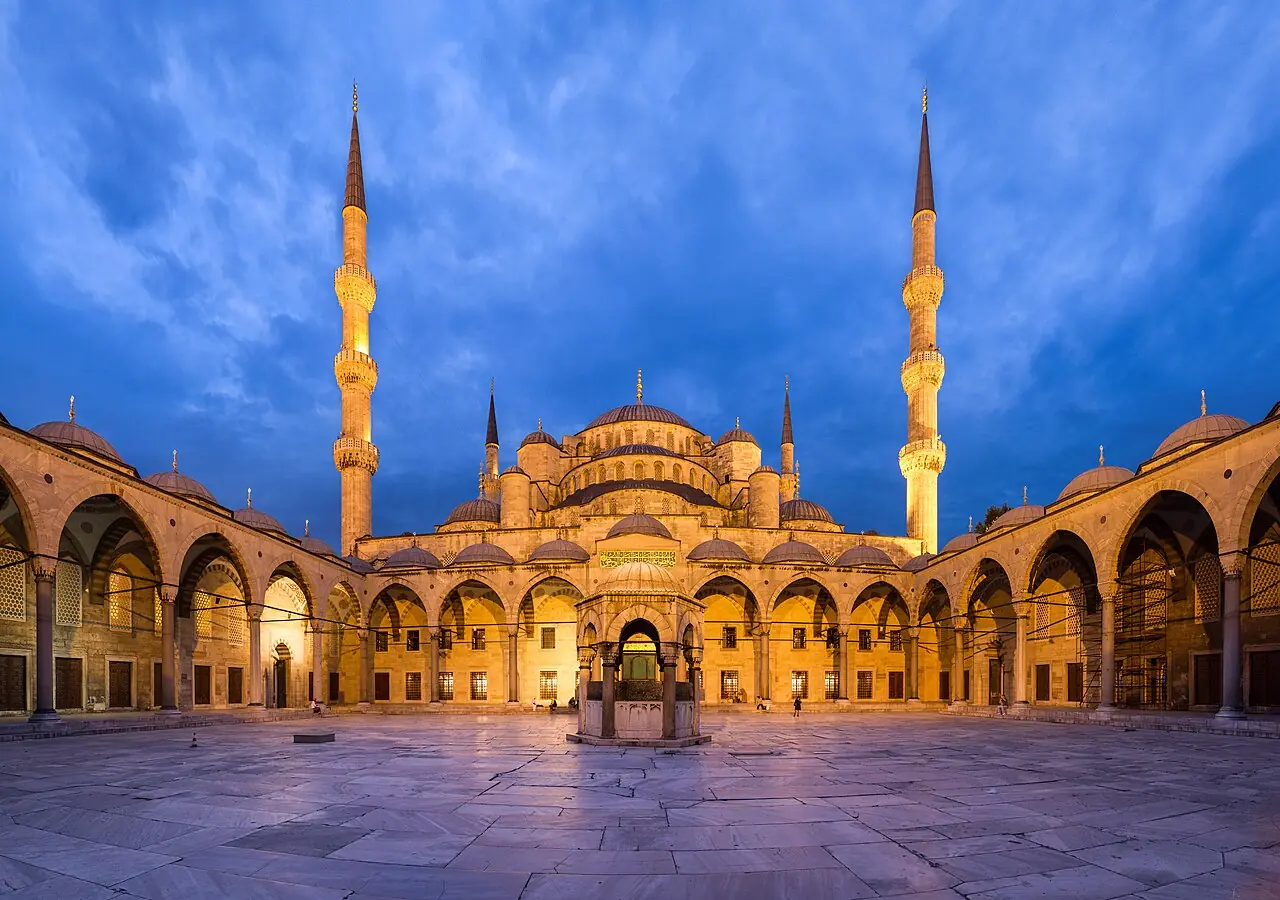
Six minarets — the only Ottoman imperial mosque ever built with six, equalling the Kaaba's Masjid al-Haram at the time and forcing Ahmed I to fund a seventh minaret at Mecca; over 20,000 İznik tiles so dominating the interior with blue tones that Europeans renamed the building after the colour of its tilework; the largest courtyard of any Ottoman imperial mosque.
- Dome
- 23.5 m
- Height
- 43 m
- Minarets
- 6
- Built
- 1609–1617
- Architect
- Sedefkar Mehmed Agha
- Patron
- Ahmed I
- District
- Fatih / Sultanahmet
History
The Sultan Ahmed Mosque, known worldwide as the Blue Mosque, was built between 1609 and 1617 under Sultan Ahmed I — his only great architectural commission; Ahmed I died in 1617, a year after its completion, at the age of 27. The site was chosen demonstratively, opposite Hagia Sophia on the remains of the Great Byzantine Palace; several noble residences had to be bought out and demolished to clear the ground. The architect was Sedefkâr Mehmed Ağa — Mimar Sinan's principal pupil, who rose from a mother-of-pearl inlay craftsman (hence the epithet 'Sedefkâr') to chief imperial architect (mimarbaşı). According to tradition, the sultan himself, wearing rich robes, worked as a labourer on the first day of construction as an act of piety. Work took seven years; the mosque closes the classical period of Ottoman architecture while pointing forward toward the Baroque. The külliye also included a madrasa, dar-ul-hadis, imaret, hospital, mektep, hamam, bazaar, and the mausoleum of Ahmed I.
Architecture
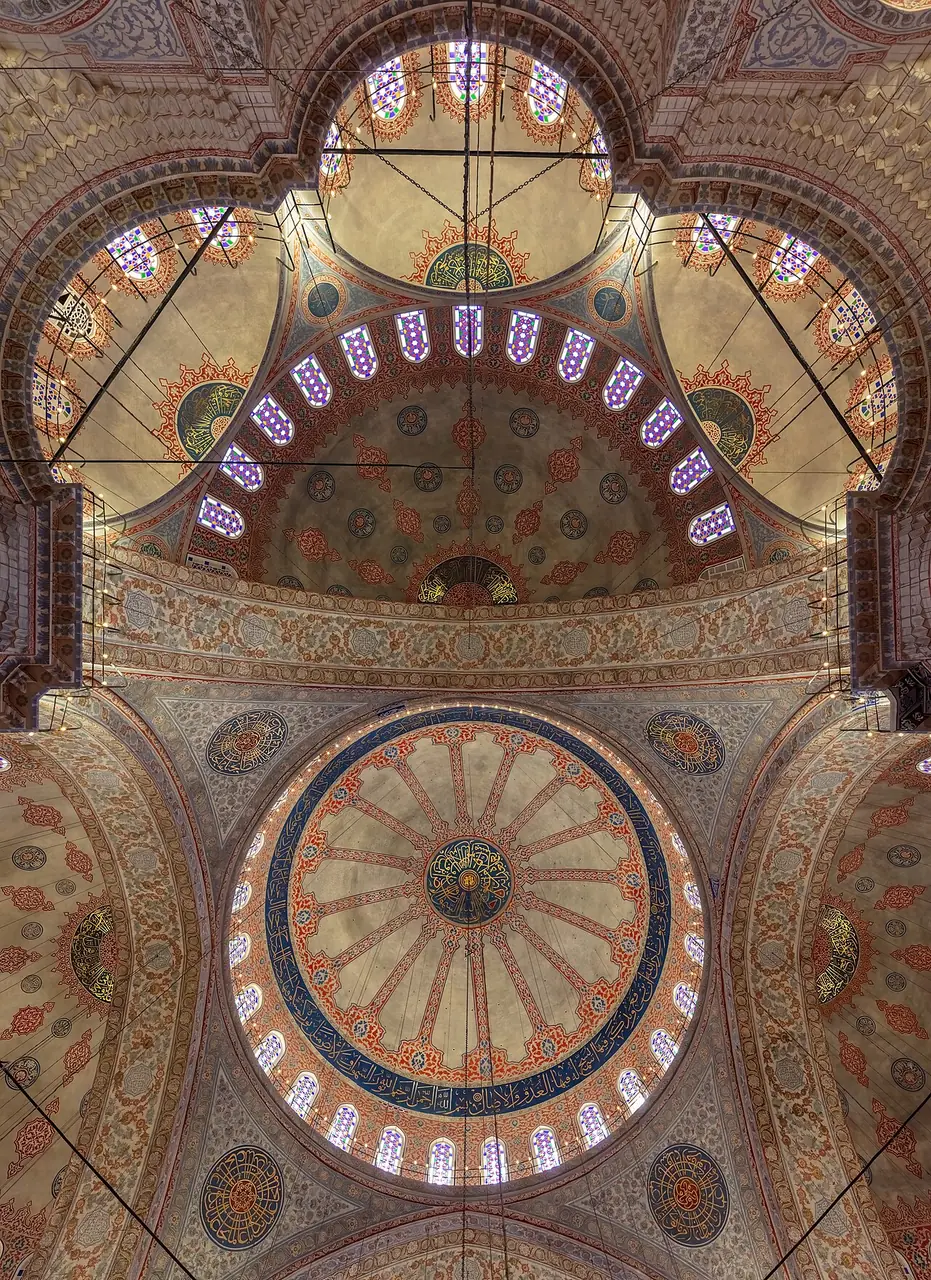
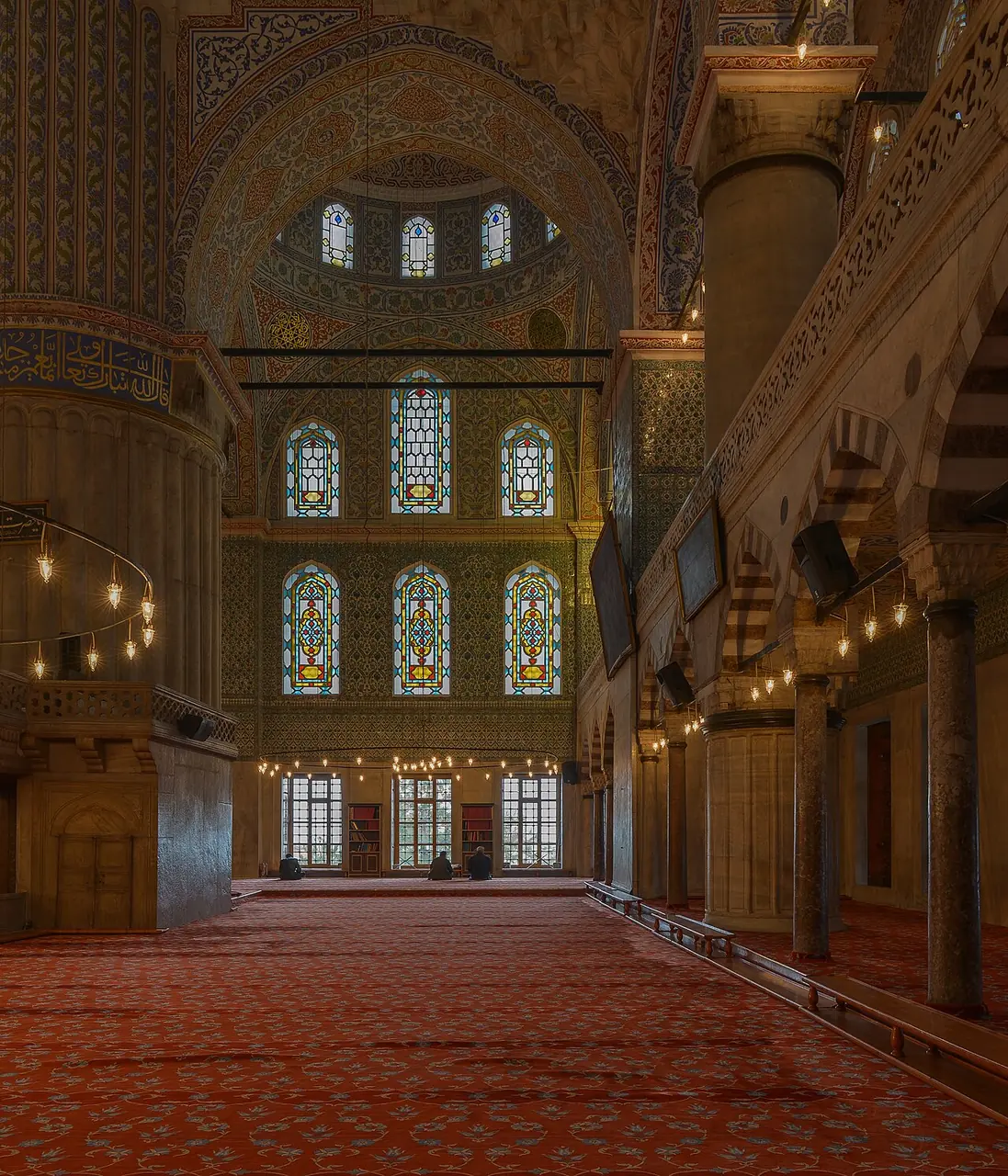
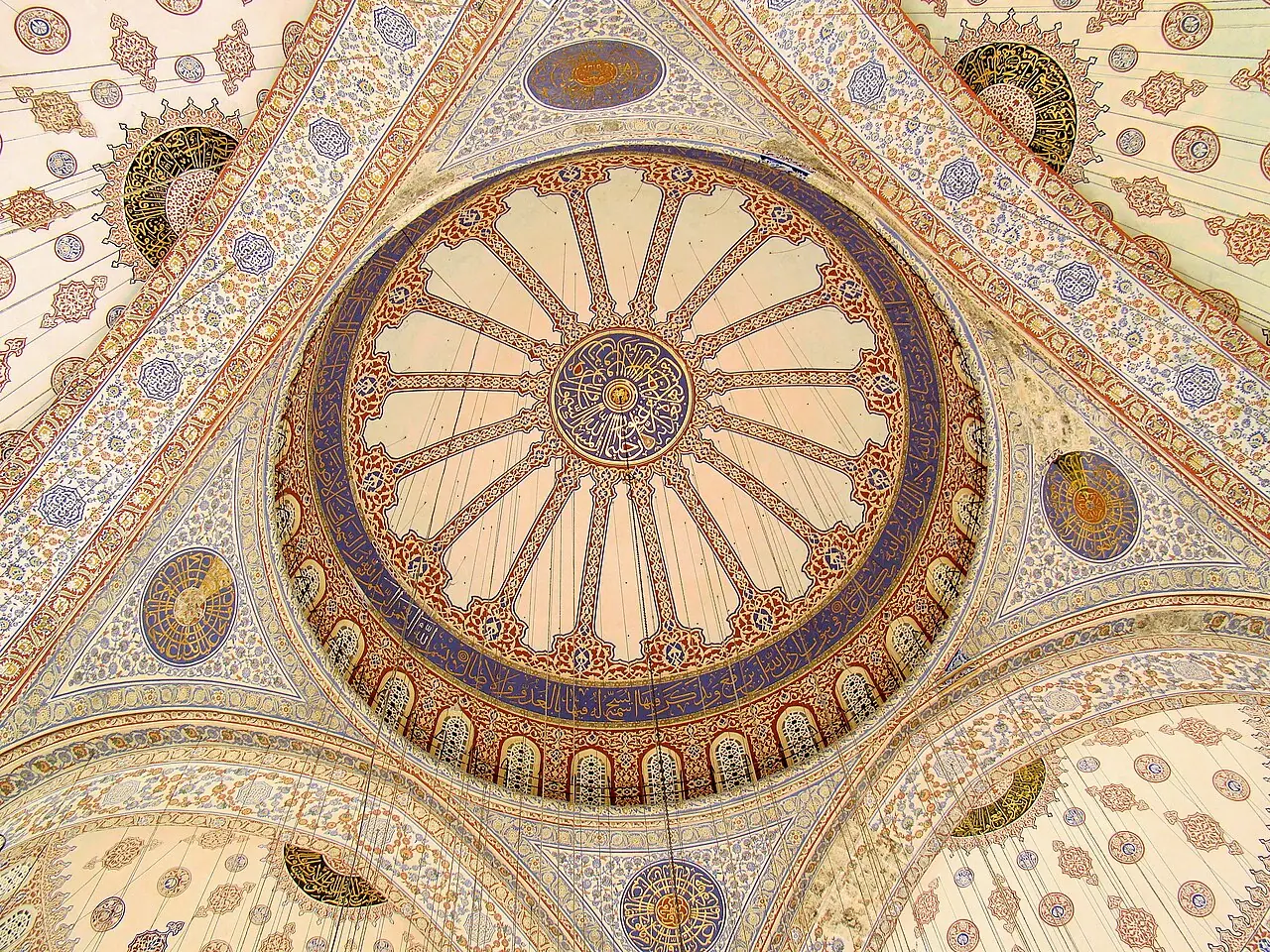
The main dome (23.5 m diameter, 43 m high) rests on four massive 'elephant-foot' piers flanked by four semi-domes — the classical Ottoman scheme descending from Şehzade and, beyond it, from Hagia Sophia. The mosque is surrounded by six minarets — unique among Ottoman imperial mosques (which usually had no more than four). By legend the sultan ordered 'altın' (golden) minarets but the architect understood 'altı' (six). The choice caused controversy, as only the Masjid al-Haram in Mecca had six minarets; to resolve the crisis, Ahmed I funded the addition of a seventh minaret at Mecca. The interior is faced with over 20,000 İznik ceramic tiles; in 1613 the sultan temporarily banned the sale of İznik tiles to any buyer but his own site. Over 200 stained-glass windows originally filled the hall with coloured light; the originals, sent as a gift by the Doges of Venice, are largely lost. The courtyard, as large as the prayer hall itself, is the biggest of any Ottoman imperial mosque.
Facts
- Six minarets — unique among Ottoman imperial mosques. Only the Masjid al-Haram in Mecca had six minarets at the time; to resolve the ensuing scandal, Ahmed I funded a seventh minaret at Mecca. en.wikipedia.org
- The interior contains 21,043 İznik tiles in more than 50 different patterns; in 1613 the sultan banned the sale of İznik tiles to any buyer other than his own construction site. bluemosquetickets.com
- The architect Sedefkâr Mehmed Ağa was Mimar Sinan's pupil; his epithet 'Sedefkâr' derives from his mastery of mother-of-pearl inlay. britannica.com
- Tradition holds that on the first day of work Sultan Ahmed I personally wielded a spade while dressed in his finest robes, as an act of piety. bluemosque.com
- This was the last great imperial mosque of the classical period; Ahmed I died aged 27, only a year after its completion, and is buried in the mausoleum attached to the complex. en.wikipedia.org
Photographs