Sinan / Classical
Zal Mahmud Pasha Mosque
1577–1590 · Eyüp
Joint posthumous memorial of two patrons who died twelve days apart; Sinan's radical late-period departure from pyramidal massing toward a tall rectangular box with a single dome and three-sided galleries — and the grim historical notoriety of its patron, 'Zal' the Executioner.
- Dome
- 12.5 m
- Minarets
- 1
- Built
- 1577–1590
- Architect
- Mimar Sinan
- Patron
- Şah Sultan and Zal Mahmud Pasha
- District
- Eyüp
History
The Zal Mahmud Pasha Mosque was jointly endowed by Şah Sultan — daughter of Sultan Selim II and his wife Nurbanu Sultan — and her second husband, the Bosnian-born Ottoman vizier Zal Mahmud Pasha. Both patrons died within twelve days of each other in autumn 1577: Şah Sultan on 3 November, Zal Mahmud Pasha twelve days later. The complex was built posthumously in their memory, from 1577 to 1590, completing two years after Sinan's own death in 1588. The sobriquet 'Zal' (Executioner) was earned when, in 1553, Zal Mahmud Pasha strangled Crown Prince Şehzade Mustafa — Suleiman I's eldest son and heir — on the sultan's orders.
Architecture
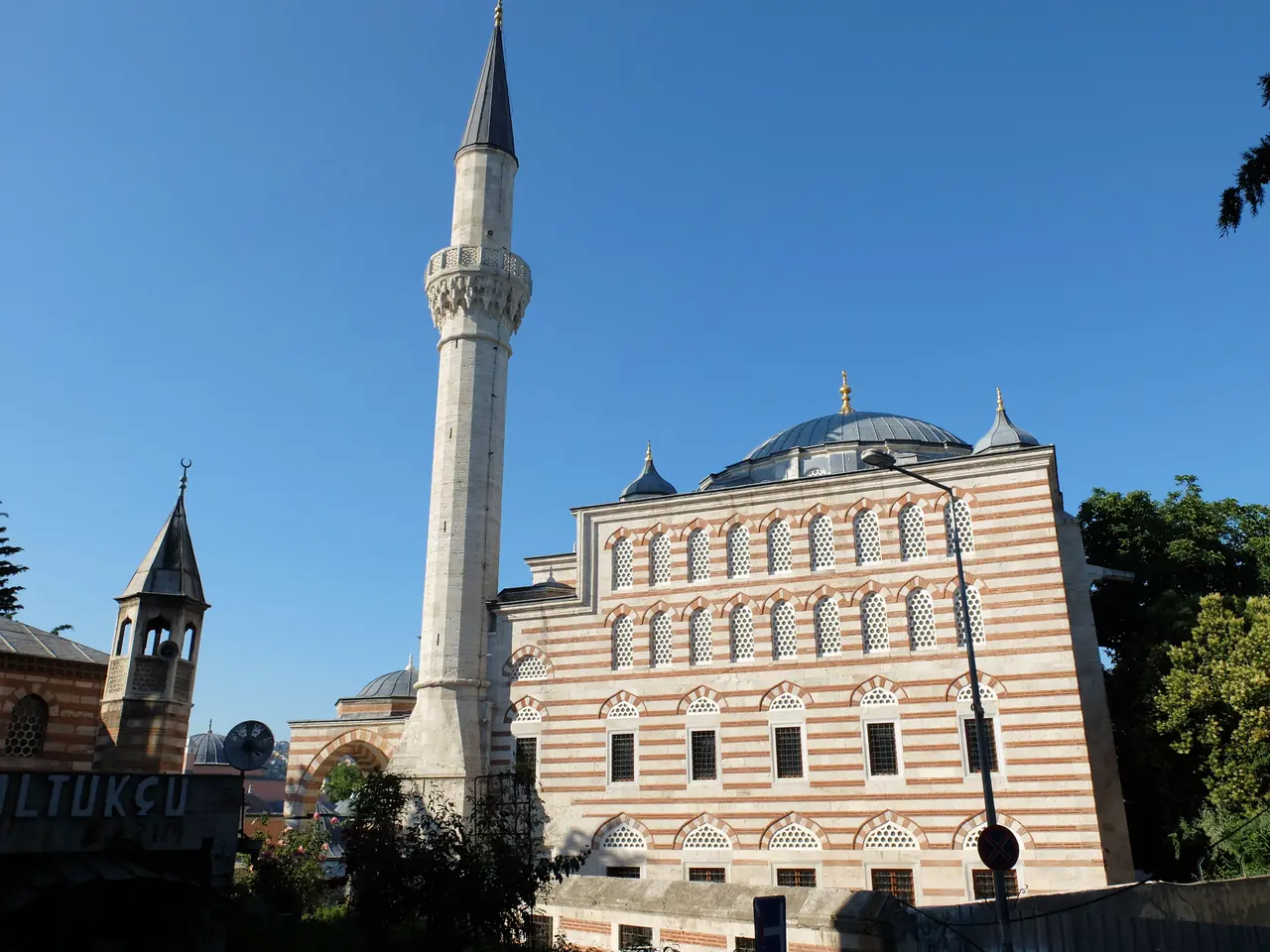
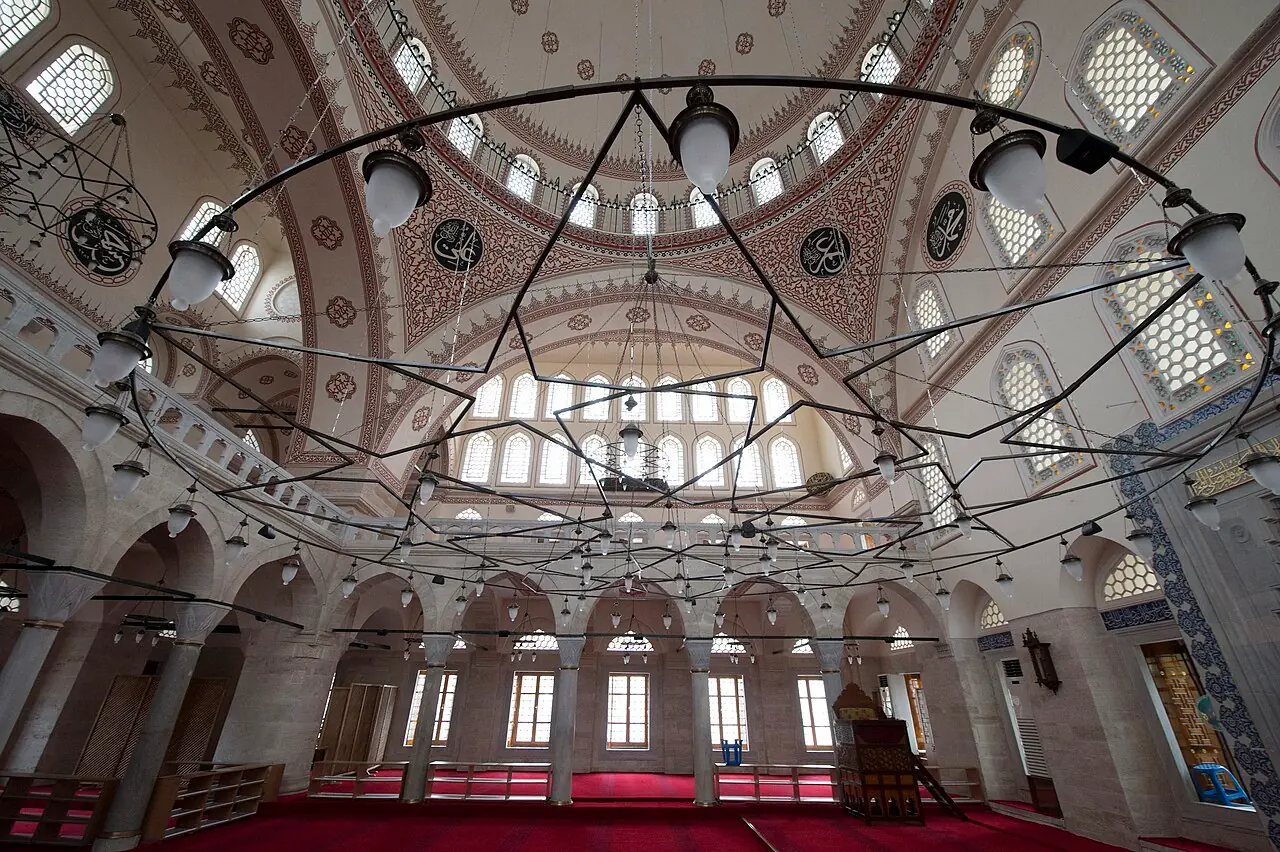
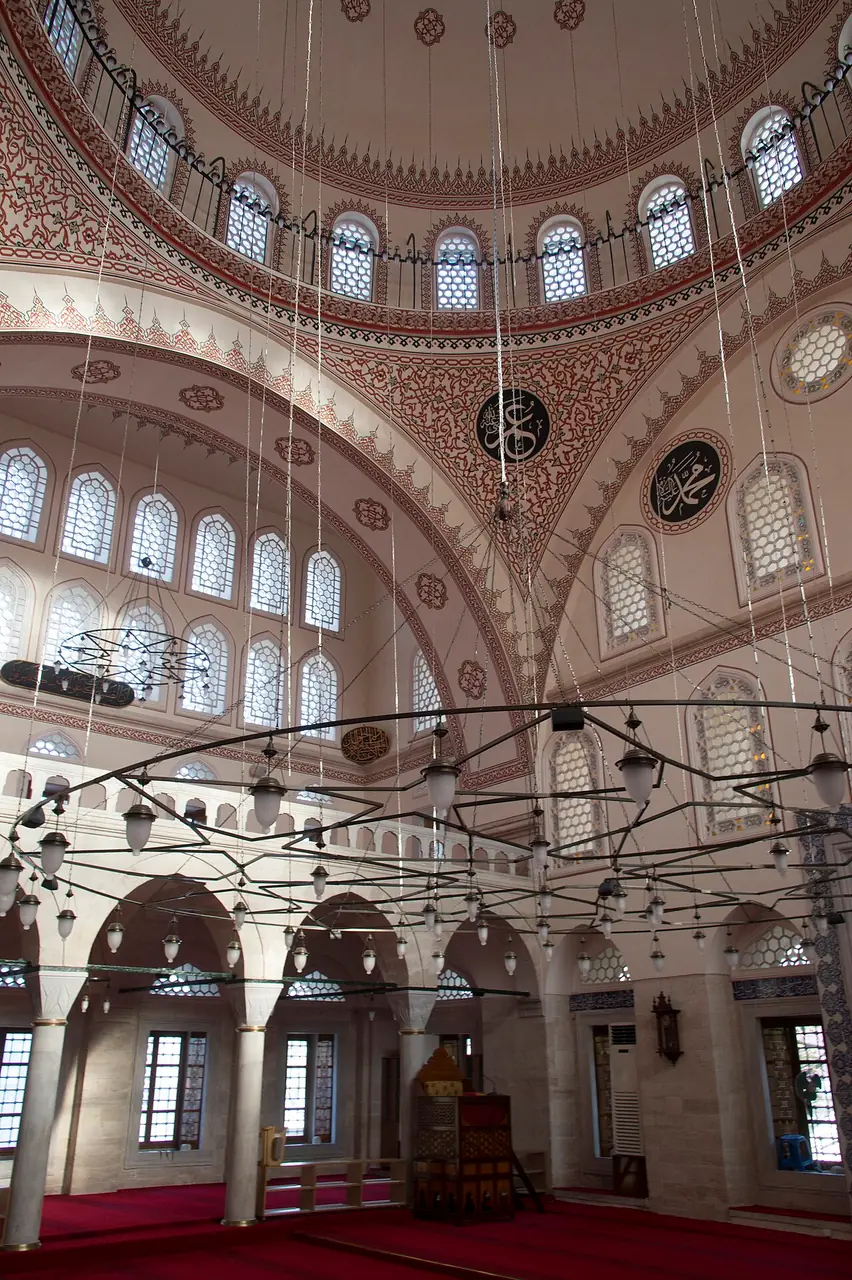
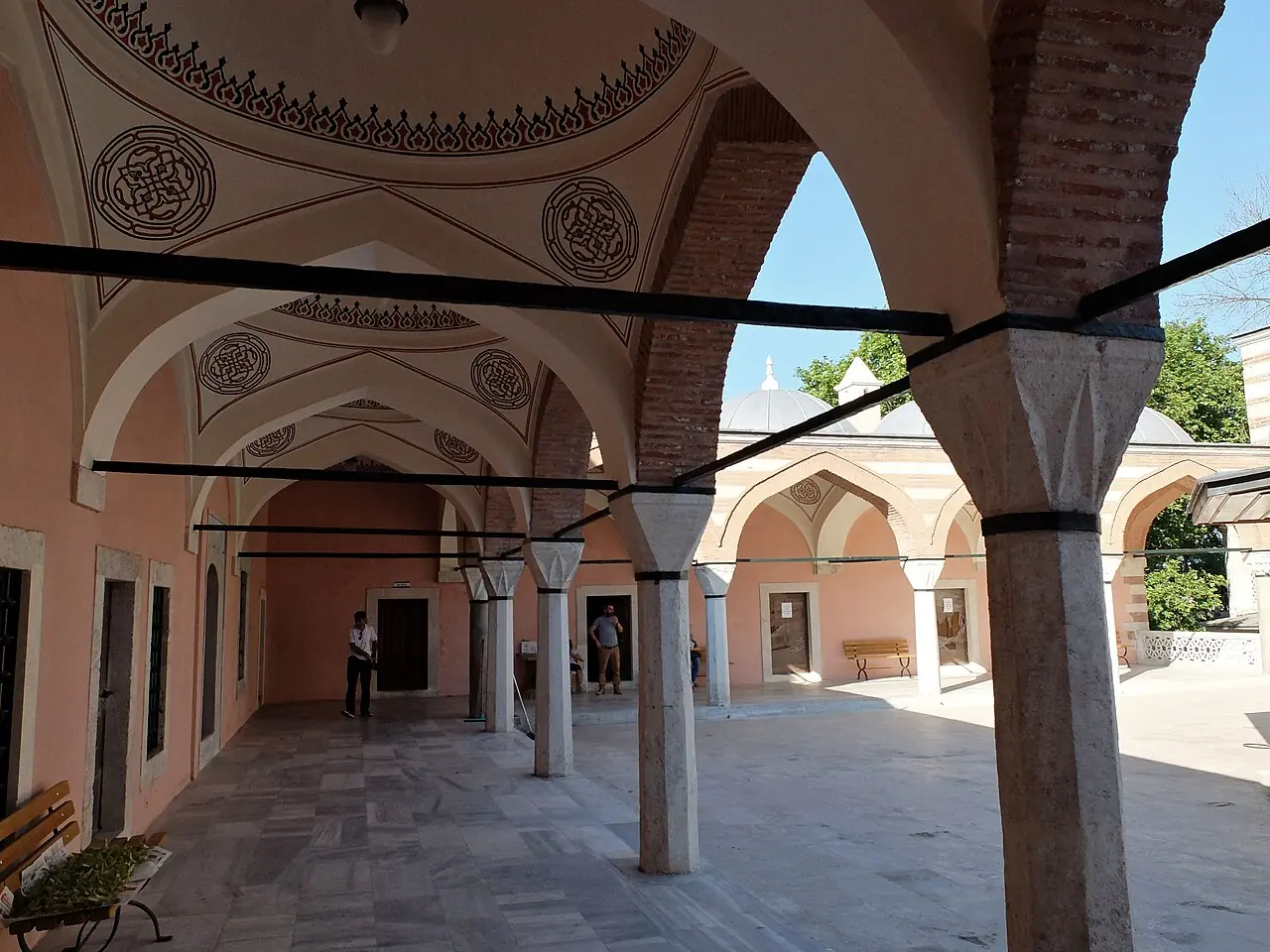
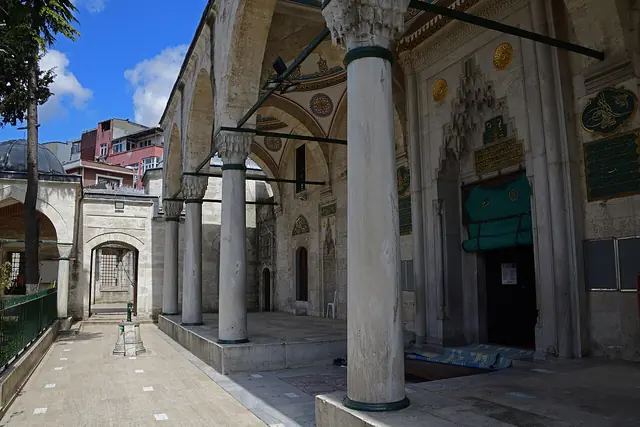
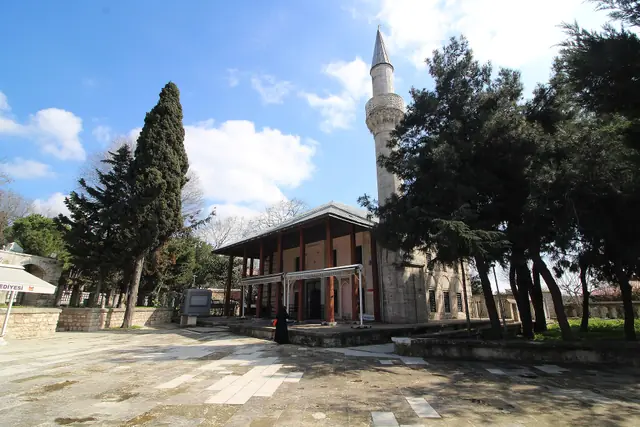
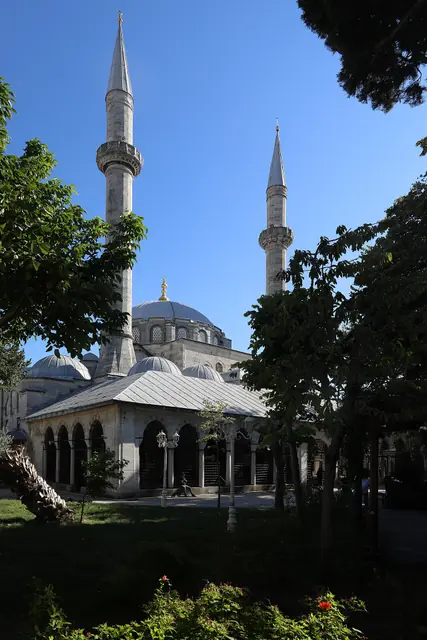
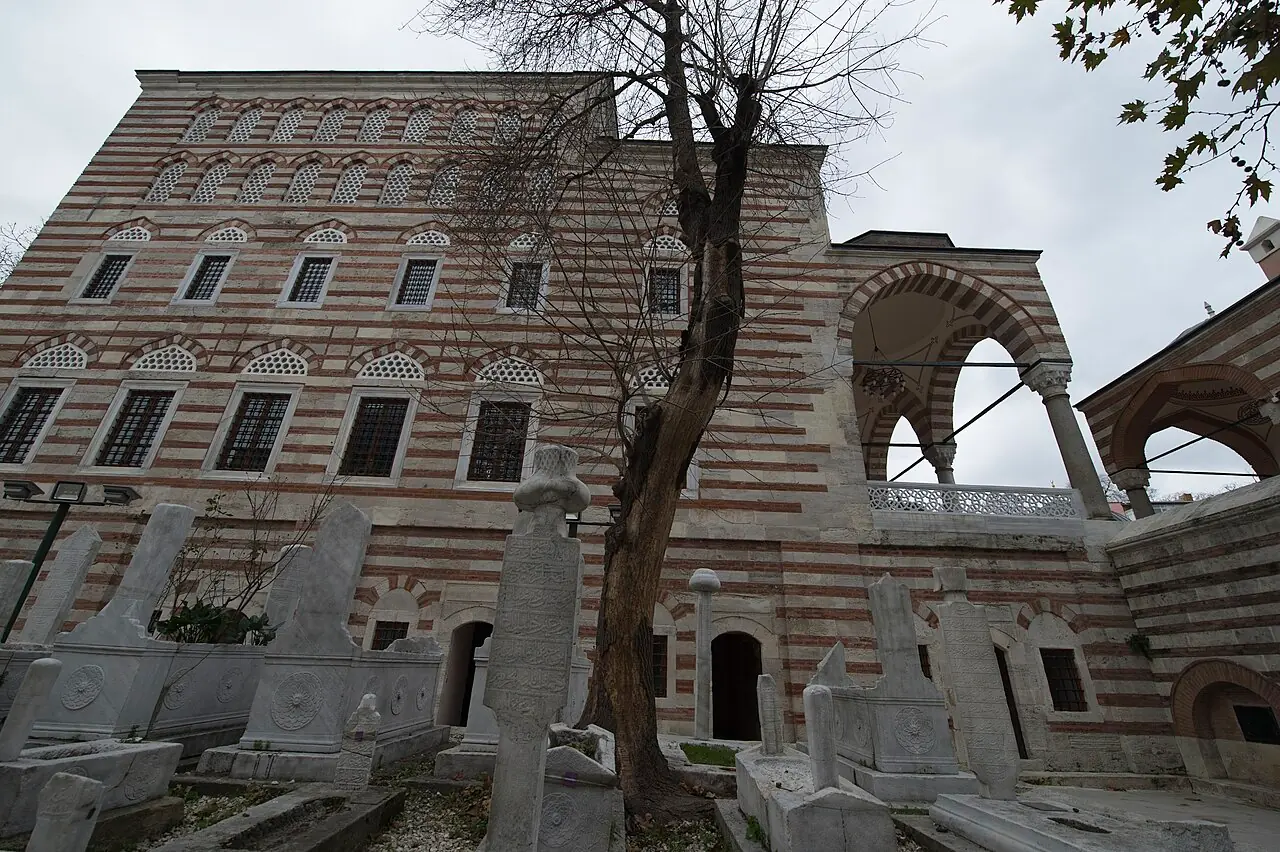
In this complex Sinan departed from the graded pyramidal massing of his earlier mosques, building a large rectangular 'box' structure crowned by a single dome of 12.5 m diameter, its walls pierced by multiple rows of windows. The prayer hall is flanked on three sides by covered aisles supporting second-story galleries. The complex occupies an irregular plot on a steeply inclined slope in Eyüp, along the upper reaches of the Golden Horn: the mosque and upper madrasa stand on the high terrace; a lower madrasa, the joint tomb, garden, and fountain occupy the eastern slope below. The patrons' shared türbe is a domed octagonal pavilion with a cross-shaped interior plan.
In Sinan's evolution
Very late career (1577–1590). Represents a significant structural departure from Sinan's typical pyramidal compositional language toward a rectangular box massing. Completed two years after Sinan's death. May reflect either a deliberate late experiment or constraints imposed by the difficult sloped site in Eyüp.
Sinan Tree →Facts
- Both patrons died within twelve days of each other in autumn 1577 — Şah Sultan on 3 November, Zal Mahmud Pasha twelve days later. The entire complex was built posthumously in their memory. en.wikipedia.org
- The name 'Zal' means Executioner: Zal Mahmud Pasha earned the sobriquet by strangling Crown Prince Şehzade Mustafa on Sultan Suleiman I's orders in 1553. en.wikipedia.org
- Şah Sultan, daughter of Selim II, chose to be buried in this mosque's türbe beside her husband rather than in the royal Selim II Mausoleum at Hagia Sophia with her sisters. en.wikipedia.org
- The mosque was completed in 1590, two years after Sinan's death in 1588, making it one of the last buildings constructed to his design. archnet.org
- The complex contains two separately named madrasas — the Madrasa of Şah Sultan and the Madrasa of Zal Pasha — a rare instance of a single külliye preserving the names of both co-patrons in distinct component buildings. archnet.org
Photographs