Early Ottoman
Fatih Mosque
1463–1470 · Fatih
Palimpsest of three eras on one site: Byzantine imperial church (Holy Apostles) → early Ottoman imperial prototype (1470, single central dome + one semi-dome) → Baroque rebuild (1771); the foundational külliye that gave Istanbul's Fatih district its name and housed the first Ottoman imperial 'university' (Sahn-ı Seman). Tomb of Mehmed II the Conqueror stands in the precinct.
- Dome
- 26 m
- Minarets
- 2
- Built
- 1463–1470
- Architect
- Atik Sinan
- Patron
- Mehmed II the Conqueror
- District
- Fatih
- rebuilt after
- earthquake, 1766
History
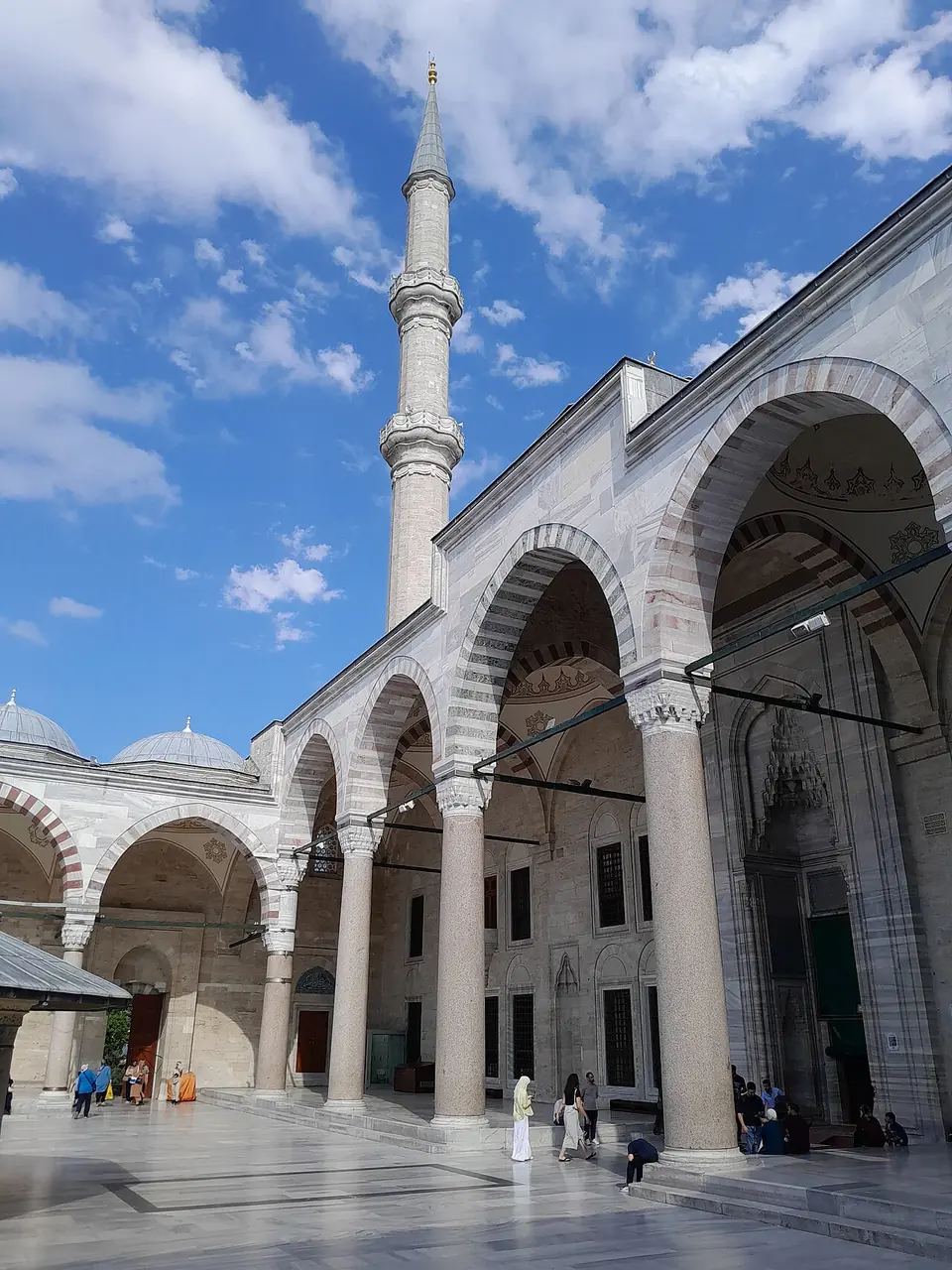
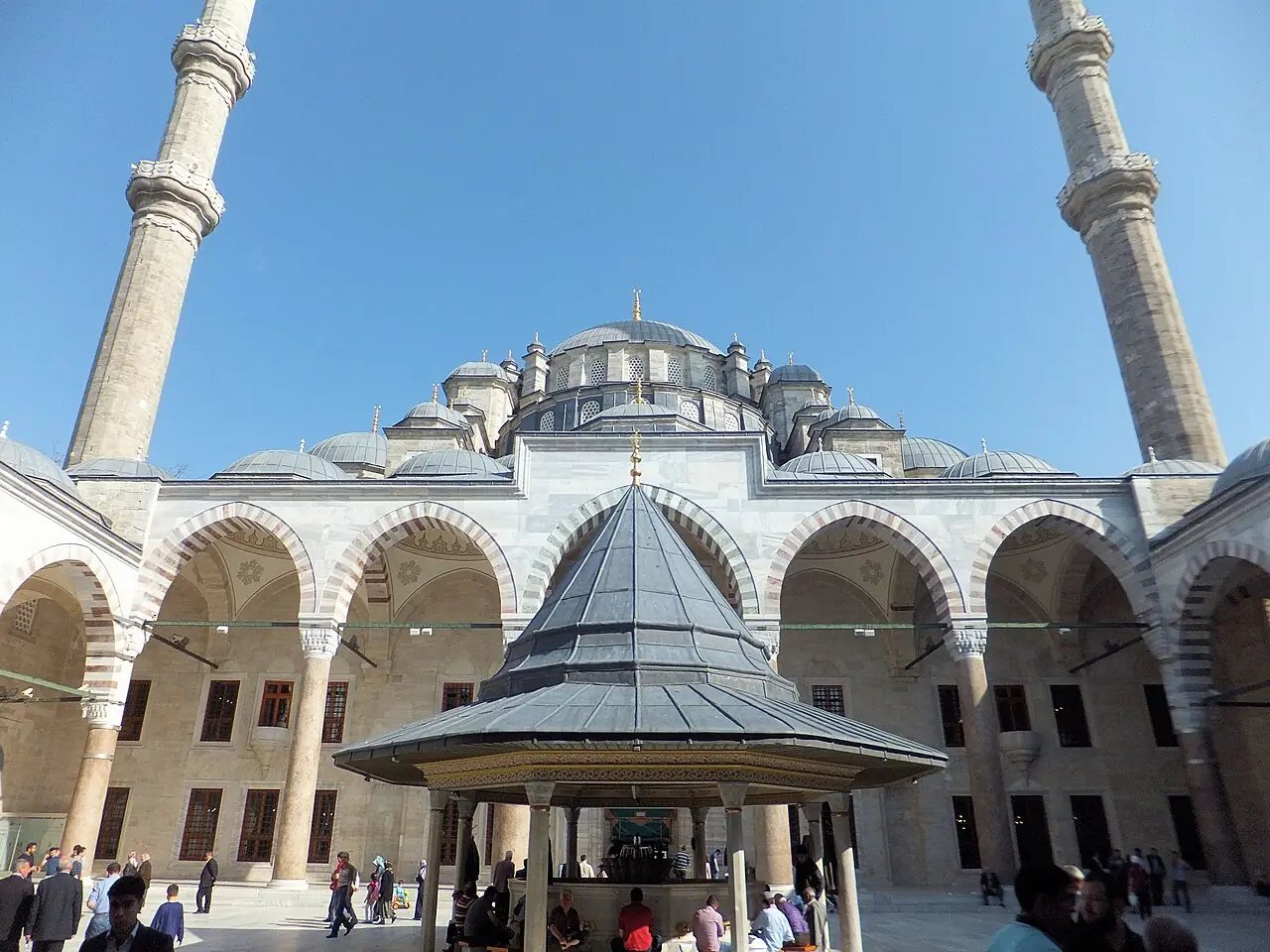
The Fatih Mosque was built in 1463–1470 by order of Mehmed II the Conqueror, the first sultan to make Constantinople the Ottoman capital. It was the first monumental project in the Ottoman imperial architectural tradition and the largest külliye of its time. To clear the site, the 4th-century Byzantine Church of the Holy Apostles — second only to Hagia Sophia in importance and the burial place of Byzantine emperors — was demolished. The architect was the Greek Atik Sinan (Christodoulos), who had previously served as court architect. The complex comprised the Sahn-ı Seman madrasas (eight higher colleges), a library, hospital, asylum, caravanserai, hamam, bazaar, soup kitchen, primary school, guest house, and a cemetery with the mausoleums of Mehmed II and his consort Gülbahar Hatun. The Sahn-ı Seman, associated with the Turkic astronomer Ali Qushji, taught theology, law, medicine, astronomy, physics and mathematics — effectively the first Ottoman imperial university. An earthquake in 1766 destroyed the building; Sultan Mustafa III commissioned architect Mehmet Tahir Ağa to build an entirely new Baroque mosque in 1767–1771. Only the courtyard, main portal and lower parts of the minarets survive from the original 15th-century mosque.
Architecture
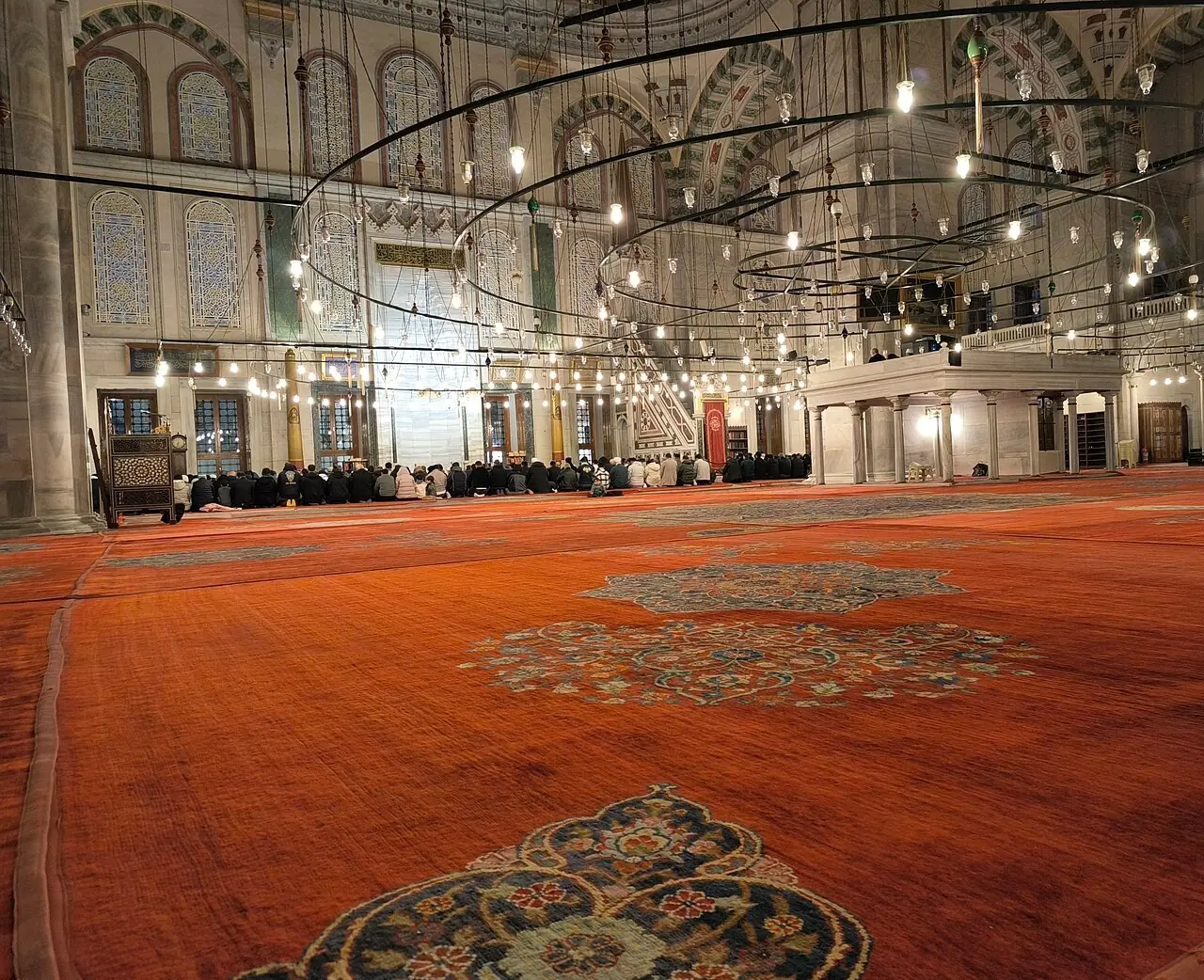
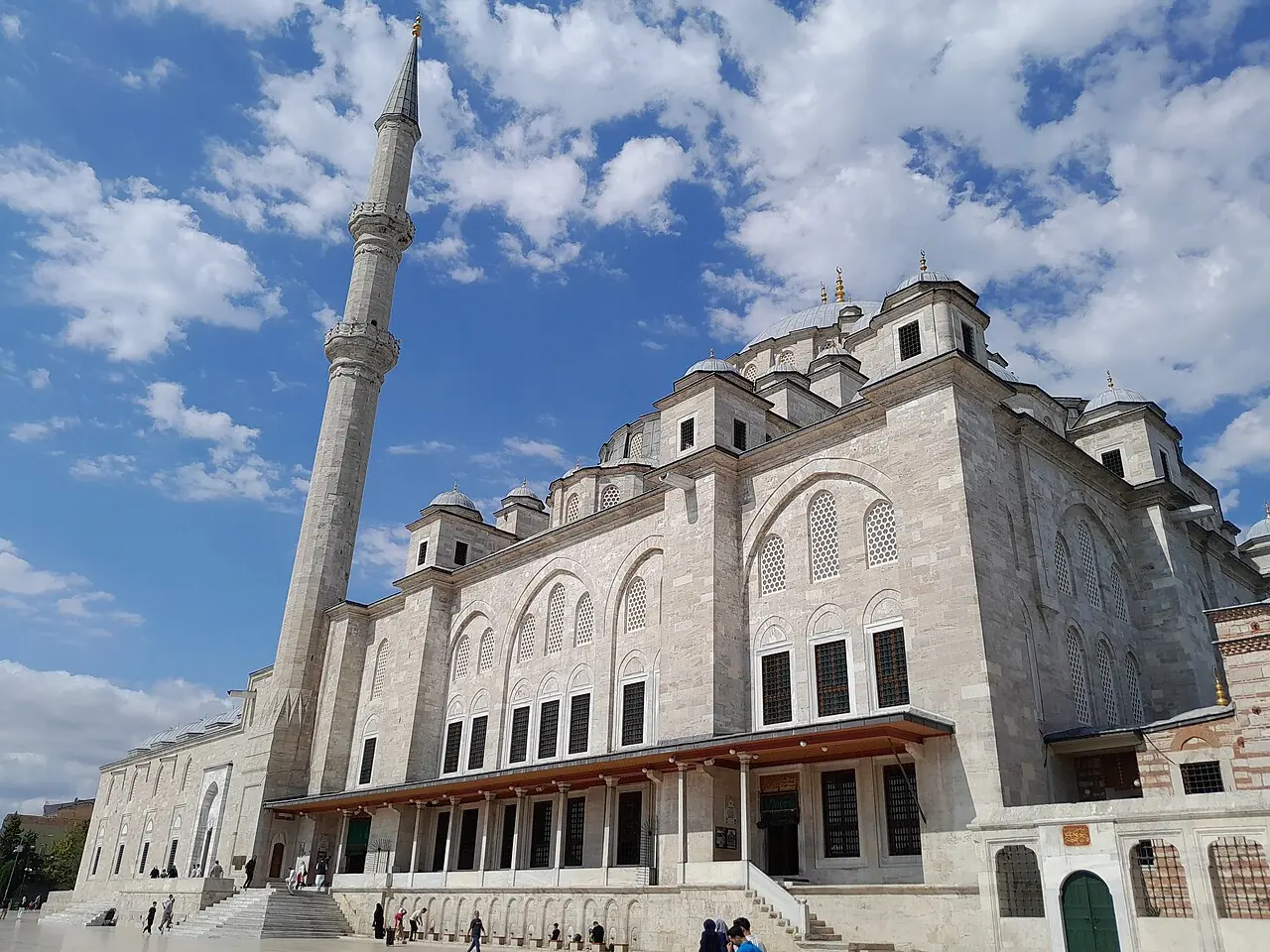
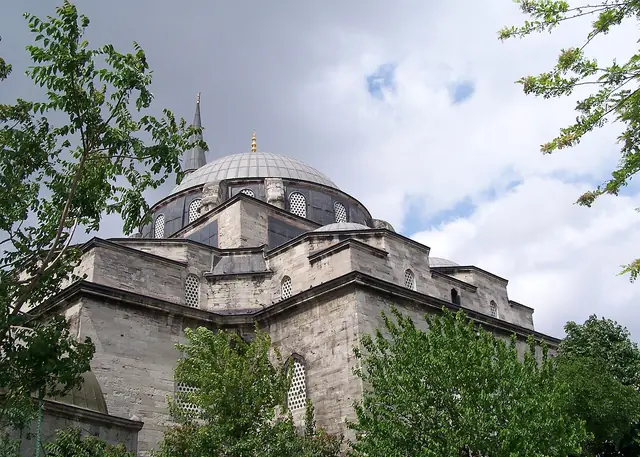
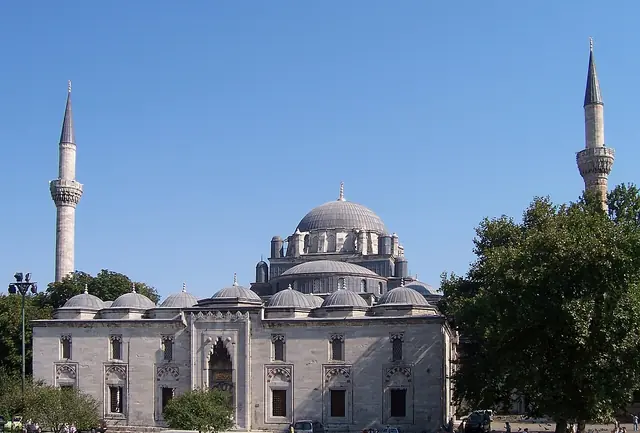
The original 1470 mosque had a single central dome about 26 m in diameter, supported by one semi-dome of the same width on the qibla side and suspended on four arches. It was the most ambitious imperial dome yet raised by the Ottomans, and the last to use this particular single-semi-dome scheme: later imperial mosques pursued more complex compositions. After the 1766 earthquake only the courtyard, portal and lower parts of the minarets were preserved. Tahir Ağa's 1767–71 rebuild has a square plan with a central dome supported by four semi-domes — a scheme closer to Sinan's Şehzade, now dressed in Baroque decor. The two minarets were retained. Inside the precinct stand the türbes of Mehmed II (a major pilgrimage site) and Gülbahar Hatun; the surrounding cemetery holds many other dynastic graves. The complex is so large that the entire surrounding Istanbul district of Fatih takes its name from the mosque.
Facts
- This was the first monumental project in the Ottoman imperial architectural tradition — effectively the inaugural work of classical Ottoman architecture as an era. en.wikipedia.org
- The mosque replaced the 4th-century Byzantine Church of the Holy Apostles — second only to Hagia Sophia and the burial place of Byzantine emperors. en.wikipedia.org
- The original 1470 dome spanned 26 m, making it the largest Ottoman dome built to that date, a deliberate rival in scale to Hagia Sophia — only later surpassed by Süleymaniye (26.5 m). en.wikipedia.org
- The complex included the Sahn-ı Seman — eight higher madrasas functioning as the first Ottoman imperial 'university', teaching theology, law, medicine, astronomy, physics and mathematics. islamiclandmarks.com
- The current mosque is effectively the third architectural entity on the site: Byzantine Church of the Holy Apostles → Atik Sinan's 1470 mosque → Mehmet Tahir Ağa's 1771 Baroque rebuild after the 1766 earthquake. en.wikipedia.org
Photographs