Sinan / Classical
İskender Pasha Mosque, Kanlıca
1559–1560 · Beykoz / Kanlıca
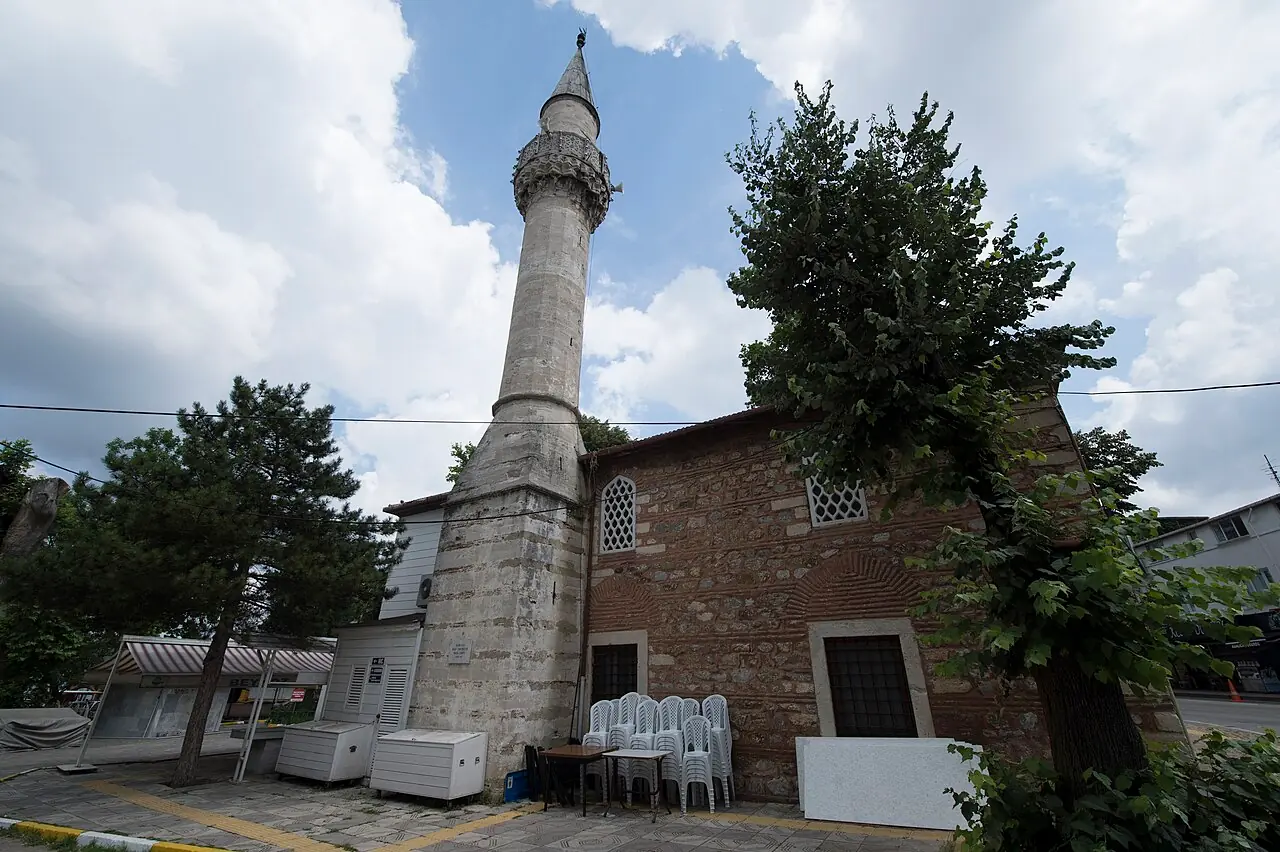
Rare Sinan mosque under a hipped timber roof (no masonry dome) — a small-scale Bosphorus-shore commission anticipating the later waterfront typology of Şemsi Pasha and Sokollu-Azapkapı.
- Minarets
- 1
- Built
- 1559–1560
- Architect
- Mimar Sinan
- Patron
- Kazasker Gazi İskender Pasha
- District
- Beykoz / Kanlıca
History
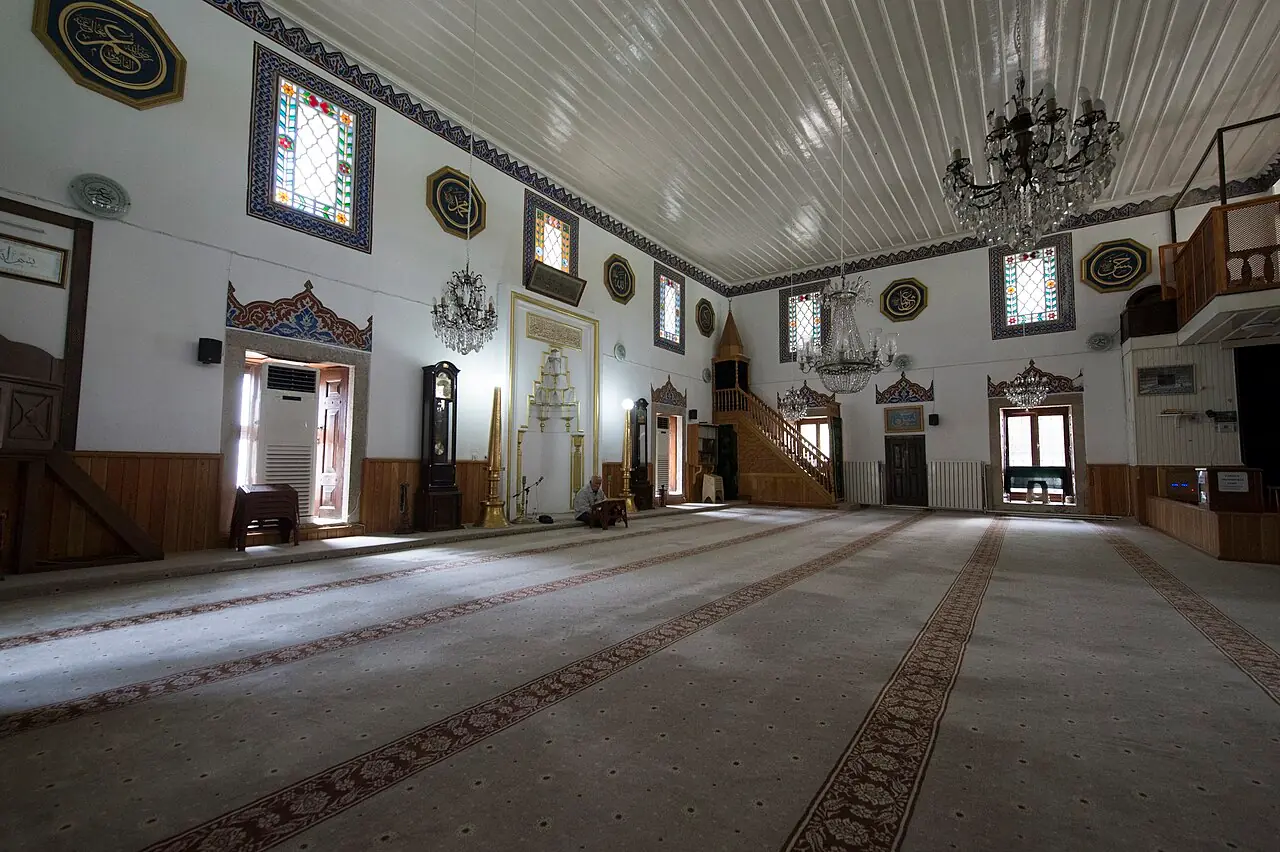
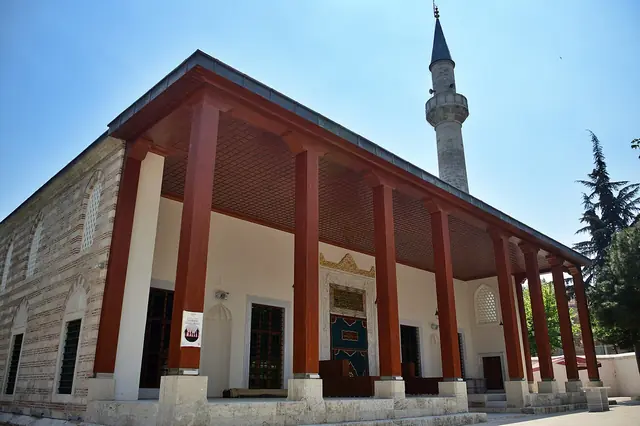
The İskender Pasha Mosque was built in 1560 in Kanlıca, a Bosphorus village on the Asian side of Istanbul (Beykoz district), by order of Kazasker (Chief Military Judge) Gazi İskender Pasha. It was designed by Mimar Sinan during the years he was simultaneously overseeing the Süleymaniye complex. The mosque was the core of a small külliye with a medrese, bathhouse, and the patron's mausoleum (türbe). In 1925, when the Bosphorus shore road was widened, the medrese and hamam were demolished; only the mosque and türbe survive. The fabric has been extensively rebuilt, and the original timber roofing and the late-congregation portico (son cemaat yeri) have been replaced. Despite these interventions, it remains an important early example of Sinan's Bosphorus-waterfront architecture.
Architecture
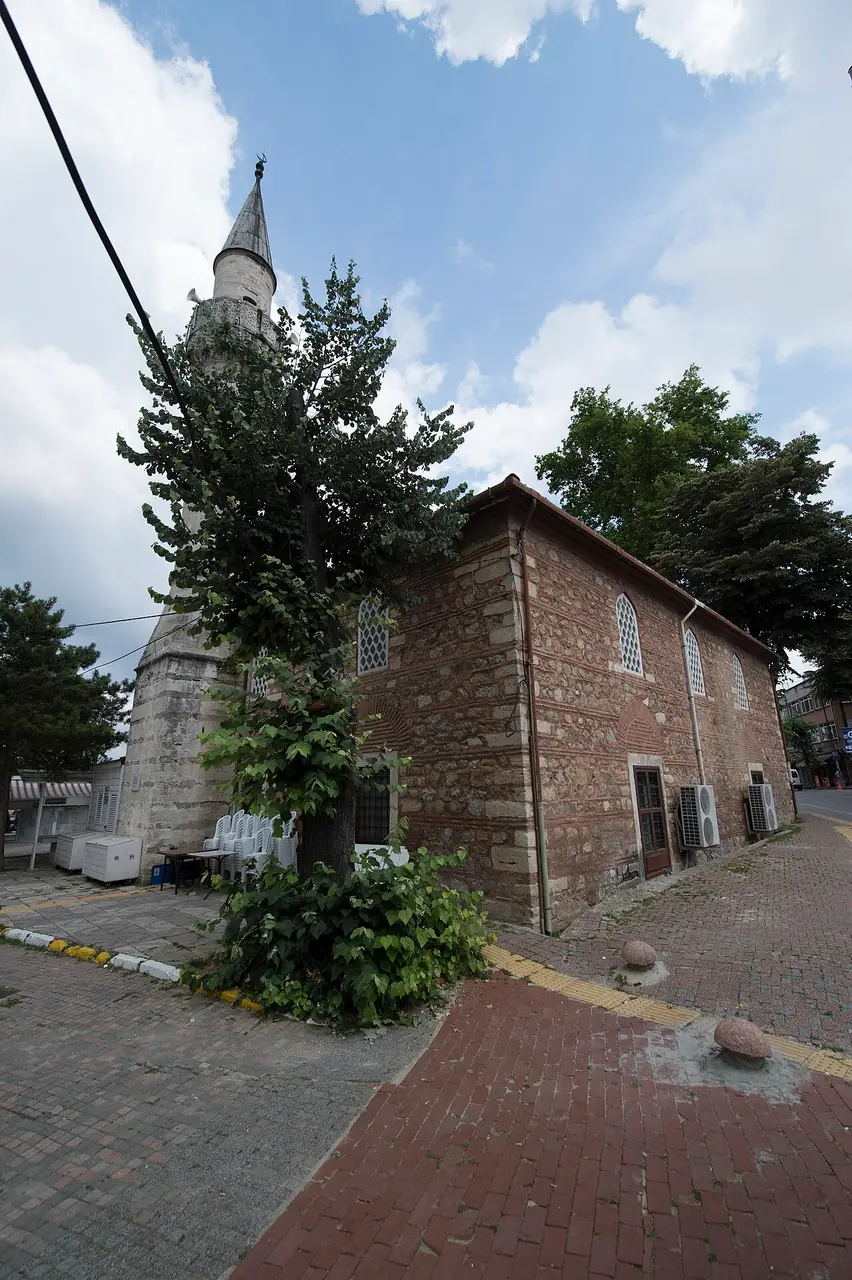
İskender Pasha Mosque is a rare example of a Sinan mosque covered by a hipped timber roof rather than a masonry central dome. The plan is a simple rectangle roughly 11.25 × 15.7 m. Sinan used this type for smaller provincial and waterfront commissions where a masonry dome would have been disproportionate to budget and context. A single minaret stands at the northwest corner. The mosque's position directly on the Bosphorus shore — one of Sinan's earliest such waterfront buildings — anticipates the fully-developed shoreline typology of Şemsi Pasha at Üsküdar (1580) and Sokollu Mehmed Pasha at Azapkapı (1577–78). The patron's türbe adjoins the mosque on the qibla side.
In Sinan's evolution
Contemporaneous with late Süleymaniye phase (1560). An important 'counter-piece' to the imperial monumentality of the same years — shows Sinan's adaptability to minor scale and waterfront context. Predates and informs the later coastal typology fully developed in the 1570s–1580s (Şemsi Pasha, Sokollu-Azapkapı).
Sinan Tree →Facts
- One of the few Sinan mosques without a masonry dome — roofed with a hipped (pitched) timber structure instead. archiqoo.com
- The prayer hall measures approximately 11.25 × 15.7 m, placing it among Sinan's 'small scale' works. archiqoo.com
- In 1925 the medrese, hamam, and much of the surrounding külliye were demolished to widen the Bosphorus shore road — only the mosque and türbe remain. en.wikipedia.org
- One of Sinan's earliest mosques built directly on the Bosphorus shoreline — it predates the more famous waterfront pair Şemsi Pasha (Üsküdar, 1580) and Sokollu Pasha (Azapkapı, 1577–78). culturecityistanbul.blogspot.com
- Built while Sinan was simultaneously supervising the Süleymaniye construction — evidence that he continued to take private commissions during his imperial-project years. cornucopia.net
Photographs