Sinan / Classical
Rüstem Pasha Mosque
1561–1563 · Fatih / Tahtakale
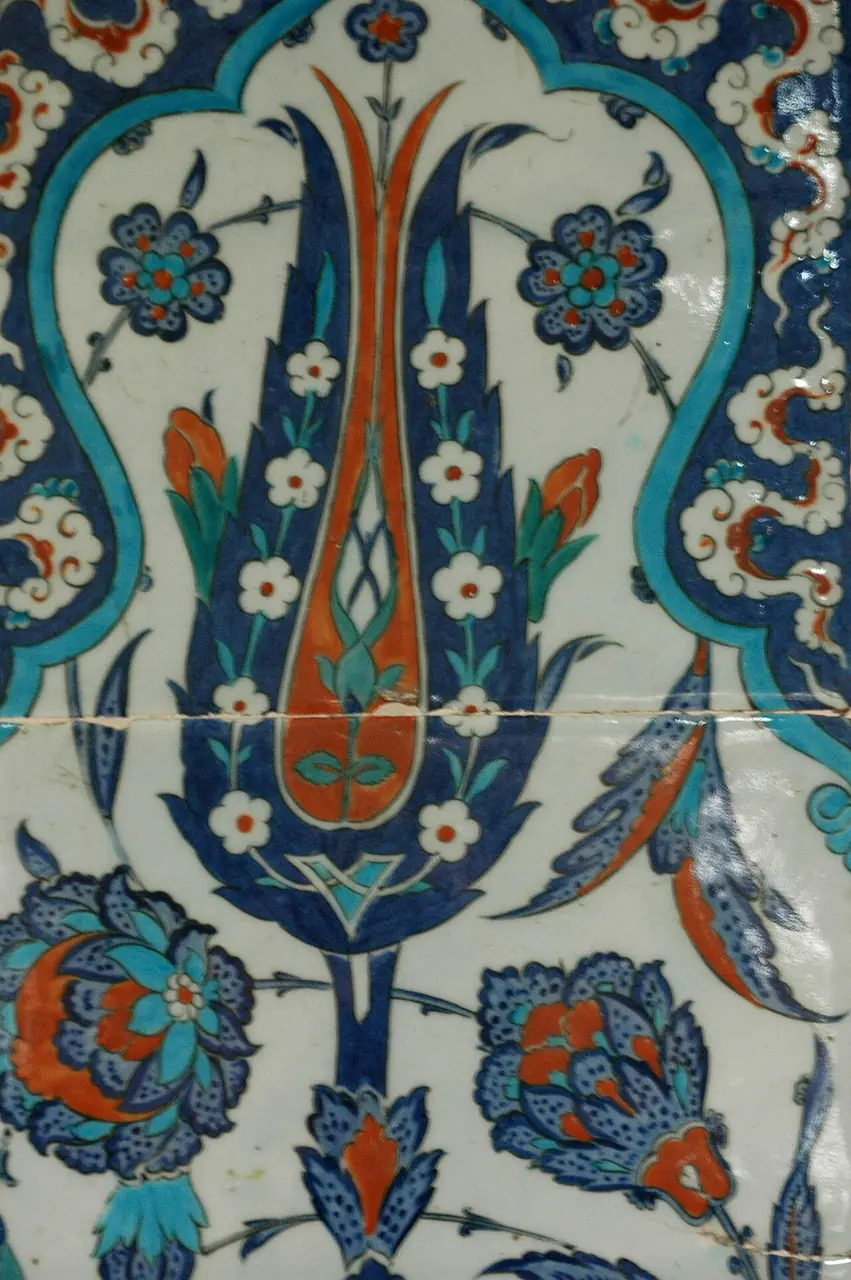
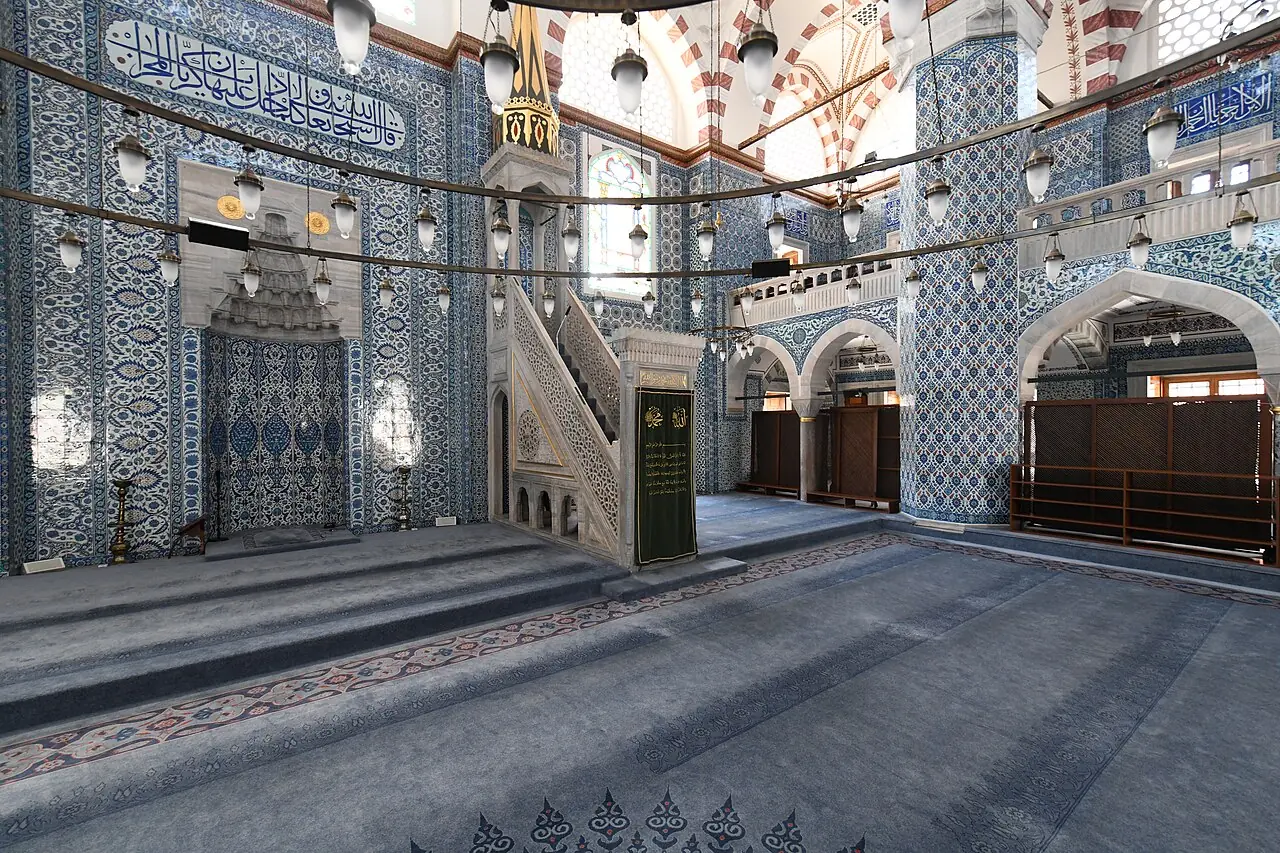
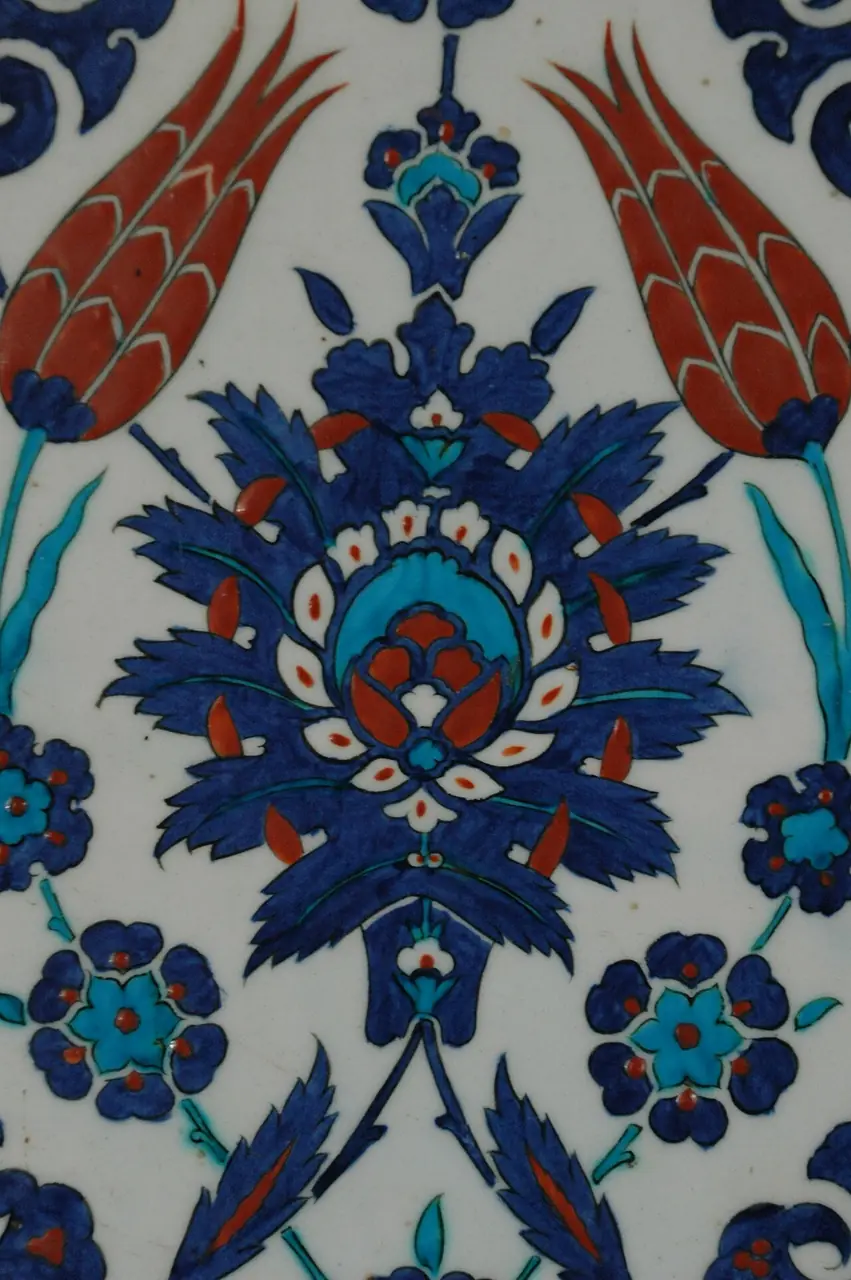
The most tile-dense interior of all Sinan's works: ~2,300 İznik panels in ~80 patterns cover every vertical surface, making this the definitive showcase of İznik ceramics at the peak of their 'classical period'; the mosque also pioneered the large-scale use of Armenian bole (tomato-red) that would become İznik's most recognisable colour.
- Dome
- 15.2 m
- Height
- 22.8 m
- Minarets
- 1
- Built
- 1561–1563
- Architect
- Mimar Sinan
- Patron
- Rüstem Pasha (Grand Vizier, died 1561); completed posthumously by his widow Mihrimah Sultan
- District
- Fatih / Tahtakale
History
The Rüstem Pasha Mosque was built for Rüstem Pasha, who served as Grand Vizier of the Ottoman Empire under Suleiman the Magnificent (1544–1553 and 1555–1561) and was the husband of Mihrimah Sultan, Suleiman's daughter. Rüstem Pasha died in 1561 before construction was completed. The mosque was finished by his widow Mihrimah Sultan and named in his honour. Construction is dated approximately to 1561–1563; an exact date cannot be determined because no foundation inscription survives. The mosque is concealed within the Tahtakale commercial quarter near Eminönü: it stands on a terrace above the Hasırcılar Çarşısı, the strawmat weavers' market beside the Egyptian Spice Bazaar but not inside it. Invisible from the street, it is reached by narrow twisting stairs in the corners of the substructure, which makes it the most 'hidden' of Istanbul's imperial mosques. İznik craftsmen are reported to have worked on the tiles for approximately seven years.
Architecture
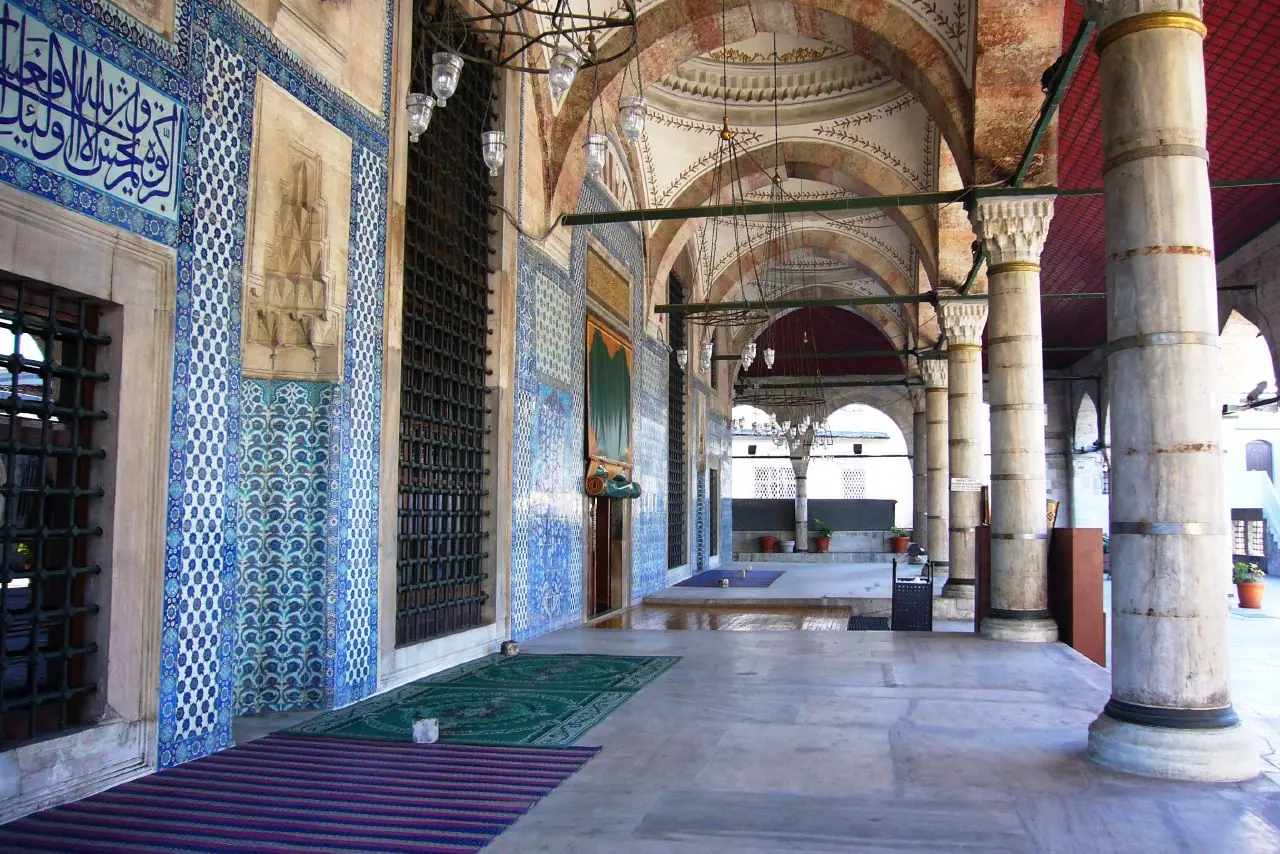
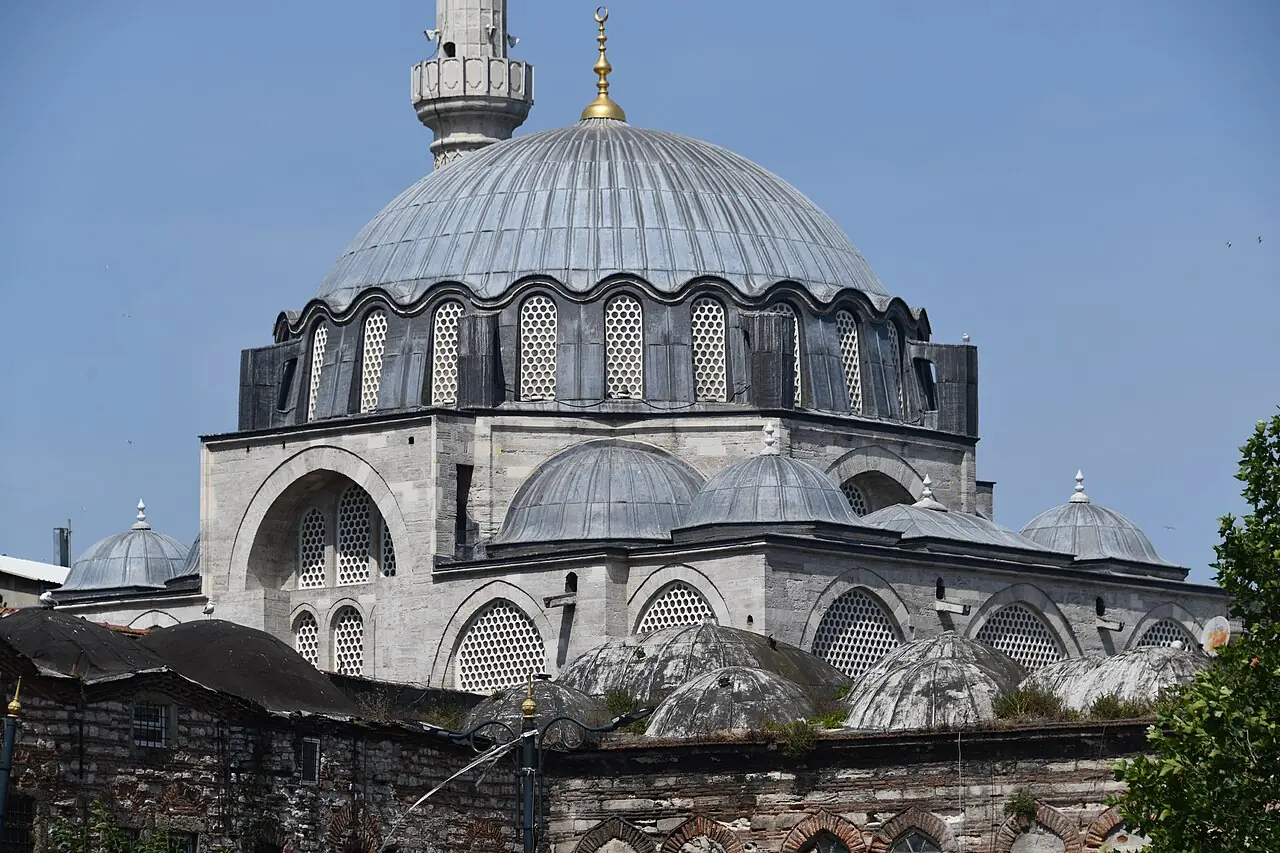
The prayer hall occupies the second floor of the building; the ground floor contains vaulted warehouses and shops whose rents funded the mosque's upkeep. The central dome, 15.2 m in diameter and 22.8 m high, rests on an octagonal base formed by eight piers — four rectangular ones built into the walls and four free-standing octagonal ones. The piers are connected by arches; four semi-domes placed on the diagonals further support the dome system. Twenty-four windows pierce the dome. Almost every vertical surface — walls, piers, pendentives, the portico, and the mihrab — is covered with İznik tilework: approximately 2,300 hand-made tile panels in roughly 80 distinct patterns. This represents the greatest variety of İznik tile designs in any single Sinan building. The mosque is also notable for the first systematic large-scale use of the Armenian bole pigment (tomato-red), which became the hallmark of later İznik production. Single minaret.
In Sinan's evolution
Mid-career (c. 1561–63). A deliberate aesthetic experiment: Sinan replaces the stone vocabulary of his earlier imperial mosques with a total tile surface, testing a different mode of sacred beauty. The octagonal eight-pier dome support is itself an unusual structural solution. Positioned between Süleymaniye (1557) and Mihrimah Edirnekapı (1563–66) in timeline.
Sinan Tree →Facts
- Approximately 2,300 İznik tile panels in roughly 80 distinct patterns — the greatest variety of İznik tilework in any single Sinan building; patterns include at least 41 different tulip motifs. en.wikipedia.org
- The mosque marks the first systematic large-scale use of Armenian bole (tomato-red pigment) in İznik ceramics — a breakthrough that defined the 'classic period' of İznik tile production in the following decades. iznikcini.com
- The prayer hall is elevated on a commercial terrace: the ground floor consists of warehouses and shops whose rents funded the mosque — an innovative urban-commercial integration. en.wikipedia.org
- The mosque has no visible street-level entrance: it sits on a terrace above the Hasırcılar market beside the Spice Bazaar, reached by narrow twisting stairs in the corners of the substructure, making it the most 'hidden' imperial mosque in Istanbul. smarthistory.org
- No foundation inscription survives, making the dating of this mosque among the most debated of Sinan's works in the scholarly literature. en.wikipedia.org
Photographs