Sinan / Classical
Şah Sultan Mosque (Eyüp)
1555–1556 · Eyüp
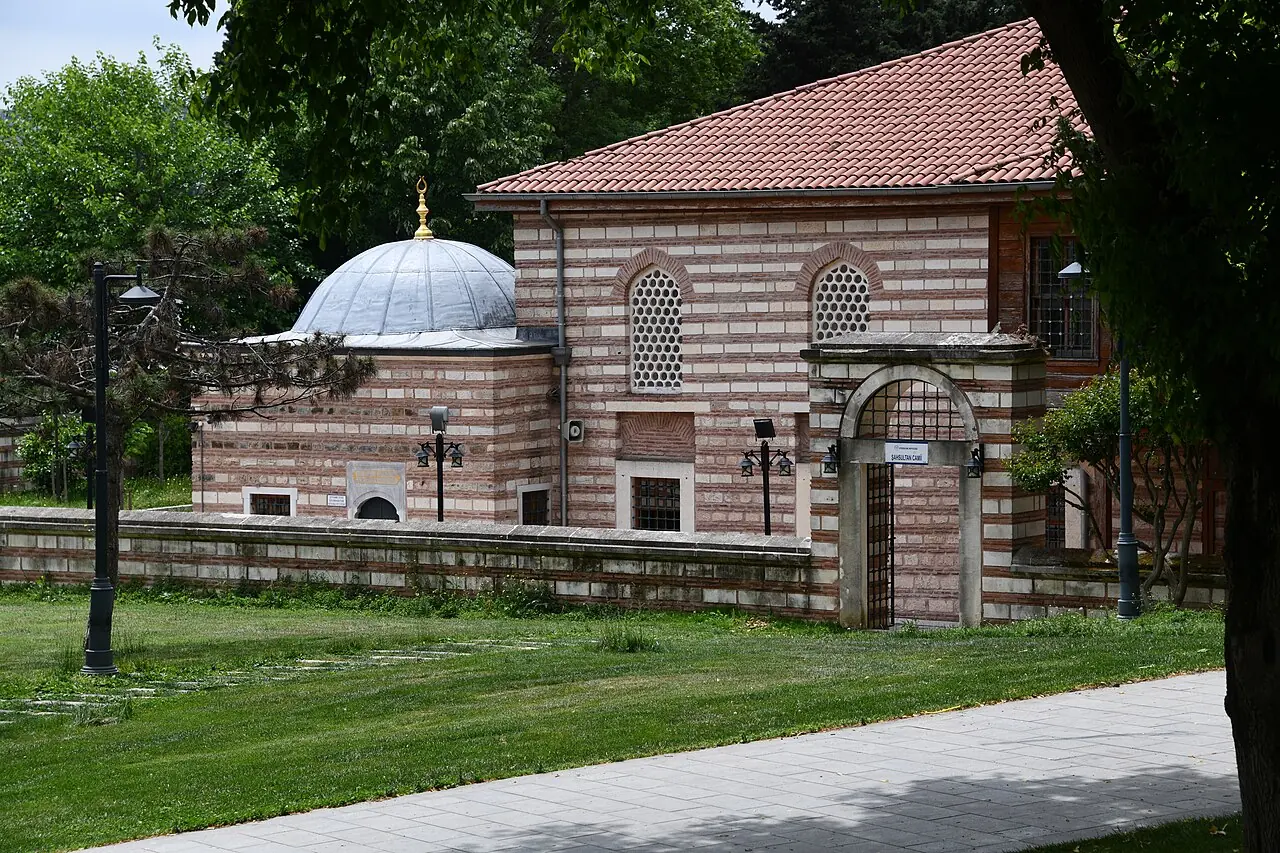
Small, intimate Sinan foundation in a dense Eyüp waterside setting; its principal interest is social-historical rather than structural — it commemorates one of the few Ottoman princesses to have won a public divorce (from the Grand Vizier), and it is the sole survivor of her three Istanbul külliyes. 19th-century restorations largely effaced the Sinan-era fabric.
- Minarets
- 1
- Built
- 1555–1556
- Architect
- Mimar Sinan
- Patron
- Şah Sultan (sister of Süleyman I, former wife of Grand Vizier Lütfi Pasha)
- District
- Eyüp
History
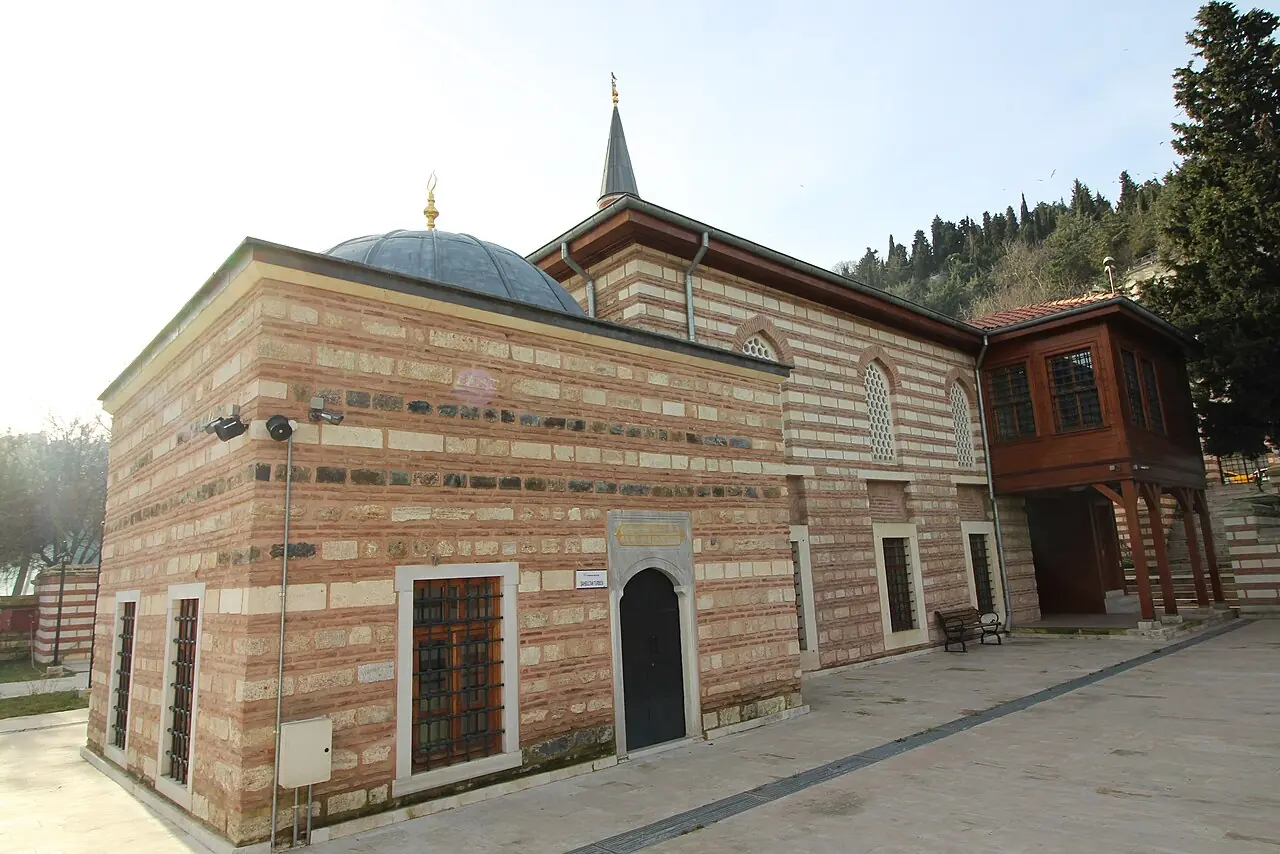
The Şah Sultan Mosque in the Bahariye neighbourhood of Eyüp (Silahtar Ağa Street) was commissioned by Şah Sultan — daughter of Selim I, sister of Süleyman the Magnificent, and former wife of Grand Vizier Lütfi Pasha. In 944 AH (1537) she had already endowed a Sünbüli-Halveti tekke (dervish lodge) on the site for Şeyh Merkez Efendi. In 1541 she initiated a notorious divorce from Lütfi Pasha; Süleyman granted it and dismissed the pasha from the grand vizierate. In 1555 she endowed a new tekke here, and in 1556 the mosque itself. The building suffered heavy damage and was subjected to two major restorations — one at the end of the 18th century, and another in 1251 AH (1835) under Mahmud II — which significantly effaced its 16th-century character. Of Şah Sultan's three külliyes (Davutpaşa, Eyüp, Yenikapı), only the Eyüp complex survives today.
Architecture
The mosque is small, square in plan, and covered by a single dome — Sinan's typical chamber-scale format for private patronage. A front portico carries a wooden roof on six wooden columns and includes several small side mihrabs. A three-line foundation inscription stands above the arched entrance. There is one minaret on the right side, currently in need of repair. The walls are built in stone-and-brick courses. The broader complex once included a tekke with dervish cells and the sheikh's residence along the shore of the Golden Horn, and a school (mektep) above the courtyard gate. Post-restoration the interior reads as late-Ottoman rather than Sinan-classical, making the original spatial programme difficult to recover.
In Sinan's evolution
A mid-career minor imperial-family commission (1555–56), contemporary with Süleymaniye's final completion. Represents Sinan's standard small single-dome square-hall scheme used for princess/vizier foundations — not a site of structural experimentation. Interesting chiefly for its Halveti-tekke context and chronological proximity to the completion of Süleymaniye.
Sinan Tree →Facts
- The site began as a Sünbüli-Halveti tekke in 1537 for Şeyh Merkez Efendi — founder of the order. eyupsultan.bel.tr
- Şah Sultan is one of the rare Ottoman princesses to have obtained a formal divorce: in 1541 Süleyman I granted her petition and also dismissed her husband Lütfi Pasha from the grand vizierate. en.wikipedia.org
- Şah Sultan funded THREE Istanbul külliyes — at Davutpaşa, Eyüp, and near Yenikapı; only the Eyüp complex survives today. istanbultarihi.ist
- The mosque effectively lost its 16th-century Sinan appearance after two major restorations — in the late 18th century and in 1835 under Mahmud II. eyupsultan.bel.tr
- The attached tekke was Sünbüli: its ceremonial zikr days were held on Tuesdays. eyupsultan.bel.tr
Photographs