Sinan / Classical
Sokollu Mehmed Pasha Mosque, Azapkapı
1577–1578 · Beyoğlu / Azapkapı
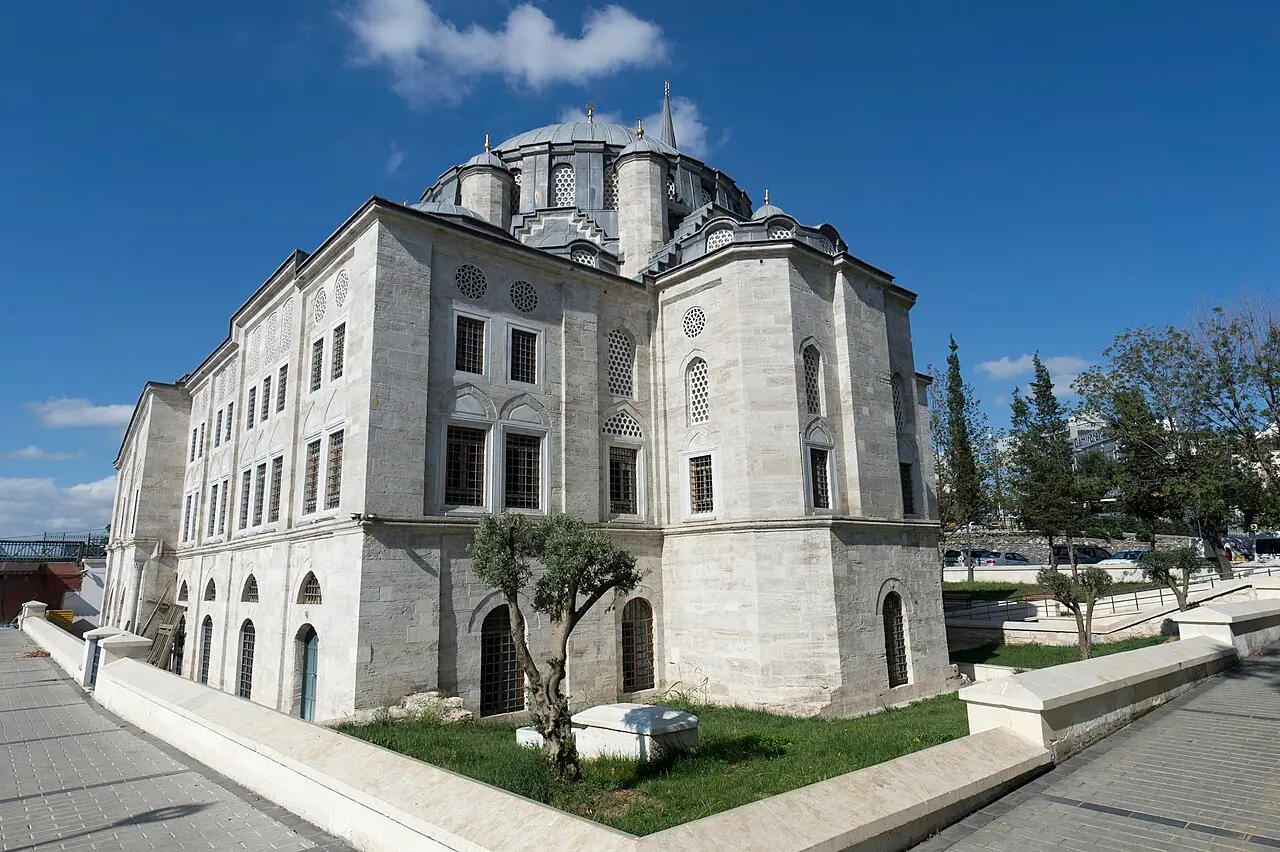
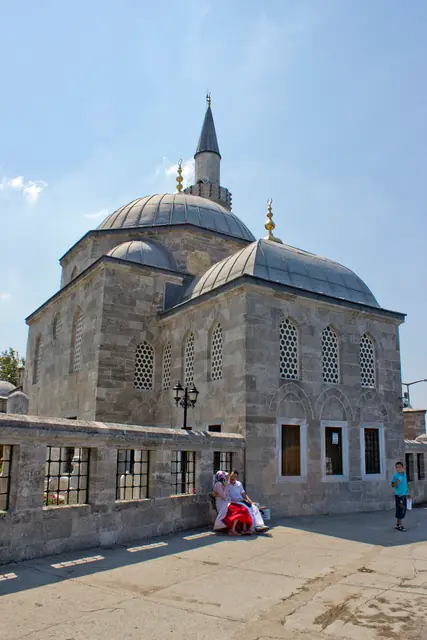
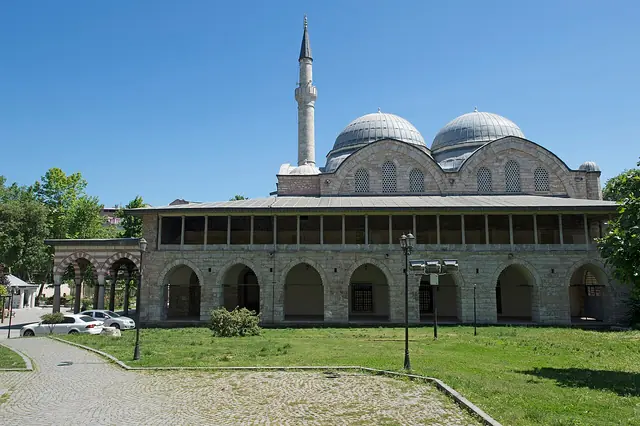
Prayer hall raised on a vaulted basement of shops on land reclaimed from the Golden Horn — the canonical working-out of Sinan's octagonal baldachin.
- Minarets
- 1
- Built
- 1577–1578
- Architect
- Mimar Sinan
- Patron
- Sokollu Mehmed Pasha, Grand Vizier (1565–1579)
- District
- Beyoğlu / Azapkapı
History
The Sokollu Mehmed Pasha Mosque at Azapkapı was built in 1577–1578 for Grand Vizier Sokollu Mehmed Pasha — completed only months before his assassination in 1579. The building inscription dates it to AH 985 (= CE 1577–78). It is one of three Istanbul mosques Sokollu commissioned from Mimar Sinan (the others are the Kadırga mosque and the Lüleburgaz complex). The site — at the foot of what is today the Unkapanı Bridge on the Golden Horn — was reclaimed land outside the Galata walls. To cope with the unstable ground, Sinan drove timber piles and set the mosque atop a tall vaulted basement of cellars and vaults. The building has suffered repeated fires and flooding from the Golden Horn; its present state reflects 19th-century and later restorations.
Architecture
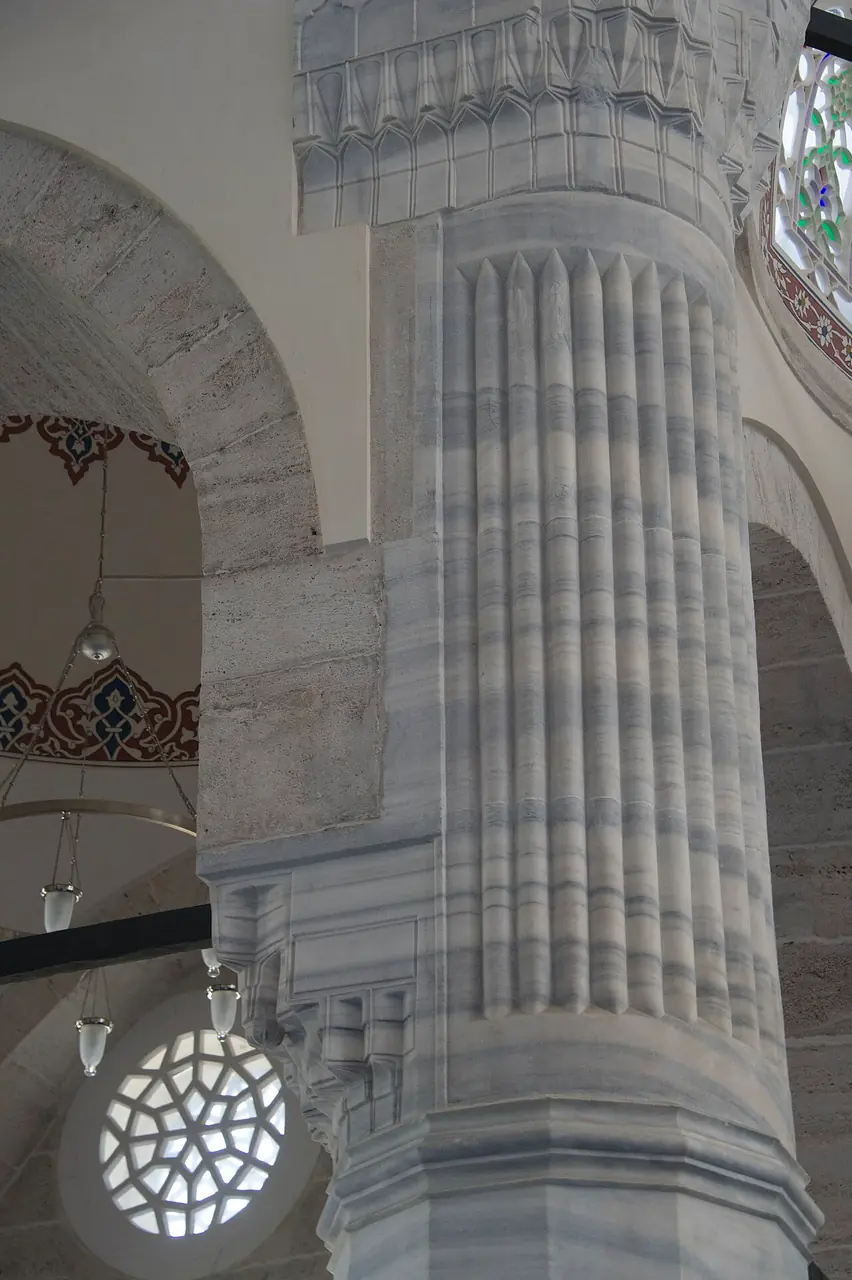
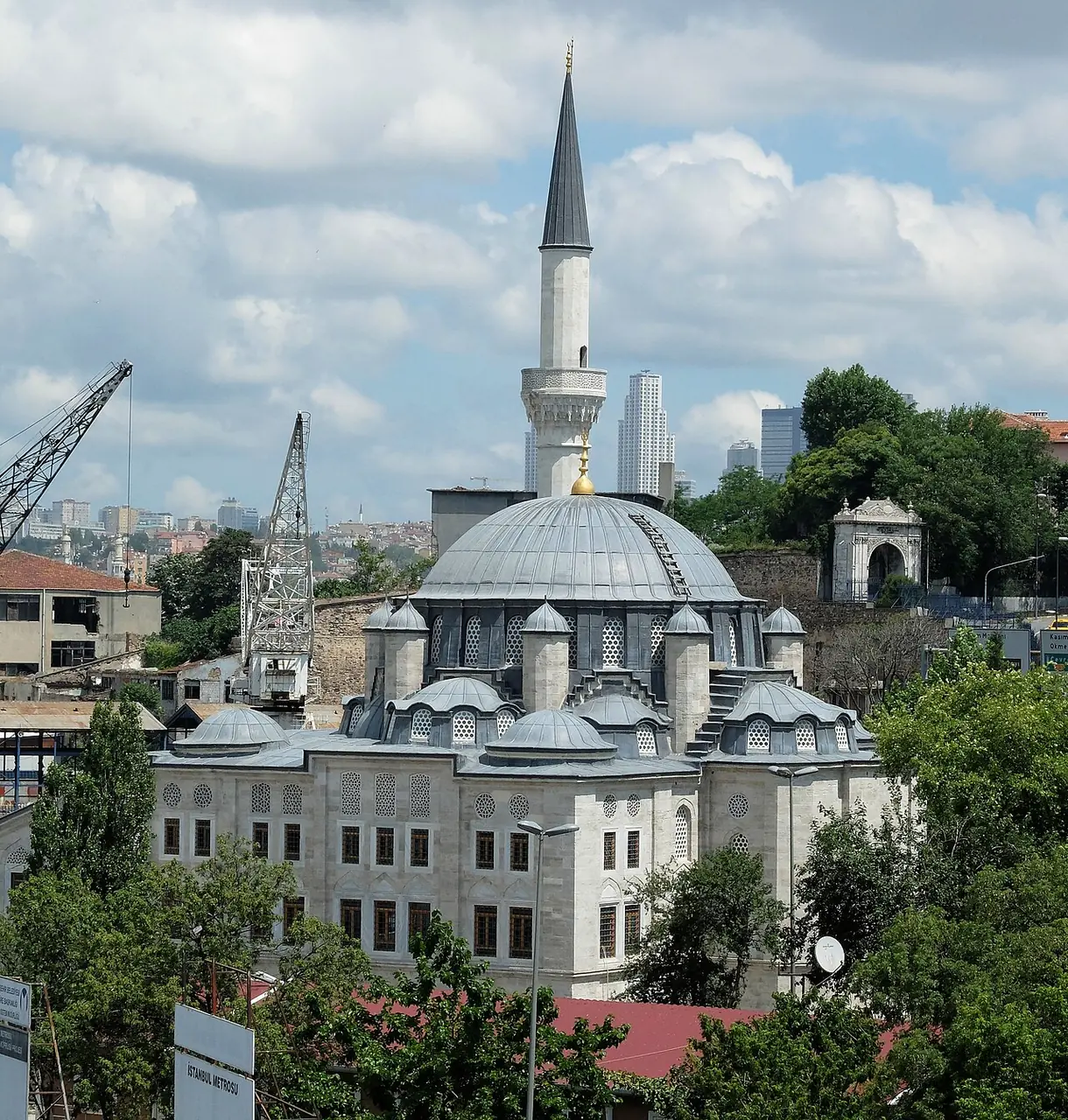
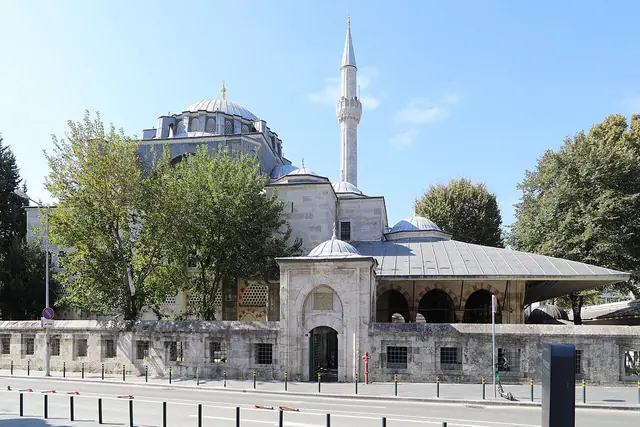
Azapkapı is one of the cleanest realisations of the octagonal baldachin in Sinan's work: eight heavy polygonal piers carry the central dome through eight arches. Two of the eight piers are engaged in the qibla wall, two stand freely in front of the mihrab, and four are free-standing on the lateral axes. The dome transition uses four large semi-domes on the cardinal axes and four smaller semi-domes on the diagonals, plus eight squinches. The prayer hall is raised on a tall vaulted basement of shops and cellars — Sinan's standard solution for unstable waterfront sites. A single minaret stands at the northwest corner. The interior preserves traces of original İznik tilework, though much was lost in 18th–19th-century fires.
In Sinan's evolution
1577–78 — Sinan's late imperial phase, after Selimiye (Edirne, 1568–74) and alongside the very late Istanbul commissions (Zal Mahmud Pasha, Kılıç Ali Pasha). The definitive working-out of the octagonal baldachin he had first used at Rüstem Pasha (1561–63). Not its last appearance, though: the same scheme carries the dome of Nişancı Mehmed Pasha (1584–89), whose execution Goodwin and Kuban credit to Davud Agha.
Sinan Tree →Facts
- The octagonal baldachin (eight-pier) scheme reaches its canonical form here; Sinan had used it earlier at Rüstem Pasha (1561–63). It is not, however, the last building on that scheme: the same baldachin carries the dome of the late Nişancı Mehmed Pasha mosque (1584–89), whose execution Goodwin and Kuban credit to Davud Agha. en.wikipedia.org
- Built on reclaimed land at the Golden Horn's edge — Sinan drove timber piles into the ground and set the mosque on a vaulted basement to stabilise it. archnet.org
- The inscription dates the building to AH 985 = 1577–78 CE. en.wikipedia.org
- One of three Istanbul mosques Sokollu Mehmed Pasha commissioned from Sinan — the others are Sokollu-Kadırga (1572) and Lüleburgaz (1565–69). islamicartsmagazine.com
- The eight piers are asymmetrically distributed: two engaged to the qibla wall, two in front of the mihrab, four standing freely — concentrating the mihrab zone while keeping the main space open. archnet.org
Photographs
_column_in_2018_7369.jpg)
