Sinan / Classical
New Mosque (Yeni Cami)
1597–1665 · Fatih / Eminönü
66-year construction saga under two Valide Sultans — Safiye (start 1597) and Turhan Hatice (completion 1665) — with a 57-year abandonment between 1603 and 1660. A three-architect pedigree: Davud Ağa (Sinan's pupil), Dalgıç Ahmed Ağa, Mustafa Ağa. Last great imperial mosque of classical Ottoman style before the Baroque era, and Istanbul's defining Golden Horn skyline monument.
- Dome
- 17.5 m
- Height
- 36 m
- Minarets
- 2
- Built
- 1597–1665
- Architects
- Mimar Davud Agha · Dalgıç Ahmed Agha · Mimar Mustafa Agha
- Patron
- Safiye Sultan & Turhan Hatice Sultan
- District
- Fatih / Eminönü
History
The Yeni Cami (New Mosque) is one of Istanbul's great imperial mosques, remarkable for a construction history that dragged on for 66 years through political and financial catastrophe. Work began in 1597 under Safiye Sultan, Valide Sultan during the reign of Mehmed III; a dense Jewish neighbourhood at Eminönü on the Golden Horn was cleared for the site. The first architect was Davud Ağa, a pupil of Mimar Sinan; after his death from plague in 1598 the project passed to Dalgıç Ahmed Ağa. With Mehmed III's death in 1603, Safiye Sultan was sent to the Old Palace, funding was cut, and construction halted with walls only partly raised. The janissaries and the court viewed the project as extravagance and as a visible expression of the growing political power of Valide Sultans. For 57 years the half-built shell decayed, and in 1660 the Great Fire of Istanbul (24–26 July 1660) damaged it further. That same year the imperial architect Mustafa Ağa proposed to Turhan Hatice Sultan, mother of Mehmed IV, that she complete the building as an act of piety. Work resumed at the end of 1660; the mosque was completed in 1663 and inaugurated in 1665. The associated Egyptian Bazaar (Mısır Çarşısı) is one of the city's most famous covered markets.
Architecture
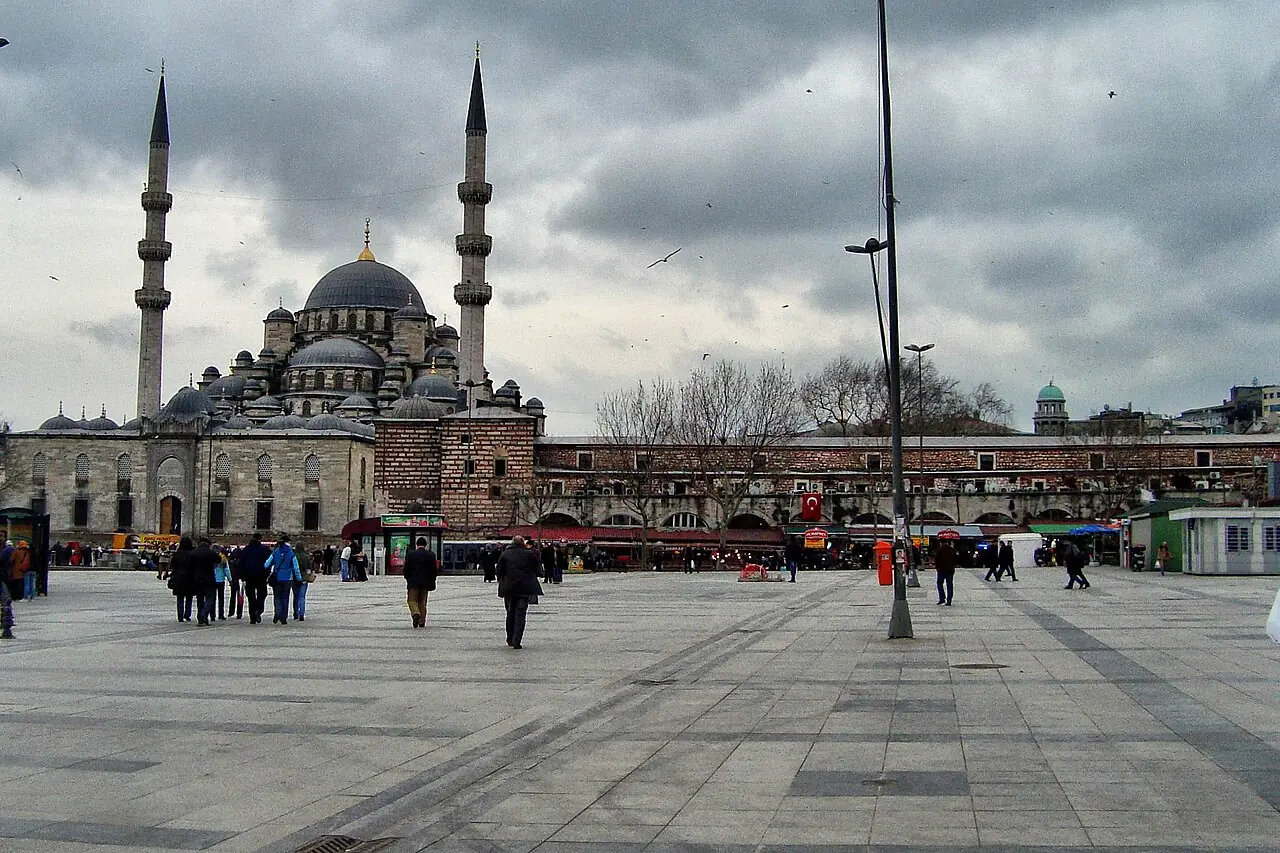
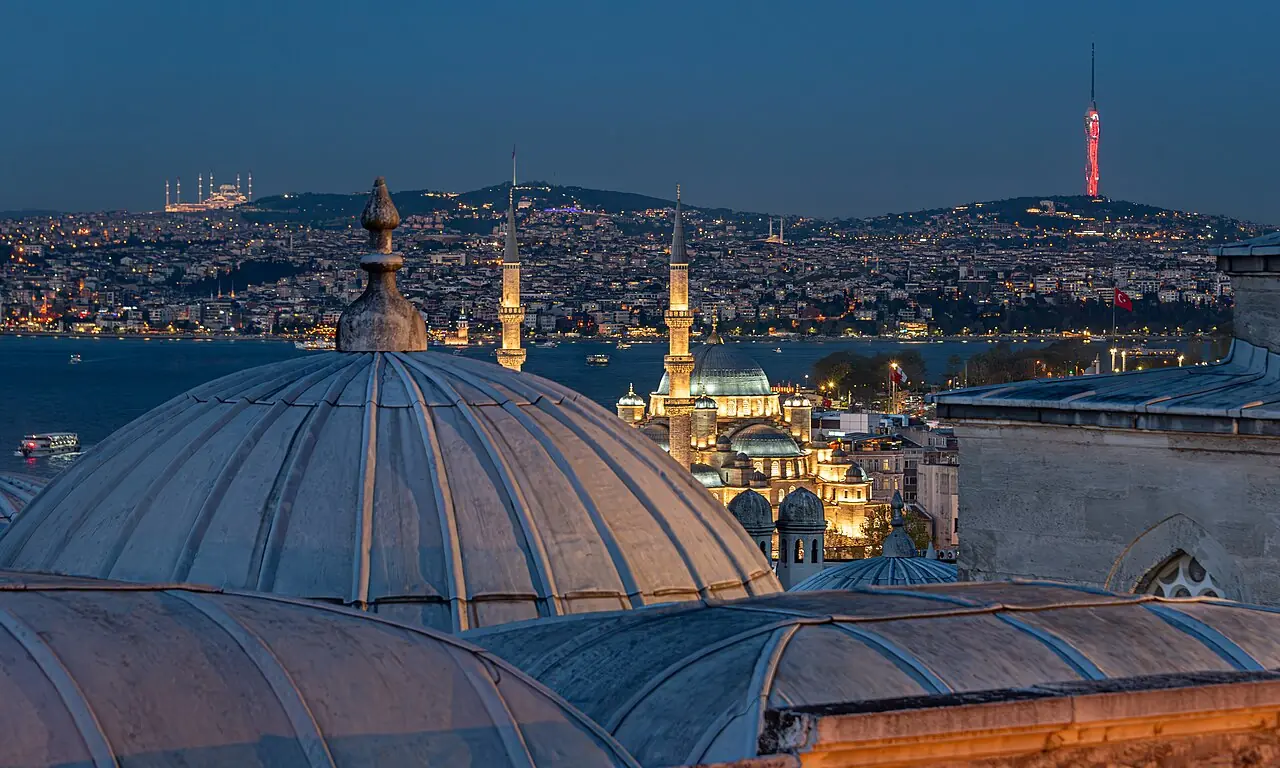
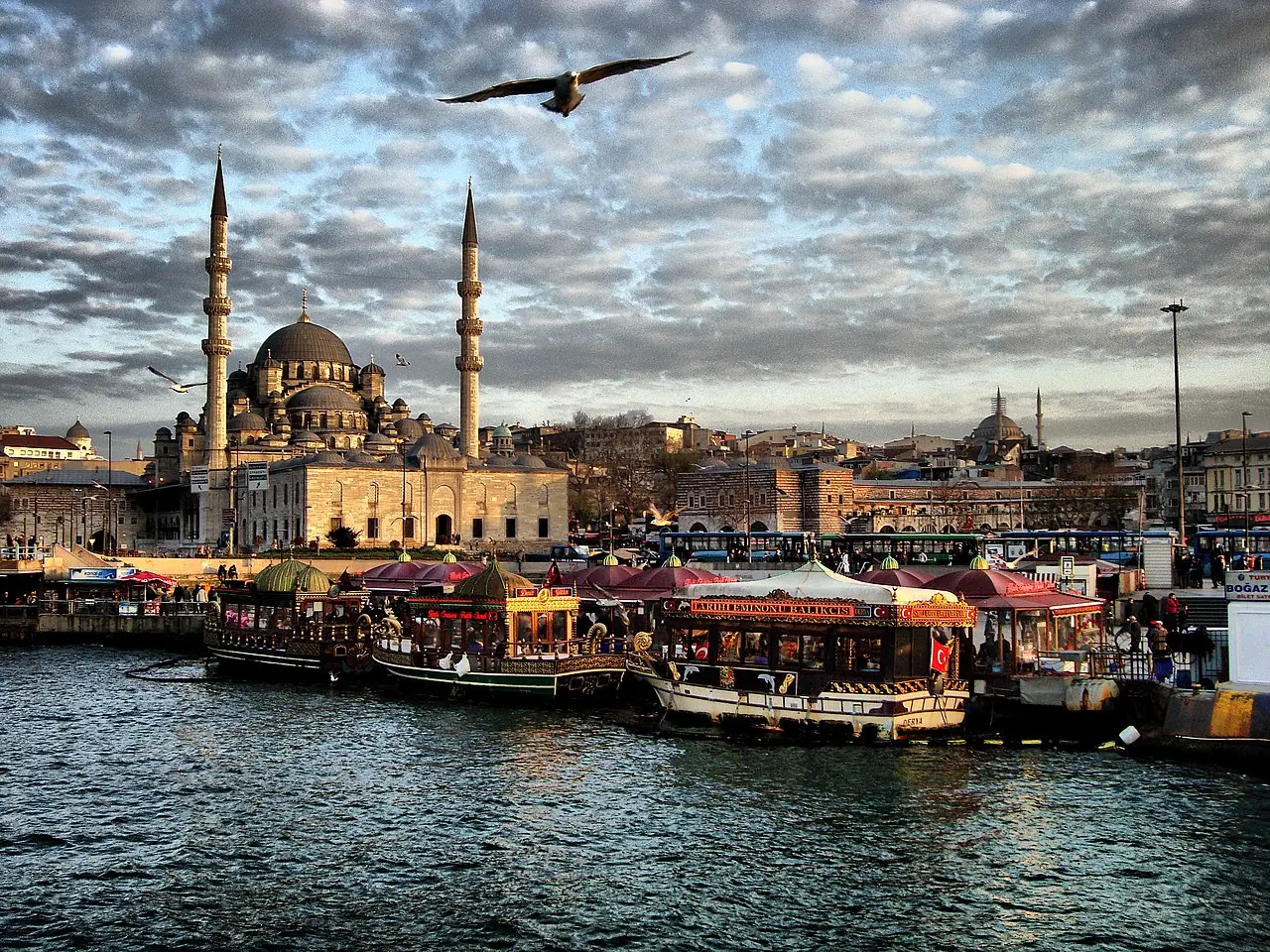
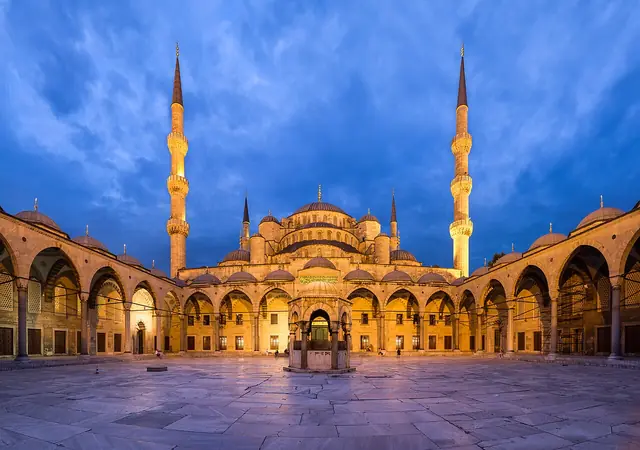
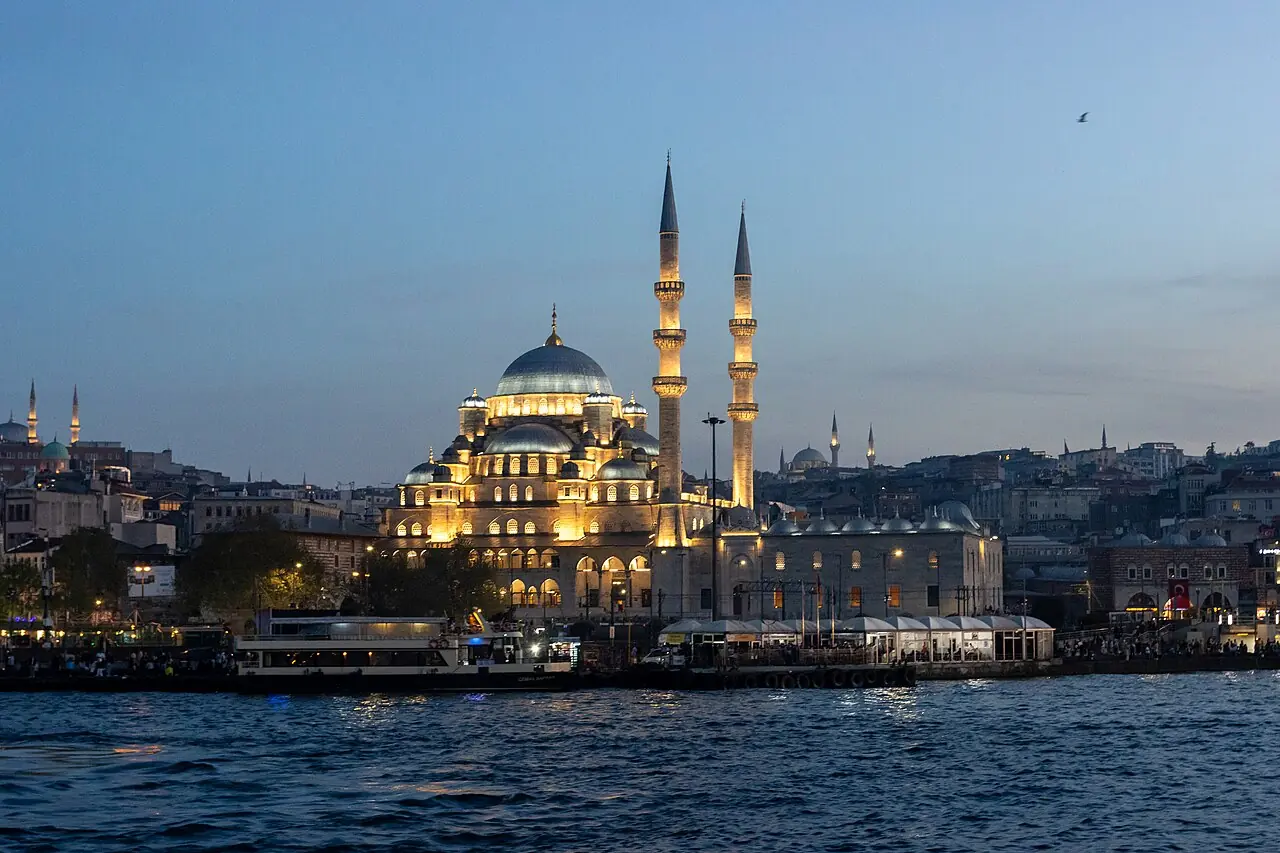
Yeni Cami follows the classical Istanbul imperial scheme: a square plan with a central dome 17.5 m in diameter and 36 m high, supported by four semi-domes. Externally the mosque rises in a cascading pyramidal composition of 66 domes and semi-domes — the most recognisable feature of the silhouette. Two minarets with three balconies (şerefe) each flank the prayer hall; a mosque founded by a Valide Sultan (rather than a reigning sultan) was permitted only two minarets by protocol. Inside, the hall is richly decorated with İznik tiles, carved stone, gilding and painted panels. The complex includes a separate sultan's lodge (hünkâr mahfili) with its own entrance, the mausoleum of Turhan Hatice Sultan (and several later sultans), and the Egyptian Bazaar — one of the city's principal covered markets. Its position right at the Galata Bridge end of the Golden Horn makes Yeni Cami the defining skyline monument of Eminönü. It is the last great imperial mosque of the classical Ottoman style before the shift to Baroque (Nuruosmaniye, 1755). Construction spans three generations of architects: Davud Ağa laid the mosque out in 1597 and died of plague a year later; Dalgıç Ahmed Ağa carried the masonry up to the first row of windows, after which the work stood abandoned for nearly sixty years; the chief court architect Mustafa Ağa completed the building in 1661–1665 under Turhan Hatice Sultan's endowment.
Facts
- Construction stretched across 66 years (1597–1663), including a 57-year pause after the death of Mehmed III in 1603, with work only resuming after the Great Fire of Istanbul in 1660. en.wikipedia.org
- The first architect, Davud Ağa, was a pupil of Mimar Sinan; after his plague death in 1598 the project passed to Dalgıç Ahmed Ağa and was finally completed six decades later by Mustafa Ağa. architectuul.com
- The exterior rises in a pyramidal cascade of 66 domes and semi-domes — one of the most complex multi-dome silhouettes in Ottoman architecture. en.wikipedia.org
- Completed under the patronage of Turhan Hatice Sultan in 1665, Yeni Cami was the last great imperial mosque of the classical Ottoman style before the Baroque era. en.wikipedia.org
- The complex includes the Egyptian Bazaar (Mısır Çarşısı) — one of Istanbul's main historic covered markets, built simultaneously with the resumption of mosque construction in 1660. en.wikipedia.org
Photographs